

Why does a luxury cabin often feel like a gilded cage after six hours at altitude? True comfort is more than aesthetic. It is biological. Many owners find the world of bespoke aircraft interior design overwhelming. You face strict technical regulations and the constant worry that chosen materials won't stand the test of time. Travel fatigue and persistent cabin noise can turn a private jet into a source of stress rather than a sanctuary.
We understand that your aircraft should be an extension of your well-being. This guide provides a clear path to a cabin that restores you. You'll discover how to navigate complex certifications while prioritizing neuroarchitecture and cognitive health. We show you how to create a space that feels as good as it looks.
We'll cover the essential principles of cabin transformation. This includes optimizing acoustics, managing lighting for better sleep, and selecting materials that increase resale value. Prepare to turn your aircraft into a precise, personalized retreat in the sky.
Key Takeaways
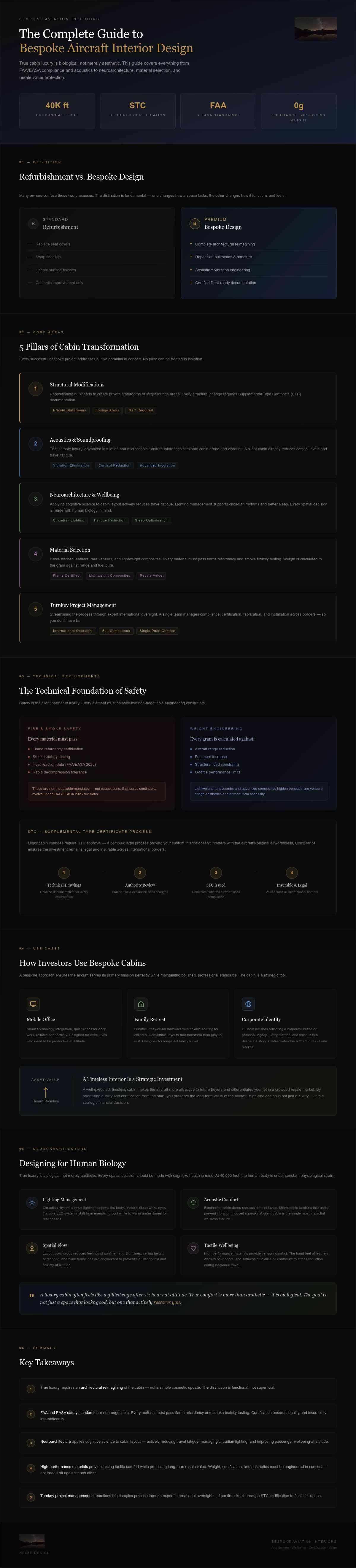
- Learn why true luxury requires an architectural reimagining of the cabin rather than a simple cosmetic update.
- Master the technical safety standards and certification requirements for high-end aviation textiles and finishes.
- Apply neuroarchitecture to your cabin layout to actively reduce travel fatigue and improve well-being at altitude.
- Select high-performance materials that provide lasting tactile comfort while protecting your aircraft's long-term resale value.
- Streamline the complex process of bespoke aircraft interior design through expert turnkey project management and international oversight.
Defining Bespoke Aircraft Interior Design
Bespoke aircraft interior design is a complete architectural reimagining of the cabin. It's not just a cosmetic update. Many owners confuse this process with a simple refurbishment. A refurbishment might replace seat covers or floor kits. A bespoke design changes the way the space functions and feels. It transforms a standard fuselage into a personalized sanctuary tailored to your specific lifestyle.
The role of an interior architect in aviation is highly specialized. Residential designers focus on light and flow. Aviation architects focus on rapid decompression, G-forces, and toxic smoke. The stakes are higher. Every material must meet strict fire safety standards. Weight is a constant constraint. Every gram counts. A skilled designer balances these technical limits with human needs. They manage airflow, sound dampening, and vibration. This ensures the cabin feels like a home, even at 40,000 feet. It requires precise technical design documentation to ensure every custom element is flight-ready.
A strategic approach to bespoke aircraft interior design also protects the asset. High-end design isn't just a luxury; it's a strategic investment. A well-executed, timeless cabin makes the aircraft more attractive to future buyers. It differentiates your jet in a crowded resale market. By prioritizing quality and certification from the start, you preserve the long-term value of the aircraft.
The Scope of Private Jet Customization
Customization ranges from subtle aesthetic shifts to major structural changes. We look beyond the surface to optimize every inch of the cabin. This involves deep technical planning and creative problem-solving. Key areas of focus include:
- Structural modifications: Repositioning bulkheads to create private staterooms or larger lounge areas.
- Galley and lavatory reconfiguration: Designing high-efficiency galleys for gourmet service or spa-like lavatories for long-haul comfort.
- Bespoke furniture: Creating custom seating and tables that meet aviation safety standards without sacrificing style.
- Aesthetic integration: Using hand-stitched leathers and rare veneers that reflect a specific personal or corporate identity.
Why Investors Prioritize Custom Interiors
Smart investors see the cabin as a strategic tool. A custom interior can reflect a corporate brand or a personal legacy. It also optimizes the space for specific use cases. For some, the jet is a mobile office. It needs integrated smart technology and quiet zones for deep work. For others, it's a family retreat. It needs durable materials and flexible seating for children. A bespoke approach ensures the aircraft serves its primary mission perfectly while maintaining a polished, professional edge.
The Technical Foundation of VIP Cabin Design
Safety is the silent partner of luxury. Achieving a successful bespoke aircraft interior design requires more than an eye for beauty. It demands a deep respect for physics. Every material you touch must pass rigorous testing for flame retardancy and smoke toxicity. These aren't suggestions; they're non-negotiable mandates. In 2026, FAA and EASA standards continue to evolve, requiring even more precise data on how bespoke textiles react under heat. We don't just choose a fabric for its hand-feel. We choose it because it's certified to protect lives.
Weight is the other constant challenge. Every gram of luxury must be calculated. A heavy cabin reduces range and increases fuel burn. Designers must collaborate closely with engineers from the first sketch. We use lightweight honeycombs and advanced composites hidden beneath rare veneers. This ensures the design is feasible without compromising the aircraft's performance. Expert technical design documentation bridges the gap between a creative vision and a flight-certified reality. It's about finding the perfect balance between high-end aesthetics and aeronautical necessity.
Navigating FAA and EASA Requirements
Major changes to a cabin require a Supplemental Type Certificate (STC). This is a complex legal process that proves your custom interior doesn't interfere with the aircraft's original airworthiness. We manage this by creating detailed technical drawings for every modification. Whether it's a new bulkhead or a custom divan, the documentation must be flawless. Compliance isn't a hurdle; it's a benchmark for quality. Following 2026 safety protocols ensures your investment remains legal and insurable across international borders.
Acoustics and Soundproofing Strategies
A quiet cabin is the ultimate luxury. High-altitude flight creates a constant drone that leads to significant travel fatigue. We use advanced insulation materials to create a silent environment. This involves more than just thick carpets. We design out vibration by ensuring every piece of furniture fits with microscopic precision. When parts don't rub, they don't squeak. A silent cabin reduces cortisol levels and allows for restorative sleep. It turns a long-haul flight into a refreshing experience rather than an exhausting one. This focus on acoustics is a core pillar of modern bespoke aircraft interior design.
Neuroarchitecture in Aviation: Designing for Wellbeing
Neuroarchitecture in aviation is the science of designing for the human brain. It moves beyond the visual to address the physiological. Flying at high altitudes is inherently stressful for the human body. Air pressure changes and constant vibration keep the nervous system on high alert. Modern bespoke aircraft interior design uses science to calm these responses. We create environments that don't just look expensive; they actively promote recovery and mental clarity.
Spatial geometry plays a huge role in your mental state. A cramped or cluttered cabin triggers a subtle fight-or-flight response. We counter this with intentional negative space. By simplifying the cabin's architecture, we reduce the amount of information the brain has to process. This creates a feeling of expansive freedom. It's about giving the passenger room to breathe and think. This intentionality ensures the cabin feels like a sanctuary rather than a confined space.
We also bring the outdoors in through biophilic elements. Humans have a biological need to connect with nature. In a metal tube, this connection is typically lost. We restore it by using natural materials with visible grains and varied textures. These organic details provide a sensory anchor. They help the passenger feel grounded even while moving at high speeds. This approach is a hallmark of sophisticated bespoke aircraft interior design that prioritizes human health.
Circadian Lighting Systems
Circadian lighting is a powerful tool for wellness. We integrate smart systems that adjust color temperature in real-time. These systems mimic the sun's natural progression. Warm tones during takeoff keep stress levels low. Shifting to cooler light helps maintain focus during business hours. By mimicking natural cycles, we help the body adjust to new time zones faster. It's a sophisticated way to combat jet lag before you even land.
Ergonomics and Human-Centric Layouts
Wellness is also about physical ease. Ergonomics must account for long-duration missions. Every seat and surface is designed to support natural posture and reduce physical strain. But we also look at the flow of the cabin. Movement should be easy and logical. A well-planned layout prevents the feeling of confinement. This human-centric focus is what defines neuroarchitecture interior design. It ensures the cabin is a true sanctuary for both the mind and the body.
Selecting Materials for High-End Aircraft Refits
Material choice defines the soul of the cabin. It's the intersection of touch and technology. In bespoke aircraft interior design, every surface must perform. It must resist wear while feeling effortless. High-end aviation textiles aren't just fabric; they're engineered systems. They must withstand dry cabin air and intense UV light at altitude. We select materials that balance this durability with a soft, inviting hand-feel.
Eco-conscious luxury is no longer a niche. It's a requirement for the modern owner. We use sustainable alternatives like recycled fibers woven into high-performance yarns or responsibly sourced leathers. These materials offer the same tactile richness as traditional options but with a reduced environmental footprint. It's about creating a legacy that respects the future.
Wood veneers remain a classic choice for warmth and elegance. However, we now use advanced composites to achieve the same visual depth with significantly less weight. These composites are more stable than solid wood. They won't crack or warp in the fluctuating humidity levels of a pressurized cabin. Custom metal finishes provide the final layer of precision. Whether you prefer brushed nickel or matte champagne gold, these accents define the cabin's personality.
Bespoke Upholstery and Leatherwork
We source premium hides from specialized tanneries. These aren't standard leathers. They are treated to meet 2026 FAA and EASA flame-retardancy standards while remaining incredibly supple. Hand-stitched details are a hallmark of our craftsmanship. They signal a level of care that machines cannot replicate. For those who prefer light-colored cabin palettes, we apply advanced protective coatings. These prevent dye transfer and stains, ensuring your sanctuary stays pristine mission after mission.
Innovative Surfaces and Flooring
Stone and marble were once too heavy for flight. Modern technology has changed that. We use ultra-thin stone veneers bonded to lightweight honeycomb cores. This allows for marble lavatories that don't compromise the aircraft's range or fuel efficiency. For flooring, we often recommend custom-woven silk and wool blends. These materials provide natural acoustic dampening. They absorb sound rather than reflecting it. This contributes to the silent, restorative environment we aim to create. If you're ready to refine your cabin's palette, explore our Bespoke Interior Design services.
Managing Your Aircraft Interior Project Turnkey
A successful project requires a single point of responsibility. Bespoke aircraft interior design involves a massive network of specialists. You need a partner who speaks the language of both design and aviation engineering. The lifecycle of a refit starts with a vision and ends with a certified, flight-ready cabin. Managing this process turnkey means we handle every detail. We coordinate with international contractors and specialized artisans to ensure the highest standards are met across every border.
Efficiency is the primary goal during the installation phase. Aircraft downtime is costly. We minimize ground time through rigorous planning and preemptive coordination. Every component is prepared off-site. This ensures the actual refit is a precision assembly rather than a discovery process. Bespoke aircraft interior design is a complex undertaking, but a streamlined workflow keeps the path from inquiry to action as short as possible.
Our multilingual team manages the friction of international logistics. We ensure that technical design documentation is interpreted correctly by every technician on the floor. This oversight prevents costly errors and ensures the final result matches the initial intent. We don't just design a space; we manage the entire ecosystem of its creation.
The Design and Documentation Phase
Precision begins on paper. We create comprehensive technical drawings for every aspect of the renovation and outfitting. This stage includes detailed material boards and 3D visualizations. These tools help you see the final result before a single panel is removed. For projects spanning multiple regions, our expertise in international project management interior design ensures a seamless workflow. We bridge the gap between global suppliers and local installation teams.
Supervision and Quality Control
Documentation only works if it's followed perfectly. We provide dedicated site supervision during the installation of all custom components. This on-site presence ensures that every element is fitted with microscopic accuracy. We act as your representative on the hangar floor. Final inspections and certification sign-offs in 2026 focus on both aesthetic perfection and regulatory compliance. This level of oversight is similar to the precision required in luxury yacht decoration services. We ensure every stitch and veneer meets our standards before you take flight.
Refining the Future of Flight
A private jet should be a space of absolute clarity. We've discussed how the best cabins move beyond simple aesthetics to prioritize biological needs and technical safety. From the science of neuroarchitecture to the rigors of 2026 certification, every detail serves a specific purpose. High-end materials and silent acoustics turn a long-haul journey into a restorative event. This level of bespoke aircraft interior design ensures your aircraft remains a timeless legacy asset that supports your lifestyle.
HEIMÉ provides the specialized expertise needed to navigate this complex field. We focus on UHNW and legacy estate design, ensuring every project reflects a unique personal or corporate identity. Our approach combines wellness-driven design with expert turnkey project management. We manage international artisans and technical documentation to ensure a seamless delivery. You can trust our team to handle every requirement with quiet confidence and precision. We bridge the gap between a creative vision and a certified reality.
Begin your bespoke aviation journey with HEIME. Your personalized sanctuary in the sky is ready for takeoff.
Frequently Asked Questions
How long does a bespoke aircraft interior refit typically take?
A full refit typically takes between 4 and 10 months. This timeline depends on the aircraft size and the complexity of the structural changes. The process includes several weeks for initial design and material sourcing before the aircraft enters the hangar. Efficient project coordination is essential to minimize downtime and return the jet to service as quickly as possible.
Can any residential material be used in a private jet cabin?
No, residential materials are rarely suitable for aviation. Every textile, foam, and veneer must meet strict FAA or EASA flame-retardancy and smoke toxicity standards. Bespoke aircraft interior design requires specialized materials that have been flight-certified. Even the most luxurious residential fabrics usually fail the rigorous "burn tests" required to ensure passenger safety during an emergency.
What is the difference between an aircraft refurbishment and a bespoke refit?
A refurbishment is a cosmetic refresh of the existing space. It usually involves replacing worn carpets or reupholstering seats without changing the layout. A bespoke refit is a total architectural reimagining of the cabin. It often includes moving bulkheads, upgrading lighting systems, and integrating new technology to create a completely personalized flight experience tailored to your specific needs.
How does a custom interior affect the resale value of a private jet?
A high-quality custom interior significantly increases an aircraft's resale value. It differentiates the jet in a crowded market and appeals to buyers looking for a modern, move-in ready cabin. We focus on timeless designs that balance personal style with broad market appeal. This strategic approach ensures the interior remains a valuable asset for years to come.
What are the current trends in VIP aircraft cabin design for 2026?
Current trends prioritize wellness and sustainable luxury. Owners are moving away from heavy, dark aesthetics in favor of lighter, expansive environments. We see a high demand for circadian lighting, biophilic textures, and advanced soundproofing. There is also a strong focus on using lightweight composites that mimic rare woods while improving the aircraft's overall range and fuel efficiency.
Do I need a new certification if I only change the seat leather?
Yes, you still need technical documentation for minor cosmetic changes. Any material added to the cabin must come with a "burn certificate" to prove it meets aviation safety standards. These records are vital for maintaining the aircraft's airworthiness certificate. We handle all the necessary bespoke aircraft interior design documentation to ensure your aircraft remains fully compliant after any update.
How does neuroarchitecture improve the flight experience?
Neuroarchitecture reduces the physical and mental stress of high-altitude travel. We use specific spatial layouts and natural materials to calm the nervous system. By controlling light cycles and reducing cabin noise, we can actively combat jet lag and travel fatigue. This science-based approach ensures you arrive at your destination feeling refreshed and ready for your next engagement.
Can I include a full-size bedroom in my business jet interior?
Yes, a full-size bedroom is a common feature in large-cabin business jets. This usually involves installing a dedicated stateroom with a certified divan or a custom-built bed. It requires careful planning to ensure the layout meets safety regulations for takeoff and landing. Such a configuration transforms the aircraft into a true sanctuary for long-haul international travel.


