

Why do some luxury interiors feel like cold showrooms while others feel like a true sanctuary? Most people assume high end furniture selection is simply about choosing the most recognizable labels or following the latest trends. In reality, the most striking piece in a catalog might be the worst choice for your nervous system or your long-term investment strategy.
You've likely felt the weight of overwhelming retail options or the stress of coordinating complex international logistics. It's difficult to balance aesthetic desires with the need for material durability and health-conscious design. We understand that a 60,000 zł investment in a single piece should offer more than just a visual statement; it must serve as a functional part of your legacy. This guide helps you master the art of selecting furniture that balances technical rigor with the principles of neuroarchitecture.
You'll discover how to curate a cohesive environment that supports mental well-being and ensures seamless project execution. We'll explore the intersection of investment value, technical documentation, and the quiet precision required for elite environments.
Key Takeaways
- View high end furniture selection as a strategic asset management decision rather than a simple retail purchase.
- Apply neuroarchitecture principles to select pieces that actively support your mental well-being and nervous system.
- Navigate the technical complexities of marine and aviation interiors with specialized material standards and weight-saving strategies.
- Implement a structured curation framework to ensure every piece aligns with your architectural environment and sensory palette.
- Simplify international logistics through turnkey coordination that manages cross-border projects with professional precision.
Beyond Aesthetics: The Strategic Value of High-End Furniture Selection
High end furniture selection is not merely an exercise in taste. It's a calculated asset management strategy. For the owner of a legacy estate or a high-value property across the country, every piece represents a portion of the home's total valuation. Unlike mass-market items that depreciate the moment they leave the showroom, curated pieces often retain or increase in value. This shift from retail purchasing to bespoke curation marks the difference between a decorated house and a curated environment.
Modern investors recognize that quality furniture preserves the long-term value of generational properties. A designer acts as a essential gatekeeper in this process. They provide access to exclusive, non-retail collections that aren't available to the general public. These pieces often feature superior craftsmanship and materials that meet the rigorous standards required for elite environments. Understanding the evolution of furniture design helps investors identify which styles hold historical significance and which are merely passing fads.
Furniture as a Generational Asset
Selecting pieces for a family estate requires a long-term view. Provenance is key. You aren't just buying a table; you're acquiring a piece of history with documented origins. Focus on materials that age gracefully. Solid European hardwoods, hand-forged artisanal metals, and natural stones develop a patina that adds character over decades. These materials ensure the piece remains a heritage asset rather than a disposable commodity. In the Polish market, where legacy property design is growing, choosing items with high resale and heritage value is a prudent financial move.
Curation vs. Decoration
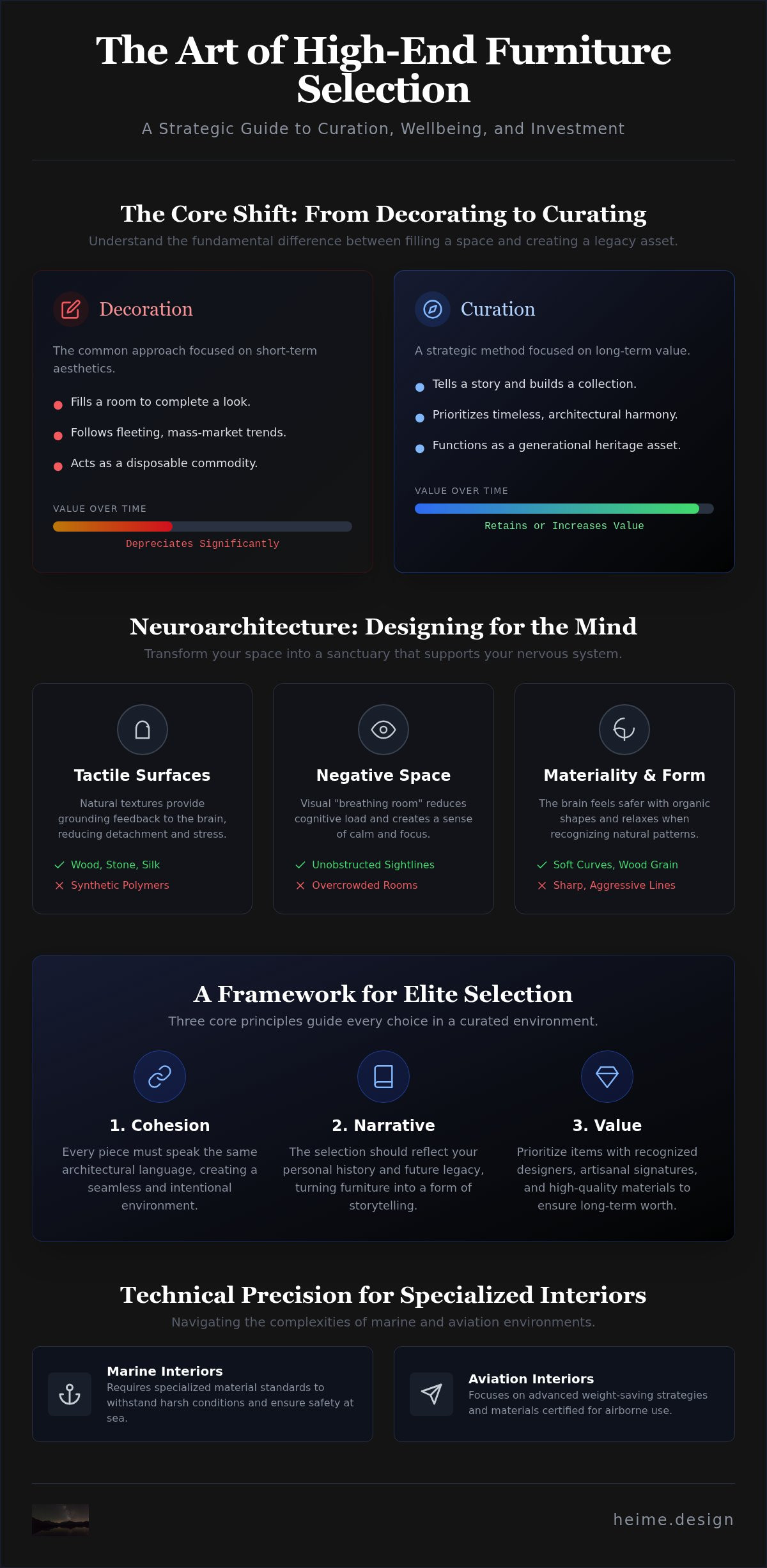
Decoration fills a room. Curation tells a story. A strategic high end furniture selection reflects the owner's personal brand and values across every square meter. While trendy items might catch the eye, they rarely survive the test of time. Timeless investments prioritize architectural harmony and sensory quality. This approach creates a cohesive narrative across diverse spaces, ensuring the interior feels intentional. It's about building a collection that serves your lifestyle while maintaining its status as a significant financial holding.
- Cohesion: Every piece should speak the same architectural language.
- Narrative: The selection should reflect your personal history and future legacy.
- Value: Prioritize items with recognized designers or artisanal signatures.
The goal is a seamless blend of function and form. When you move beyond simple decoration, you create an environment that supports both your mental well-being and your financial portfolio. Precision in selection ensures that your home remains a sanctuary of high-value design.
Neuroarchitecture: Selecting Furniture for Mental Wellbeing
Designing for the mind requires more than intuition. It demands a scientific understanding of how our surroundings dictate our internal state. Effective high end furniture selection treats the home as a biological extension of the inhabitant. By applying neuroarchitecture principles, we transform physical objects into tools for emotional regulation and cognitive clarity.
Tactile surfaces are the primary interface between the body and the environment. When you touch a hand-planed oak table or a silk-wool rug, your nervous system receives grounding feedback. Synthetic materials often feel "dead" or static, which can subconsciously increase feelings of detachment. We prioritize materials that offer rich, varied textures to stimulate the brain's sensory processing centers in a positive way.
The layout of your furniture is equally vital. Negative space is not "empty" space; it's visual breathing room. Overcrowding a room with excessive pieces creates a high cognitive load, leading to subtle but persistent stress. We select and place furniture to encourage specific psychological outcomes:
- Calm: Low-profile seating and unobstructed sightlines to windows.
- Focus: Desks with non-reflective finishes and chairs that provide lumbar security.
- Connection: Circular arrangements that facilitate eye contact and easy conversation.
The Science of Materiality
Natural materials consistently outperform synthetics in wellness metrics. The brain recognizes the subtle, non-repeating patterns found in wood grain and stone. This recognition triggers a relaxation response similar to being in nature. Organic shapes, characterized by soft curves and rounded edges, feel inherently safer to the primitive brain than sharp, aggressive geometric lines. In high-pressure environments like family offices, these softer forms help mitigate the physiological impact of stress. Our team integrates these scientific insights into every wellness interior design project to ensure your space truly supports your health.
Lighting and Furniture Synergy
Furniture selection must account for how pieces interact with light. A dark velvet sofa might absorb too much natural light, making a room feel heavy or oppressive. Conversely, a polished stone surface can create harsh glares that cause eye strain. We select finishes that work in harmony with bespoke lighting design to support your circadian rhythms. Lighter, textured surfaces help distribute light evenly throughout the day. This synergy ensures that your environment transitions smoothly from a bright, productive morning to a soft, restorative evening. Proper placement ensures that your path to the balcony or window remains clear, maximizing your exposure to essential daylight.
Technical Precision: Selection for Marine and Aviation Interiors
High end furniture selection for marine and aviation environments demands a level of technical rigor far beyond standard residential design. In these specialized spaces, furniture must withstand constant motion, pressure changes, and corrosive elements. Every piece is an engineering feat. You aren't just selecting a chair; you're approving a functional component that must meet global safety benchmarks while maintaining an elite aesthetic. Precision is the only path to success in these high-stakes environments.
Compliance is the non-negotiable foundation of this process. For aviation, every material must adhere to strict FAA or EASA flammability requirements. In the maritime sector, the International Maritime Organization (IMO) sets the definitive standards for fire safety. These regulations dictate which foams, fabrics, and adhesives are permissible for use. Following established aviation interior material standards ensures that luxury never compromises passenger safety. Our technical design documentation accounts for every gram and every certification before a single piece is commissioned.
Bespoke Yacht Interior Refits
Marine environments are notoriously harsh. High salinity and humidity can destroy standard luxury finishes in months. We prioritize moisture-resistant hardwoods like teak or specially treated mahogany alongside performance fabrics that repel salt air. Space is a high-value commodity on any vessel. High end furniture selection for a yacht often involves custom-built, multi-functional pieces that maximize the footprint of a cabin. Every item must be secured for motion. We utilize hidden fastening systems to ensure that a lounge chair remains stationary during heavy seas without visible bolts ruining the architectural lines.
Private Jet Cabin Excellence
Weight is the primary constraint in aviation design. Heavier furniture reduces flight range and increases operating costs. We solve this by using aerospace-grade materials like carbon fiber cores topped with ultra-thin stone or wood veneers. This creates the visual impact of solid materials without the physical burden. Specialized leathers are selected for their weight-to-durability ratio, ensuring they withstand the rigors of long-haul travel. Ergonomics are refined to fit the limited cabin envelope, providing maximum comfort during transcontinental flights. We also integrate smart-home technology directly into the furniture, allowing for seamless control of the environment from a seated position.
The investment in these sectors is significant. Whether you're refitting a cabin in Poland or managing a project in a Mediterranean shipyard, the technical documentation must be flawless. This level of precision protects your investment and ensures the vessel or aircraft remains compliant with international registration standards. It's a specialized discipline where engineering meets artistry.
The Curation Process: A Framework for Elite Selection
Elite curation follows a specific sequence. It moves from broad architectural vision to microscopic technical details. A successful high end furniture selection requires a framework that eliminates guesswork and ensures total alignment with the space. We begin with a deep environmental and architectural analysis. This involves evaluating room volumes, the path of natural light, and the intended movement of inhabitants. Every piece must serve the architecture rather than competing with it.
Once the spatial logic is defined, we develop a material and sensory palette. This stage builds on the neuroarchitecture principles discussed earlier. We select textures and tones that evoke a specific emotional response. A private study might require the grounding scent of natural leather and the warmth of solid walnut. A spa-adjacent lounge might call for the coolness of honed stone and moisture-resistant textiles. Technical compliance and durability auditing follow. We verify that every item meets the safety standards required for its specific environment, whether it's a family estate or a high-traffic commercial lobby.
The final stage is global procurement and logistics planning. We manage the friction of cross-border shipping so you don't have to. Our team handles the complexities of customs, international insurance, and multi-stage transport. This structured approach ensures that the transition from design concept to physical reality is frictionless and precise.
Auditing for Quality and Craftsmanship
True luxury is found in the hidden details of construction. We audit for artisanal quality, looking for hand-joined wood, hand-stitched upholstery, and authentic finishes. Mass-produced luxury often relies on brand names to mask average craftsmanship. A strategic high end furniture selection often includes bespoke commissions. These pieces are designed for the unique dimensions of your space, ensuring a perfect fit that retail options cannot provide. We also prioritize ethical sourcing. We verify the provenance of hardwoods and the sustainability of stone extraction to ensure your investment is responsible and enduring.
Managing the Procurement Timeline
Handcrafted pieces involve significant lead times. Managing these timelines is a core part of our project management. We maintain constant communication with workshops in Italy, Spain, and Poland. Quality control happens during the manufacturing phase, not just upon delivery. When pieces are ready, we coordinate white-glove delivery and professional on-site installation. This ensures that a 150,000 zł dining table is handled with the precision it deserves. Our turnkey interior design services provide the oversight needed to manage these moving parts without stress. We ensure your vision is realized on schedule and to our exacting standards.
Turnkey Execution: How heime.design Coordinates Your Vision
High end furniture selection requires more than a vision; it needs a conflict-free execution partner. At heime.design, we prioritize your interests over brand partnerships. We don't sell stock. We sell professional oversight. This independence allows us to curate pieces based solely on their architectural fit and investment potential. From the first draft of technical design documentation to the final site supervision, we manage every detail. This level of control is essential to preserve property value and ensure the original design intent remains intact throughout the procurement cycle.
We act as your primary liaison. This eliminates the friction of managing dozens of separate vendors and shipping agents. We maintain a calm and organized workflow to ensure the transition from a mood board to a physical sanctuary is precise. Our team verifies every specification to prevent costly delays. This level of project management is a requirement for maintaining the standards of elite environments.
Cross-Border Project Management
International projects require more than design skill. They need cultural and logistical fluency. Our multilingual team bridges the gap between global suppliers and local contractors in Poland, Spain, and the UK. We navigate the complexities of international logistics and local permits for global property investors. Technical documentation is our tool for ensuring design fidelity. It provides a clear roadmap for contractors. We manage the friction of cross-border coordination so you can enjoy a global high end furniture selection without the administrative stress.
Bespoke Solutions for UHNW Clients
We understand the specific needs of UHNW residential interior design. Discretion and security are built into our process. Whether we're designing for a family office or a legacy estate, our focus is on long-term value preservation. We provide tailored services that respect your privacy while delivering world-class results. Our turnkey model removes the burden of coordination. Contact heime.design for a bespoke furniture selection consultation to begin your project.
- Independence: Conflict-free advice focused on your goals.
- Coordination: Management of international suppliers and logistics.
- Fidelity: Technical documentation that ensures your vision is realized.
- Discretion: Professional and secure handling of high-value property.
Your environment reflects your standards. Through strategic curation and technical rigor, we ensure your space supports your well-being and your legacy. Precision in execution is the final step in creating a true sanctuary.
Realize Your Vision with Precision
A strategic high end furniture selection is the final layer of a successful architectural narrative. We've examined how this process balances neuroarchitecture with the technical rigor required for marine and aviation interiors. These decisions protect your investment and support your long-term mental wellbeing. By following a structured curation framework, you transform a property into a generational asset that stands the test of time.
The transition from a design concept to a finished interior requires expert oversight. Our multilingual team at heime.design brings the specialized knowledge needed to manage international logistics and technical compliance. We ensure that every piece is installed with the precision your legacy deserves. Explore the bespoke design and project management services at heime.design to see how we can assist with your next curation. Your environment is a reflection of your standards. Let's make it exceptional.
Frequently Asked Questions
What defines 'high-end' in furniture selection beyond the price tag?
High-end is defined by provenance, material integrity, and artisanal craftsmanship. It represents a shift from mass production to bespoke curation where every joint and finish is documented. These pieces serve as generational assets that maintain their structural and aesthetic value over decades. True luxury avoids the cold showroom feel in favor of intentional, human-centric design.
How does neuroarchitecture influence the choice of furniture?
Neuroarchitecture uses scientific data to select furniture that regulates the nervous system. We prioritize organic shapes and natural textures to reduce cognitive load and promote emotional stability. This approach ensures your high end furniture selection actively supports mental health through sensory feedback and spatial harmony. It transforms a living space into a functional tool for recovery and focus.
Are there specific regulations for furniture in private jets?
Aviation furniture must comply with strict FAA or EASA flammability and smoke emission standards. Every material, from the foam core to the leather upholstery, requires burn test certification. We also focus on weight-saving engineering to ensure the aircraft maintains its required flight range and fuel efficiency. Technical precision is non-negotiable to ensure the cabin remains safe and compliant.
How do you ensure furniture durability for a luxury yacht refit?
Durability is ensured through moisture-resistant materials and specialized protective coatings. We select teak, mahogany, and high-performance marine textiles that withstand salt air and high humidity. Hidden fastening systems are also used to secure pieces against the vessel's motion while maintaining a clean, architectural look. This rigorous selection process protects your investment from the harsh maritime environment.
What is the benefit of turnkey project management for furniture procurement?
Turnkey management provides a single point of accountability for the entire curation lifecycle. We handle everything from technical documentation to final site supervision, eliminating the friction of managing multiple international vendors. This approach ensures design fidelity and prevents costly logistical errors for the property owner. It's a streamlined workflow that moves from initial inquiry to final installation without distraction.
Can high-end furniture selection help increase property value?
Strategic high end furniture selection increases property value by positioning the interior as a curated, turnkey asset. Investors in the Polish market often see higher returns on legacy estates when the furniture is treated as a permanent architectural component. Quality pieces with documented provenance are viewed as significant financial holdings. They make the property more attractive to high-net-worth buyers looking for move-in-ready excellence.
How do you coordinate furniture delivery for international projects?
We utilize a multilingual team to manage cross-border logistics, customs clearance, and international insurance. Our process includes white-glove delivery coordination to ensure pieces arrive safely at properties in Spain, the UK, or Poland. This end-to-end oversight removes the administrative burden from the client. We manage every detail of the transport chain so you don't have to worry about logistical delays.
What materials are considered the most sustainable for luxury interiors?
Sustainable luxury focuses on long-lived natural materials like FSC-certified hardwoods, stone, and organic wools. These materials are chosen for their ability to age gracefully and their low environmental impact during extraction. Investing in high-quality, durable pieces reduces waste by eliminating the need for frequent replacements. It's a responsible approach that values the longevity of the planet and your home.


