
A beautiful room can impress, but a coherent place gives guests something to remember. Luxury hospitality brand interior concept creation translates a property’s identity into an experience through story, spatial planning, materials and craft. The concept shapes how guests arrive, move, rest and connect with their surroundings.
That takes more than choosing a palette or adding decorative details. The strongest concepts bring the brand’s character into the proportions of a room, the feel of its materials and the work of local makers. Each choice should support the same sense of place.
This article explains how a hospitality concept develops from its central story into a guest experience, and how space, materials and craftsmanship make that story tangible. It also explores how thoughtful design can feel distinctive without excess, and how local references can give a hotel or resort a grounded identity.
Key Takeaways
- Build the concept around a clear story, then let that idea guide how guests experience each space.
- Look beyond finishes: layout, proportions and the relationship between indoor and outdoor areas shape how a place feels.
- Use materials and craft with intention to express local character without turning it into decoration alone.
- See how bespoke interior design and project management can carry a hospitality concept from its central idea into the finished space.
What is hospitality concept design?
Hospitality concept design connects a property’s identity with the full guest experience. Luxury hospitality brand interior concept creation brings together interiors, service, landscape and brand experience to shape how guests arrive, move, rest and connect.
Concept Beyond Interior Design
A hospitality concept is the idea that guides how a hotel looks, feels and operates. Interior design alone can create attractive rooms, but it cannot define the complete destination or explain what makes its experience distinctive. For a three-room bed and breakfast or a 300-room hotel, story, space and service need to support one another. Luxury hospitality brand interior concept creation matters because it aligns those choices around a consistent identity. In Poland and across Europe, design studios differ in their creative focus, project scope and approach to coordinating these elements. The right comparison is how well a studio’s approach fits the property and its goals.
Approaches for Different Hotel Types
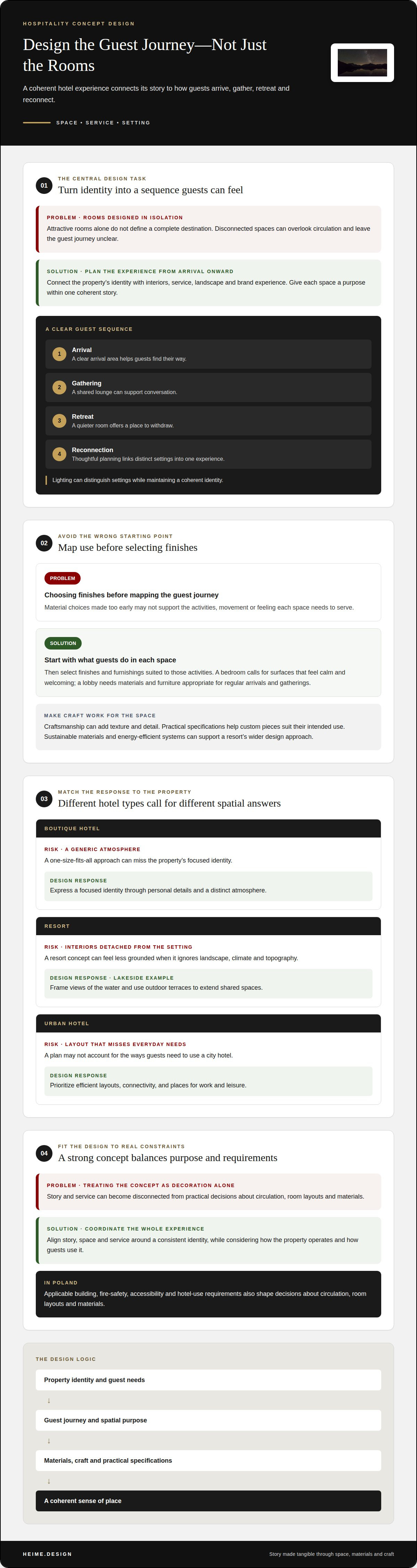
Each hotel type calls for a response suited to its setting and guests. A boutique hotel can express a focused identity through personal details and a distinct atmosphere. A resort can connect its interiors with the landscape, climate and topography. For example, a lakeside resort might frame views of the water and use outdoor terraces to extend shared spaces. An urban hotel may prioritize efficient layouts, connectivity and places for work and leisure. In Poland, applicable building, fire-safety, accessibility and hotel-use requirements also shape decisions about circulation, room layouts and materials.
Guest Movement and Connection
Guest movement is the planned sequence from arrival to gathering, retreat and reconnection. A clear arrival area helps guests find their way; a shared lounge supports conversation, while a quieter room offers a place to withdraw. Lighting can distinguish these settings while maintaining a coherent identity. Common mistakes include designing each room in isolation, overlooking circulation and choosing finishes before mapping the guest journey. For a countryside hotel, designers might orient a lounge toward the garden and create a quieter interior retreat for guests seeking privacy.
Examples of story-led hotels, coffee brands and members’ clubs
Hotel concept development turns a brand story into decisions guests can experience. Start by connecting the intended identity with the guest journey, then shape layouts and details around that relationship.
Concept Development and Spatial Layouts
Spatial planning gives a story practical form. For example, a heritage hotel concept inspired by regional publishing could inform a reading room, display shelving and quieter routes between shared and private spaces. The narrative should shape how guests use the hotel, not remain only in a presentation. STAGE offers another example of flexible programming: its hotel concept repurposed conference space for local events, including film sessions, birthday parties and yoga. A room can serve a broader purpose when its layout supports different activities.
Residential-Feeling Hotel Interiors
A residential feel comes from choices that make rooms comfortable and personal, rather than formal or anonymous. In a Polish city hotel, a lounge might combine warm timber, natural stone, table lamps and seating arranged for conversation. Local art can add cultural context without turning the room into a gallery. A hotel could also invite emerging artists to contribute rotating works, giving guests a changing point of interest while keeping the overall aesthetic coherent.
Brands and Guest Needs
Maslow’s hierarchy of needs can help a brand consider what guests value, from comfort and security to belonging and self-expression. A coffee concept might make the preparation ritual visible at a central counter, while a members’ club could pair lively gathering spaces with calm rooms for reading. These examples show how a brand story can inform layout and service, shaping a guest experience with purpose rather than relying on decoration alone.
When story and space need to align across a hospitality project, explore a coordinated hotel interior concept.
Using interior proportions, materials and craftsmanship to shape guest experience
Proportion, material and craft influence how guests experience a hotel, from moving through shared areas to settling into a room. Coherent design connects comfort with the property’s identity and gives each space a clear purpose.
Durability and Guest Needs
Hotel rooms see frequent use, so interiors need to remain comfortable while standing up to the demands of daily operation. Start by considering what guests do in each space, then select finishes and furnishings suited to those activities. A bedroom needs surfaces that feel calm and welcoming; a lobby needs materials and furniture appropriate for regular arrivals and gatherings. Craftsmanship can add texture and detail, while practical specifications help custom pieces suit their intended use. Sustainable materials and energy-efficient systems can also support a resort’s wider design approach.
Story and Emotional Guest Experience
A distinctive story gives guests a reason to connect with a place and remember their stay. It can build loyalty when the same values shape the room, shared spaces and personal touches. In a Polish countryside retreat, for example, a concept inspired by local craft might appear in a hand-finished reception desk, woven details and objects guests encounter in their rooms. These elements can create an emotional connection when they feel relevant to the setting rather than applied as decoration.
Proportion and materials also influence the pace of a stay. A quiet reading corner offers a different experience from an open dining area, even within one coherent design. Thoughtful lighting can support both uses, while custom furnishings make each space feel considered. When the hotel’s story, guest needs and material choices work together, the experience can remain distinctive as the property evolves.
Using local craftsmanship and materials to create a sense of place
Local craftsmanship gives hospitality design a physical narrative. Rather than applying regional motifs as decoration, identify what makes a place distinctive: its making traditions, available materials and surroundings. Connect each element to how guests use the space and to the property’s identity. The result feels inspired by place, not themed around it.
Consider a Polish lakeside hotel concept. Locally made ceramic pieces could serve guests at breakfast, while woven textiles bring warmth to a lounge. The craft becomes part of daily use, not an object displayed without context. A designer can develop this idea by connecting the maker’s technique, the material’s qualities and the function each item serves. That relationship gives the concept depth while keeping it contemporary.
Materials shape how guests experience arrival, rest and gathering. Timber can bring warmth to a shared room; stone can give an entrance a grounded feel. These choices work best when their finishes, colours and proportions support one narrative across the property. For example, a restrained palette inspired by local wood and stone could connect a mountain retreat’s interiors with the surrounding landscape without copying it literally.
Craft requires coordination with the wider design. Consider where a custom piece belongs, how guests interact with it and how it relates to lighting and circulation. This helps a hand-finished surface or locally made furnishing feel intentional within the room. It also keeps the narrative consistent across guest rooms and shared spaces, rather than limiting local character to a single decorative feature.
For a hospitality project shaped by place, develop a bespoke hotel interior concept that brings materials, craft and guest experience together.
Heime.design: Luxury Marine Interiors
heime.design is a natural next step when a hospitality concept needs expert interior design and project coordination, including for a luxury vessel. Its Luxury Marine Interiors service brings attention to identity, materials and guest experience into a marine setting. For international projects, Luxury Interior Design & Project Management connects design decisions with project coordination. This is especially relevant when a hotel, resort or vessel needs a coherent concept across spaces, rather than isolated visual choices.
For a hospitality project, the work can include bespoke interior design and project management shaped around the property’s needs. To discuss a project, contact heime.design.
Shape the Next Design Decision
The next step is to turn the concept into a clear project direction. Decide what experience the space should support, which qualities must remain consistent and where design choices need room to adapt. A focused brief connects creative intent with practical decisions as the work develops.
Luxury hospitality brand interior concept creation is more manageable when design and delivery are considered together. heime.design offers bespoke interior design, renovation and project management, bringing these needs into one project conversation. This approach can help when a hospitality vision calls for coordinated design decisions and a considered path from concept to implementation.
Discuss your concept with heime.design and take the next step with a clear direction for your space.
Frequently Asked Questions
How do you convince conservative hotel owners to push the boundaries with their concepts?
Connect creative choices to clear operational and guest needs. Explain how a proposed change affects arrival, room use, dining or relaxation, and how it fits the hotel’s identity. For example, present a new lounge layout with a plan and material samples, not mood imagery alone. A focused proposal makes the design decision easier to discuss.
What Defines a Luxury Stay?
A luxury stay is defined by considered comfort, personal attention and a consistent experience, not expensive finishes alone. Guests notice whether rooms support rest, shared spaces feel welcoming and service suits the setting. Thoughtful lighting, useful details and a calm sense of privacy can matter as much as a dramatic arrival space or signature material.
What is a luxury hospitality interior concept and what should it include?
A luxury hospitality interior concept is a clear design direction that connects the property’s identity with how guests use its spaces. It should guide layout, atmosphere, materials, lighting, furnishings and artwork, while accounting for the guest journey from entry to private rooms and shared areas. A written concept statement helps teams make consistent choices as the design develops.
How do luxury hotel interior concepts balance brand identity, guest experience, and local culture?
Balance the three by giving each a defined role: brand identity sets the character, guest needs shape how spaces function, and local culture informs relevant details. At Abbaye des Vaux de Cernay, the former Cistercian abbey’s Gothic architecture is preserved while the interiors adapt to modern hospitality. This shows how an existing character can remain legible while serving the needs of today’s guests.
What materials and finishes are durable and suitable for luxury hospitality interiors?
Choose materials according to each space’s use, cleaning needs and desired atmosphere. Specify finishes based on whether guests touch, walk on or place items against them. Review samples under the project’s lighting and consider how marks, wear and maintenance may affect their appearance. Stone, timber, textiles and metal can all contribute; suitability depends on the finish, placement and care requirements.


