

What if the most expensive element of your next project isn't the rare stone, but the hidden cost of a three-week shipyard delay? A flawless aesthetic vision often breaks against the hard realities of maritime engineering. Mastering superyacht interior refit management requires more than just an eye for design. It's a high-stakes balancing act. Ultra-luxury finishes must align perfectly with rigid safety regulations. You want a seamless transformation. Yet, misalignment between technical teams and designers often leads to expensive overruns and missed deadlines.
We understand that precision is the only path to success. This 2026 guide provides a clear roadmap for navigating the intersection of maritime engineering and high-end architecture. You'll learn how to bridge the gap between creative vision and shipyard execution. We'll show you how to maintain control over schedules while ensuring bespoke details meet strict IMO and SOLAS standards. From technical documentation to turnkey delivery, this is how you increase vessel value and ensure a frictionless process. Let's explore the essential strategies for coordinating stakeholders and protecting your investment.
Key Takeaways
- Align aesthetic modernization with structural engineering to preserve and increase vessel value.
- Master IMO and SOLAS compliance through the precise selection of certified fire-retardant materials.
- Use professional superyacht interior refit management to coordinate seamlessly between designers and shipyard teams.
- Implement a phased turnkey framework to ensure technical feasibility and reduce costly shipyard delays.
- Integrate neuroarchitecture and advanced lighting design to improve spatial flow and mental wellbeing at sea.
Defining the Scope: The Foundation of Superyacht Interior Refit Management
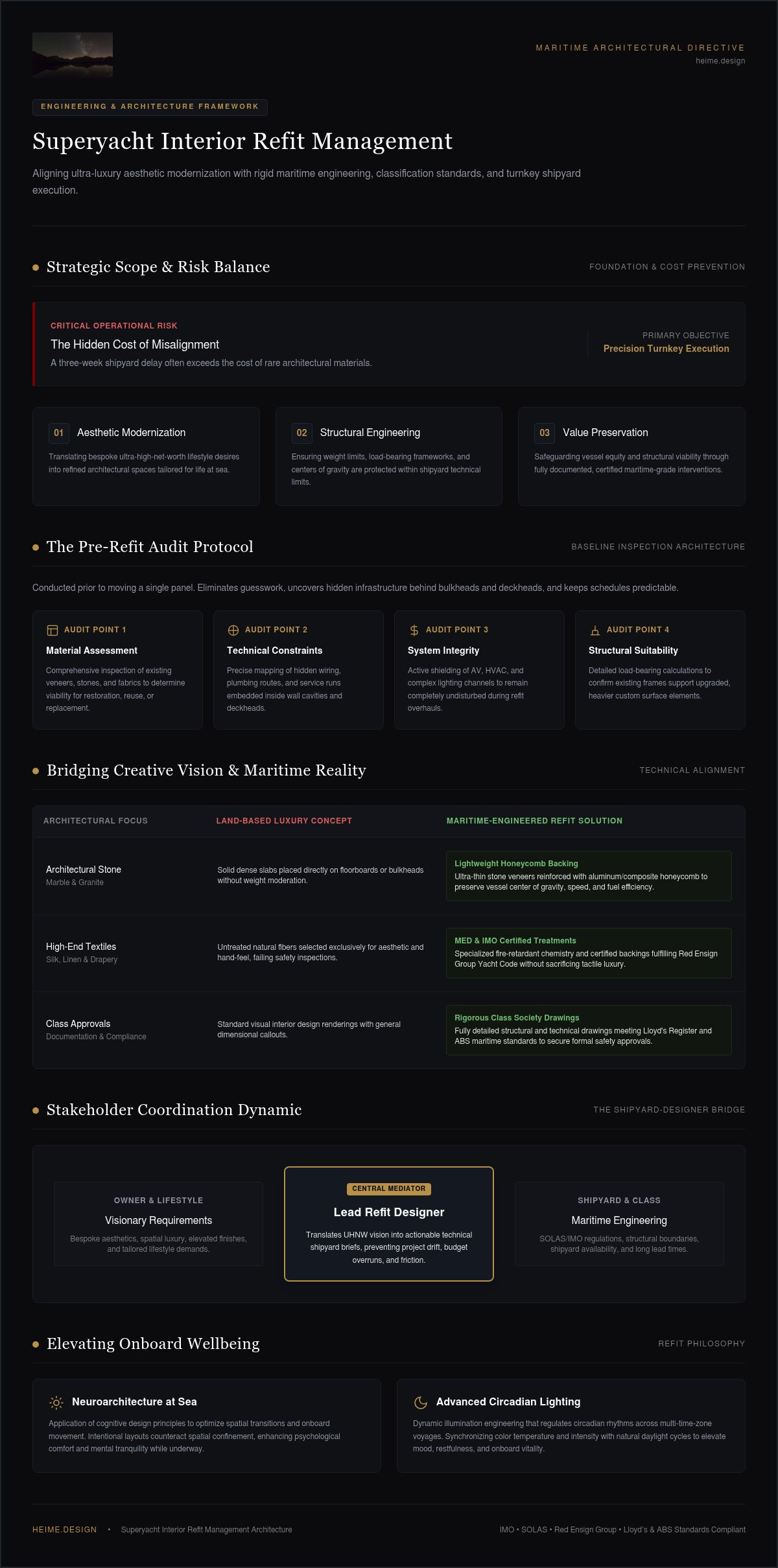
Success begins before the first panel moves. Professional superyacht interior refit management is a strategic alignment. It connects aesthetics, engineering, and logistics. It's a calculated effort. We modernize vessels while protecting structural integrity and market value. Primary objectives usually fall into three categories. Some owners seek aesthetic modernization. Others require structural repair or value preservation. Defining the scope early is the only way to prevent project drift. It ensures every stakeholder moves in the same direction.
The lead designer is the essential mediator. They translate an owner's vision into a technical shipyard brief. This requires a deep understanding of superyacht design and layout specifications. Every bespoke element must fit within the technical framework. Without this bridge, creative ideas clash with maritime reality. Friction follows. Delays become inevitable. A clear scope protects the design's intent while respecting the vessel's physical limits.
The Pre-Refit Audit and Condition Report
Precision requires a thorough audit. We examine the interior architecture in detail. We identify what stays and what goes. This report is your project's foundation. It eliminates guesswork. We evaluate materials and structural integrity. We look for hidden constraints. Wiring, plumbing, and reinforcements live behind bulkheads and deckheads. We document every system that must remain undisturbed. This process identifies potential issues before they become expensive shipyard changes. It keeps the budget under control and the schedule predictable.
- Material Assessment: We check the condition of veneers, stones, and fabrics for reuse or replacement.
- Technical Constraints: We map the infrastructure within the walls and ceilings to avoid surprises.
- System Integrity: We protect AV, HVAC, and lighting systems during the overhaul.
- Structural Suitability: We verify if existing frames can support new, heavier finishes.
Aligning Vision with Maritime Reality
Land-based luxury doesn't always work at sea. We translate UHNW lifestyle needs into a functional maritime brief. This is where superyacht interior refit management proves its worth. We manage the balance between bespoke desires and technical limits. Weight and stability are non-negotiable. Every slab of marble matters. We set realistic timelines. We account for shipyard availability and long material lead times. Our goal is a turnkey result. We deliver high-value interiors that respect the vessel's performance. The process is streamlined. The outcome is precise. We bridge the gap between the dream and the deck.
Navigating Regulatory Compliance and Maritime Engineering
Refits fail when they ignore the law. Regulatory compliance is the invisible backbone of luxury. Every fabric and finish must meet international standards. This is where superyacht interior refit management moves from the studio to the shipyard. We ensure every design choice aligns with IMO and SOLAS requirements. It's about safety first. High-end aesthetics mean nothing if the vessel fails a safety inspection.
Weight management is equally critical. Heavy stones or dense woods change a vessel's center of gravity. This impacts speed, fuel efficiency, and stability. We analyze the weight of every bespoke piece. If a material is too heavy, we find a technical solution. Lightweight honeycomb backings for marble slabs are a standard requirement. We preserve the luxury feel without compromising the hull's performance. Precision here is non-negotiable.
Fire Safety and Material Certification
Maritime fire safety is strict. We source MED-certified materials for every surface. This creates a challenge for designers. Ultra-luxury natural fibers like untreated silk or linen often fail fire tests. We bridge this gap. We use specialized treatments and backings to bring high-end textiles into compliance. Every piece of bespoke furniture must meet the Red Ensign Group Yacht Code regulations. This ensures your interior is as safe as it is beautiful. If you need help sourcing compliant materials, our luxury interior design team specializes in maritime-ready finishes.
Technical Documentation for Class Approval
Visual renderings aren't enough for class societies. Organizations like Lloyd’s or ABS require rigorous technical drawings. We provide detailed documentation for every architectural change. This includes fire load calculations and egress path clearances. We coordinate with marine engineers daily. We ensure that new decorative panels don't block access to fire dampers or electrical junction boxes. Our documentation covers:
- Electrical Integration: Mapping smart home systems and lighting to maritime electrical codes.
- Structural Fixings: Engineering secure attachments for heavy art or furniture to withstand sea motion.
- Ventilation Flow: Ensuring aesthetic bulkheads don't compromise HVAC performance.
Precision in documentation prevents costly rework. It ensures class approval is a formality, not a hurdle. We handle the technical details so the creative vision remains intact. This structured approach is the only way to deliver a compliant, high-value refit on time.
Managing the Shipyard-Designer Dynamic
Shipyards are technical environments built on schedules and heavy machinery. Design studios focus on inspiration and intricate detail. These two worlds often collide. Effective superyacht interior refit management acts as the essential mediator. We translate creative intent into a technical language that shipyard foremen understand. This prevents the "lost in translation" errors that lead to expensive rework. We manage expectations. We protect the owner's vision while respecting the shipyard's operational constraints. Precision here is about communication as much as engineering.
Change orders are the primary cause of budget inflation and timeline drift. We handle them with a structured approval process. Every request is evaluated for its impact on the critical path. We don't just say yes. We analyze. If a design change requires moving a structural bulkhead, we present the cost and time implications immediately. This transparency keeps the project moving. It ensures the final result matches the initial promise without unexpected financial surprises.
On-Site Supervision and Quality Control
Installation is where design meets reality. We establish a constant presence at the shipyard to monitor precision. This isn't just about checking progress. It's about verifying that every contractor adheres to the technical documentation and material specifications. The interface between bespoke joinery and the yacht’s structural steel is a common failure point. We manage this connection. We ensure that millwork accounts for the vessel's natural movement and vibration. Our site supervision ensures that the final fit and finish meet ultra-luxury standards.
Cross-Border Contractor Coordination
A world-class refit often requires global talent. We leverage international project management to source specialized artisans from across Europe. This might involve Italian stonemasons or French upholsterers. Coordinating these teams is a logistical puzzle. We manage the arrival of high-value furniture and art from multiple countries. Every team must also comply with local shipyard safety protocols. We handle the paperwork and the people. This allows the creative vision to be executed by the best in the world, regardless of where the vessel is docked.
- Logistics Management: We track high-value shipments to ensure they arrive exactly when the shipyard is ready.
- Artisan Sourcing: We connect the project with vetted craftsmen who understand maritime constraints.
- Safety Compliance: We ensure all external contractors follow strict shipyard safety and insurance rules.
How to Execute a Turnkey Refit: A Step-by-Step Framework
A successful refit is a linear, disciplined progression. It isn't just a series of tasks. It's a structured journey from vision to delivery. Professional superyacht interior refit management ensures that no phase begins without the data from the previous one. This eliminates guesswork. We follow a five-phase framework to maintain control over the budget, the timeline, and the final aesthetic result. It's a roadmap designed for precision.
- Phase 1: Concept and Technical Feasibility. We define the aesthetic vision. We immediately test it against the vessel's physical and regulatory limits.
- Phase 2: Detailed Design and Material Procurement. We produce technical documentation. We begin the complex task of sourcing international materials.
- Phase 3: Shipyard Selection and Contract Negotiation. We find the right facility. We negotiate based on a finalized technical brief to prevent price creeping.
- Phase 4: Execution and On-Site Management. This is the active phase. We supervise every contractor and manage the daily shipyard dynamic.
- Phase 5: Commissioning and Final Handover. We test every system. We ensure every finish is flawless before the owner steps on board.
Procurement and Long-Lead Item Management
Long-lead items are the primary cause of project delays. We identify high-end stones, rare veneers, and custom fabrics early in the process. We secure these materials months before the shipyard slot begins. We manage the entire supply chain. We perform quality control at the source for custom-manufactured furniture. This prevents the "wait-and-see" approach that derails schedules. If you're preparing for a 2026 project, our turnkey interior design service manages these logistical hurdles from day one.
The Final Handover and Documentation
The handover is about more than a simple walkthrough. We execute a rigorous punch-list process. Every detail must meet the owner’s standards. We compile a comprehensive "As-Built" documentation package. This is a complete technical record of every architectural change, material specification, and system integration. It's essential for the vessel’s long-term records. We also provide maintenance guides for specialized materials and neuroarchitecture elements. We don't just finish the job. We ensure you have the knowledge to maintain the interior's value for years to come. This is the final step in professional superyacht interior refit management.
Elevating the Onboard Experience through HEIMÉ’s Refit Philosophy
Refit projects are often viewed through the lens of simple maintenance. We see them as opportunities for evolution. Professional superyacht interior refit management is the vehicle for this change. It's about aligning the vessel with a modern understanding of wellness and cognitive ease. This philosophy treats the interior as a living environment. We don't just replace panels. We rethink how the owner lives on board. It's a legacy investment. A refit executed with this level of intentionality ensures the vessel remains a high-value asset within a global estate for years to come.
Neuroarchitecture in the Marine Environment
Cognitive science is our primary design tool. Confined maritime spaces can feel restrictive over time. We use neuroarchitecture to counteract this. This approach is central to the luxury marine interior architecture we deliver. We optimize spatial flow to reduce mental fatigue. We use specific geometries and materials that the brain perceives as calming. Lighting is a critical element. We design smart systems that mimic natural light patterns. This supports healthy circadian rhythms during transoceanic crossings. Wellness isn't an add-on. It's built into the bulkheads. We create owner cabins that act as sanctuaries for mental recovery. Every detail supports the human experience at sea. It's a precise application of science to luxury living.
The Turnkey Advantage for UHNW Clients
Technical friction is the enemy of a successful refit. Our turnkey coordination removes this obstacle. We provide a single point of accountability for the entire lifecycle. This minimizes owner involvement in shipyard disputes or procurement delays. You focus on the creative direction. We manage the logistics. This is the core of effective superyacht interior refit management. We bridge the gap between high-level vision and technical execution. Our team handles the cross-border coordination and the regulatory compliance. This ensures a seamless transition from the shipyard back to the water. It's about delivering a finished product that is ready for immediate enjoyment. We protect your time while maximizing the vessel's potential. Peace of mind is the ultimate luxury in a complex refit environment.
Our process is designed for clarity and results. We don't let technical hurdles compromise the aesthetic vision. Instead, we use our expertise to make the impossible functional. This is how we deliver value. We ensure the vessel reflects the owner's lifestyle perfectly. Every project is a commitment to precision and harmony. We move the reader quickly from a shipyard announcement to a clear invitation for engagement. Your vision deserves a streamlined path to reality.
Securing the Future of Your Vessel
A successful refit is more than a visual update. It's a strategic investment in your vessel's legacy. We've discussed how aligning maritime engineering with bespoke design ensures a seamless delivery. From navigating strict IMO codes to implementing a turnkey framework, precision is the only path to success. The future of luxury at sea lies in the balance of technical safety and cognitive wellness.
Professional superyacht interior refit management provides the necessary bridge between shipyard realities and your creative vision. We offer technical precision in maritime documentation and multilingual international coordination to eliminate project friction. Our specialized neuroarchitecture expertise ensures that every space is optimized for mental wellbeing. This structured approach protects your time and increases the vessel's long-term value.
Your vision deserves an execution defined by clarity and intentionality. We're ready to help you navigate the complexities of the 2026 refit landscape. Consult with HEIMÉ for your next Superyacht Refit to ensure your project is delivered with absolute precision. Let's begin the transformation today.
Frequently Asked Questions
What is the difference between a cosmetic refit and a structural interior refit?
A cosmetic refit focuses on surface-level updates like new fabrics, veneers, or loose furniture. It's an aesthetic refresh. A structural interior refit involves changing the vessel's layout or moving bulkheads. This requires naval architecture and class approval. Structural changes impact weight and stability. Both require professional superyacht interior refit management to ensure the design remains compliant with maritime safety standards. Knowing the difference helps in setting realistic shipyard timelines.
How long does a typical superyacht interior refit management project take?
Timelines vary based on the project's complexity. A cosmetic refresh might take four to eight weeks during a winter maintenance slot. Major structural overhauls can last four to eight months. The planning phase is equally critical. It often requires six months of preparation before the vessel enters the shipyard. This lead time is necessary for sourcing long-lead materials and finalizing technical drawings. Proper coordination prevents the delays that often plague unplanned refits.
What maritime regulations most impact luxury interior design?
IMO and SOLAS standards are the most influential regulations. They dictate fire retardancy for all interior materials. Every fabric, carpet, and wall covering must be MED-certified. The Red Ensign Group Yacht Code also sets strict rules for large commercial yachts. These regulations ensure passenger safety during emergencies. Navigating these requirements is a core part of superyacht interior refit management. It ensures the luxury interior is both beautiful and legally compliant for international waters.
Can I keep my existing furniture during a superyacht refit?
You can keep existing furniture if the structural integrity remains sound. High-quality bespoke pieces often benefit from professional refinishing or reupholstering. This is a sustainable way to preserve the vessel's character. However, all updated finishes must meet current fire safety standards. We evaluate every piece for its weight and compliance before including it in the new design. Reusing furniture requires precise logistics to protect the items during the heavy shipyard construction phase.
How do you coordinate between designers and shipyards in different countries?
We use a centralized project management system to bridge the gap between global stakeholders. Our multilingual team facilitates communication between owners, European artisans, and shipyard managers. We rely on precise technical documentation to ensure every team works from the same data. Regular site visits are mandatory. This on-site presence ensures that a designer’s vision in one country is executed perfectly by a shipyard in another. It's about maintaining a single point of accountability.
What is the role of technical documentation in a yacht refit?
Technical documentation is the shipyard’s instruction manual. It translates aesthetic concepts into engineering reality. These drawings include fire load calculations, electrical schematics, and structural fixings. Classification societies like Lloyd’s or ABS require this documentation for final approval. Without it, the shipyard cannot begin work safely. Clear documentation reduces the risk of errors and costly rework. It provides a permanent record of the vessel's "as-built" state for future maintenance or resale.
How does neuroarchitecture improve the yachting experience?
Neuroarchitecture uses cognitive science to improve mental wellbeing on board. It addresses the psychological impact of living in confined maritime spaces. We optimize lighting to support natural sleep cycles during long voyages. Spatial flow is designed to reduce stress and improve social interaction. By choosing specific materials and colors, we create an environment that the brain perceives as safe and restorative. This approach transforms a luxury cabin into a sanctuary for mental recovery.
Why is turnkey project management essential for UHNW individuals?
Turnkey management offers a single point of accountability. It removes the burden of technical friction from the owner. UHNW individuals value their time and peace of mind. We handle the complex logistics, contractor disputes, and regulatory hurdles. The owner provides the creative vision, and we manage the execution. This ensures a frictionless experience from the initial concept to the final handover. It's the most efficient way to deliver a high-value, bespoke interior.


