

A yacht is more than a vessel. It's a psychological landscape where every millimeter dictates your state of mind. Many owners settle for interiors that look stunning in a brochure but feel cramped or cold once they're actually at sea. True luxury marine interior architecture solves this by prioritizing the human experience over simple decoration. It's about moving beyond aesthetic appeal to create a space that breathes with you.
You've likely faced the friction of cross-border shipyard coordination or the rigid limits of marine technical constraints. It's a complex process that requires more than just a vision. We're here to bridge that gap. This article shows you how technical precision and neuroarchitecture converge to create the world's most sophisticated yacht interiors. You'll discover how to define the 2026 standard for high-performance, emotional sanctuaries.
We'll examine how neuro-optimized design reduces stress in confined environments. You'll learn about the technical documentation that ensures shipyard precision across international borders. We're moving toward a future where seamless project management and emotional warmth are the baseline for every voyage. Let's explore the intersection of science and sea.
Key Takeaways
- Learn why 2026 standards prioritize structural thinking and technical essentialism over basic decoration.
- Discover how rigorous design documentation ensures shipyard precision and manages critical weight constraints.
- See how luxury marine interior architecture applies neuroarchitecture to turn confined spaces into calm, high-performance sanctuaries.
- Explore how strategic refits modernize legacy hulls to preserve asset value while updating architectural layouts.
- Understand the turnkey process that creates a seamless connection between international owners and European shipyards.
Defining Luxury Marine Interior Architecture in 2026
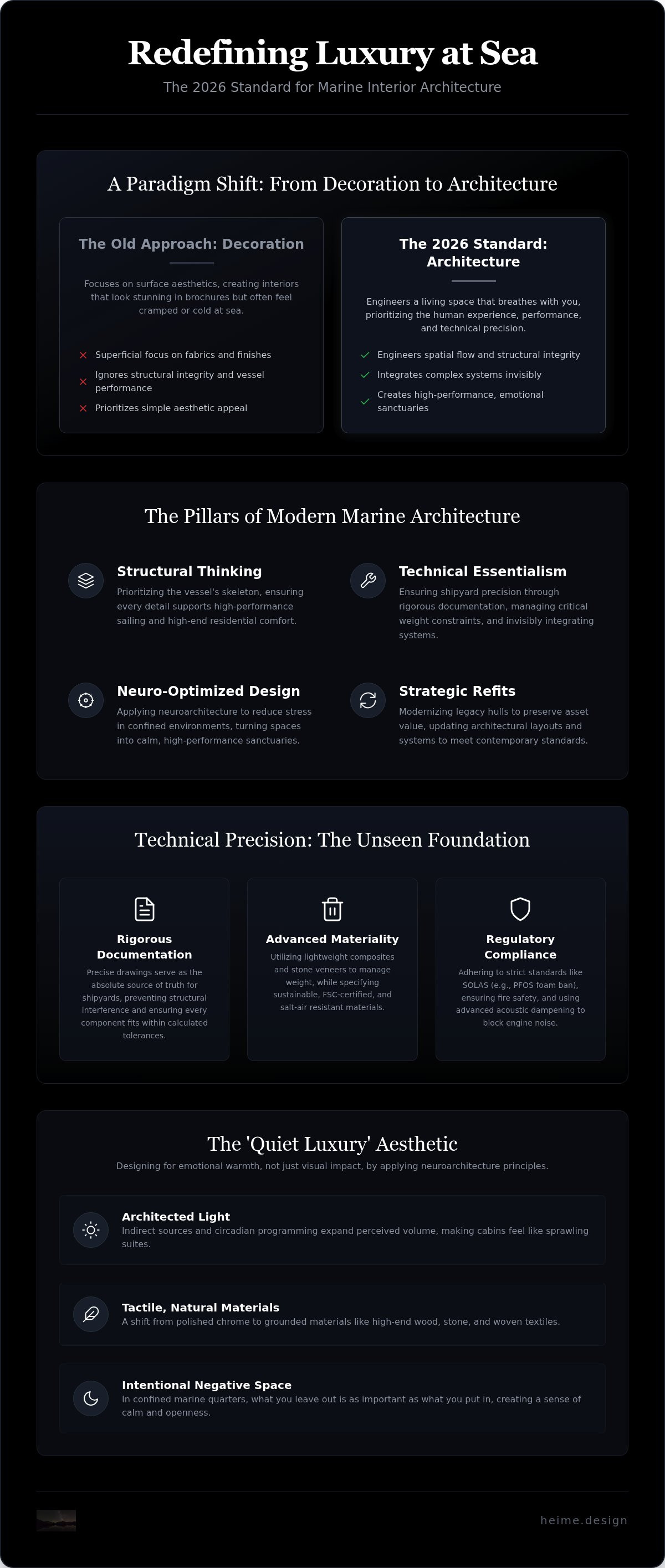
Architecture is not just choosing fabrics. In 2026, luxury marine interior architecture is defined by structural integrity. It's the difference between fitting out a boat and engineering a living space. While decorators focus on the surface, architects consider how every bulkhead and joinery detail affects the vessel's performance. This approach requires a deep understanding of the ship's skeleton. It's about creating a foundation that supports both high-performance sailing and high-end residential comfort.
The Architectural Core of Yacht Design
Yacht interiors are non-linear. Every curve serves a purpose. Defining spatial flow requires a mastery of the vessel's geometry. This process is deeply tied to naval architecture and design, where interior decisions impact stability and weight distribution. In 2026, technical essentialism means integrating complex systems like HVAC and AV so they are completely invisible. We don't just hide wires. We design the structure to accommodate them without losing a single centimeter of headroom. Precision is the priority.
Quiet Luxury and the 2026 Aesthetic
The shiny era is over. Owners now seek tactile, natural materials that feel grounded. High-end wood, stone, and woven textiles replace polished chrome and gloss. This shift toward Quiet Luxury relies on negative space. In confined marine quarters, what you leave out is as important as what you put in. We architect light to expand volume. By using indirect sources and circadian programming, we make a 20-meter cabin feel like a sprawling suite. It's about emotional warmth, not just visual impact.
The interior architect acts as the lead coordinator. They are the bridge between the owner's vision and the shipyard's execution. They manage the friction between aesthetic desires and hydrodynamic requirements. This coordination ensures that the final build is both a high-performance vessel and a sophisticated sanctuary. It's a balanced approach to luxury marine interior architecture that prioritizes clarity and function. By maintaining this focus, we ensure that every project is delivered with intentionality and precision.
Technical Precision: Documentation and Materiality
Design at sea is an exercise in restraint and engineering. In luxury marine interior architecture, the visual layer is only as good as the technical foundation. Shipyards don't work from mood boards; they work from precise drawings. These documents serve as the absolute source of truth for every contractor on site. Without them, the risk of structural interference or weight imbalance is too high. Precision is our primary language.
Engineering the Interior
Managing tolerances in a shifting environment requires a specialized mindset. The hull flexes, vibrates, and moves through three axes. We apply many principles from bespoke aircraft interior design to solve these spatial puzzles. Both disciplines prioritize weight distribution and mechanical integration. Every centimeter is negotiated. By providing comprehensive technical design documentation, we ensure that complex HVAC and lighting systems fit perfectly within the structural ribs of the vessel.
Advanced Marine Materiality
The 2026 standard for materials is defined by strict compliance and innovation. As of January 1, 2026, amendments to SOLAS Chapter II-2 prohibit the installation of firefighting foams containing PFOS. This regulation influences how we specify fire-suppression integrated materials throughout the cabins. Weight management remains equally critical for vessel performance. We utilize innovative composites and lightweight stone veneers that provide the gravitas of traditional materials at a fraction of the mass. Sustainable choices like FSC-certified woods and recycled composites are now the expectation for eco-conscious owners.
Marine-grade compliance goes beyond fire ratings. High-end furniture must be tailored for constant motion and high salinity. Standard residential pieces will fail within months. We specify internal locking mechanisms for all joinery and weighted bases for loose furniture. Every fabric and metal finish undergoes rigorous testing for salt air resistance. This prevents the worn feel that often plagues older vessels. Acoustic insulation is the final layer. We use advanced dampening composites to block engine noise, ensuring the interior remains a quiet sanctuary. By combining these technical requirements with aesthetic vision, we redefine luxury marine interior architecture for a new generation of owners.
The Strategic Value of Luxury Yacht Interior Refits
A new build isn't always the most efficient route to a high-performance vessel. For many owners, the strategic modernization of an existing hull offers a faster path to a bespoke sanctuary. A well-executed refit can significantly increase a vessel's market valuation while bypassing the long lead times of new construction. This is where luxury marine interior architecture adds the most value. It's about seeing the structural potential hidden behind dated finishes. It's a calculated investment in both lifestyle and equity.
The marine interiors market is projected to grow to $5.26 billion by 2026. This growth reflects a clear shift toward asset preservation. The luxury yacht interior refit process allows owners to retain a trusted hull while upgrading the living experience to modern standards. By focusing on architectural layouts rather than just surface decoration, we ensure the vessel remains relevant in a competitive market. It's about longevity and precision.
Structural Transformation of Existing Vessels
Legacy yachts often feature segmented layouts that feel restrictive and dark. We open these floor plans to create the fluid, social environments expected in 2026. This transformation involves more than just aesthetics; it requires a complete rethink of spatial flow. We integrate intelligent, neuro-optimized lighting systems that support circadian rhythms. We also embed smart home technology into older marine infrastructures. These upgrades reduce cognitive load and bring legacy vessels into the digital age. It's a technical overhaul that prioritizes human wellbeing.
Refit Management for International Owners
Managing a project across borders is notoriously complex. We bridge the gap between international owners and shipyards across Mediterranean and Northern European regions. Our site supervision ensures that every detail matches the technical documentation. This level of oversight is critical for maintaining quality and staying on schedule. Through architectural precision, we optimize budgets and prevent common shipyard delays. We provide a streamlined workflow that moves from initial concept to the first voyage with minimal friction. It's about delivering a turnkey result that feels intentional and organized. This approach ensures that the luxury marine interior architecture is executed exactly as envisioned, regardless of where the shipyard is located.
Neuroarchitecture: Designing for Wellbeing at Sea
Living on the water presents unique neurological challenges. Confinement, constant motion, and isolation can increase cortisol levels over time. Luxury marine interior architecture in 2026 goes beyond aesthetics to address these biological realities. Neuroarchitecture is the study of how our brains respond to the built environment. In a marine context, this means designing spaces that actively reduce stress and promote mental clarity. It's about turning a vessel into a restorative sanctuary.
Cognitive load is a major factor in yacht design. When a space feels cluttered or the layout is confusing, the brain works harder to process the environment. We use neuro-optimized principles to simplify these surroundings. By streamlining sightlines and creating intuitive transitions between decks, we lower the mental energy required to navigate the vessel. This creates a sense of effortless ease that defines modern luxury.
Psychological Spatial Planning
Geometry and texture are powerful tools for creating emotional warmth. We use soft curves and varied tactile surfaces to simulate the comfort of a land-based home. The height of a ceiling or the length of a sightline can drastically change how we perceive volume. In guest and crew quarters, applying neuroarchitecture interior design ensures that everyone on board remains balanced and productive. We prioritize open vistas and strategic mirror placement to prevent the feeling of being trapped. Every architectural choice is a psychological one.
Sensory Optimization
The ocean is a high-stimulus environment. Intense sunlight and constant white noise can be draining over long voyages. We manage these factors through sensory optimization. Haptic luxury plays a key role here. We select materials that offer a grounding touch, from cool stone to warm, natural woods. Color psychology is equally important. In high-salinity environments with bright reflection, we use muted, desaturated tones to prevent visual fatigue. We also integrate acoustic dampening to filter the rhythmic hum of the engines into a soothing background frequency.
Biophilic integration brings the ocean's calm inside. We don't just provide a view; we mirror the water's patterns and organic shapes within the joinery. This connection to nature is proven to lower heart rates and improve sleep quality. Circadian lighting systems further support this by mimicking the natural progression of daylight. This regulates sleep patterns during extended periods at sea. If you're ready to transform your vessel into a high-performance wellness retreat, explore our bespoke neuroarchitecture services. We bridge the gap between scientific precision and marine luxury.
Turnkey Project Management for International Marine Builds
Turnkey management is the final layer of luxury marine interior architecture. It's about accountability. We act as the single point of contact between the owner's vision and the shipyard's technical constraints. European shipyards are world-class, but communication gaps can lead to costly delays. Our multilingual team removes this friction. We manage the Triangle of Quality, which balances the owner, the architect, and the shipyard. This ensures that the high-performance sanctuary we designed is exactly what is delivered. It's a streamlined path from concept to the first voyage.
The Lifecycle of a Marine Design Project
A successful build follows a linear, logical flow. We divide the process into three distinct phases to maintain precision and clarity. Every step is designed to reduce the owner's cognitive load.
- Phase 1: Concept and neuro-spatial analysis. We begin by mapping the human experience. We analyze how geometry and flow will impact the mental clarity and wellbeing of those on board.
- Phase 2: Technical documentation and permit support. We produce the source of truth for the shipyard. This includes all drawings and coordination with relevant authorities for compliance and safety.
- Phase 3: Construction coordination and site supervision. We are on the ground. We supervise the installation of joinery, lighting, and systems to ensure they meet our rigorous 2026 standards.
International Coordination Excellence
Managing cross-border logistics for FF&E and specialized materials requires meticulous planning. Moving custom furniture from a workshop in one country to a shipyard in another involves complex transport steps. We leverage international project management to support remote owners who cannot be on-site every week. This oversight is vital for preserving the value of legacy marine estates and generational properties. Whether the vessel is a new build or a heritage refit, our goal is the same. We provide a frictionless experience that results in a neuro-optimized sanctuary. This is the 2026 standard for luxury marine interior architecture. It's professional, organized, and entirely focused on high-quality output.
Defining Your Future at Sea
The 2026 standard for luxury marine interior architecture is no longer defined by surface-level trends. It's built on technical precision and a deep understanding of human biology. We've explored how neuroarchitecture reduces the cognitive load of life on the water and how rigorous documentation ensures your vision survives the shipyard process. Your vessel should be a high-performance sanctuary that supports your wellbeing through every voyage. It's a calculated balance of engineering and emotion.
heime.design provides the specialized expertise needed to bridge the gap between international owners and European shipyards. Our team offers comprehensive technical documentation and specialized neuroarchitecture services to ensure every detail is intentional. We handle the complex multilingual coordination required for international project management. This allows you to focus on the journey while we manage the Triangle of Quality between owner, architect, and builder. We're ready to bring your vision to life with precision and quiet confidence.
Start your luxury marine transformation with heime.design. Let's create a space that truly breathes with you.
Frequently Asked Questions
What is the difference between yacht decoration and marine interior architecture?
Yacht decoration focuses on the aesthetic layer, such as selecting fabrics and loose furniture. In contrast, luxury marine interior architecture involves structural engineering and spatial planning. It addresses how bulkheads, HVAC systems, and lighting integration affect the vessel's performance. Our architects prioritize the technical foundation before the visual finish. This ensures that every design choice supports the ship's stability and the owner's long-term comfort at sea.
How long does a typical luxury yacht interior refit take to complete?
The timeline for a refit varies based on the project's complexity and the vessel's size. A cosmetic refresh might take a few months, while a full structural overhaul of a superyacht often requires six to twelve months. This duration includes the initial concept, technical documentation, and the physical shipyard work. We focus on architectural precision to reduce delays. Clear documentation ensures contractors have a definitive guide, which helps keep the project on schedule.
Can neuroarchitecture really improve the experience of living on a yacht?
Neuroarchitecture significantly improves the living experience by designing for the human brain's response to confined spaces. We use specific geometries and lighting to reduce cognitive load and lower stress levels. Circadian lighting systems regulate sleep patterns on long voyages, while biophilic elements bring the ocean's calm inside. These scientific principles turn a yacht from a simple boat into a restorative sanctuary. It's about designing for mental clarity and emotional wellbeing.
How do you manage weight constraints in a luxury marine interior?
Weight management is a technical discipline that balances luxury with performance. We specify innovative materials like honeycomb-backed stone veneers and advanced carbon-fiber composites. Every item's mass is tracked in a comprehensive weight schedule to ensure it doesn't compromise the vessel's stability or speed. This rigorous approach allows us to deliver high-end finishes without the traditional weight penalties. It's a critical component of luxury marine interior architecture that ensures the vessel performs as engineered.
Is it possible to manage a marine interior project remotely from another country?
Managing a project remotely is entirely possible with a dedicated turnkey management team. We act as your eyes and ears on the ground, providing regular site supervision and progress reports. Our multilingual team bridges the gap between your vision and the shipyard's execution in different European countries. You don't need to be present for every technical meeting. We ensure the build follows the documentation precisely, allowing you to focus on the final result.
What are the essential technical documents needed for a shipyard to begin work?
Shipyards require a comprehensive set of technical drawings to begin construction without errors. These include detailed joinery sections, electrical and HVAC routing plans, and material finish schedules. We also provide documentation for fire-rating compliance and weight distribution. These drawings serve as the absolute source of truth for all contractors. High-quality documentation prevents the friction of on-site guesswork and ensures that every structural element is installed correctly the first time.
How does heime.design coordinate with shipyards in different European countries?
heime.design coordinates with shipyards through a combination of multilingual communication and rigorous site supervision. Our team speaks English, Spanish, and Polish, which helps resolve complex technical issues with local contractors across Europe. We bridge the cultural and professional gaps that often cause friction in international builds. By providing clear technical documentation in the shipyard's preferred format, we maintain a streamlined workflow. This ensures that your project moves from concept to completion with maximum efficiency.
What are the key material trends for luxury yachts in 2026?
The 2026 material standard focuses on sustainability and regulatory compliance. We're seeing a shift toward FSC-certified woods and recycled composites that meet new IMO PFOS-free fire-rating requirements. Tactile, natural materials are replacing high-gloss finishes to support a Quiet Luxury aesthetic. Innovative lightweight veneers allow for the use of natural stone without the traditional weight. These trends reflect a broader movement toward technical essentialism and environmental responsibility in the marine industry.


