

What if your home could actually lower your cortisol levels by 60% just through the patterns on your walls? Most luxury spaces look beautiful but feel cold. You know that a generic high-end room often fails to provide the deep restoration your mind needs after a high-pressure day. It's time to move beyond aesthetics. By applying neuroarchitecture interior design, we can create environments that actively support your brain's health. This shift from visual luxury to cognitive luxury represents the future of high-performance living.
You deserve a space that acts as a sanctuary for your nervous system. In this article, you'll discover how the intersection of neuroscience and interior architecture creates environments that optimize mental clarity and emotional wellbeing. We'll provide the scientific justification for investing in design that prioritizes your biology. You will learn how specific factors like circadian lighting and fractal geometry can improve your sleep, focus, and long-term resilience. We're moving toward a more intentional way of living. Let's explore how your environment can become your greatest asset for cognitive recovery.
Key Takeaways
- Discover how neuroarchitecture interior design uses neuroscience to create spaces that actively lower cortisol and enhance focus.
- Learn to apply circadian lighting and fractal patterns to synchronize your biological rhythms and improve sleep quality.
- Understand the technical requirements for implementing cognitive luxury across estates, yachts, and private aviation.
- Explore the importance of precise technical documentation and turnkey management in delivering high-performance environments.
- Realize the value of personalized cognitive profiling to ensure your home supports your unique emotional and mental needs.
Understanding Neuroarchitecture in Modern Interior Design
Your environment is constantly shaping your brain. Neuroarchitecture is the study of how the built environment impacts our neural pathways and cognitive function. It goes beyond the vague promises of general wellness design. While wellness design often focuses on subjective comfort, neuroarchitecture interior design relies on data-driven principles to influence biological outcomes. In 2026, the demand for a cognitive sanctuary has become the new standard in luxury real estate. High-stress lifestyles require more than a beautiful home; they require a space that facilitates mental recovery.
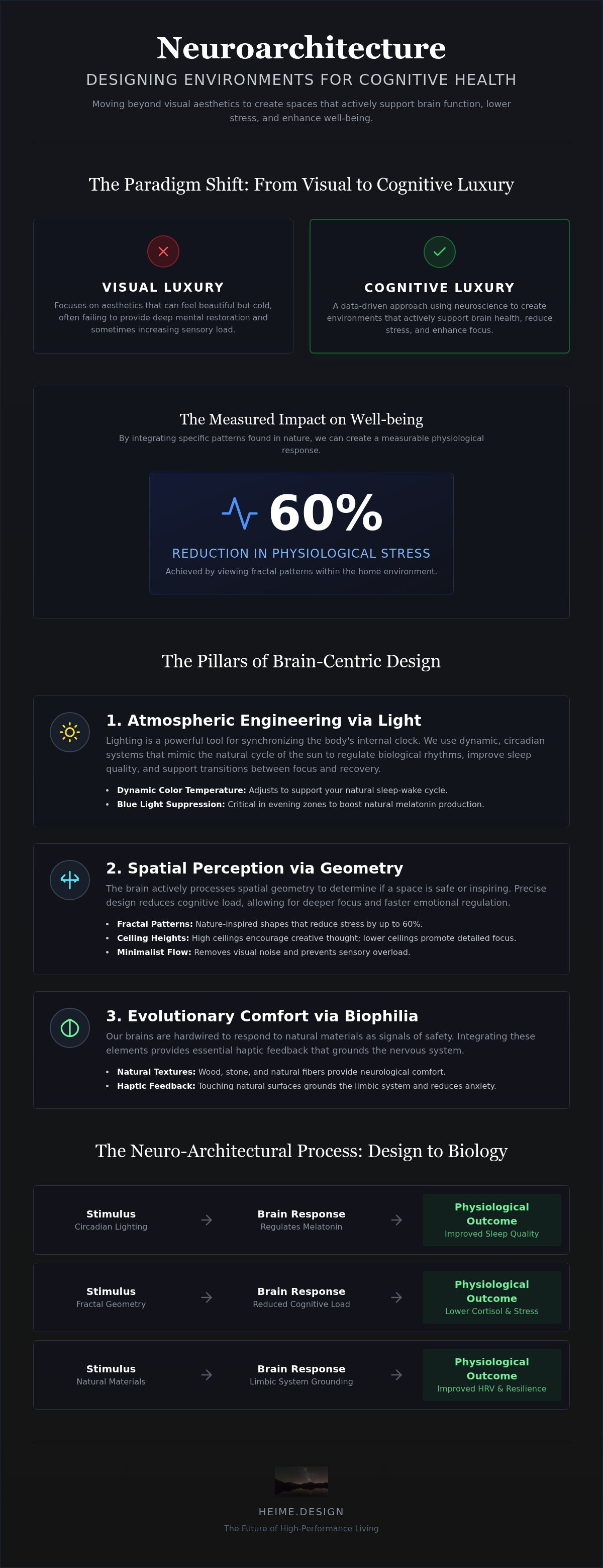
The prefrontal cortex plays a vital role in this process. This area of the brain is responsible for executive function and decision-making. It actively processes spatial geometry and architectural volume to determine if a space is safe or inspiring. When a room is designed with scientific precision, it reduces the cognitive load on your brain. This allows for deeper focus and faster emotional regulation. It is a shift from designing for the eye to designing for the mind.
The Science of Spatial Perception
Your brain interprets ceiling heights and room proportions as signals for behavior. High ceilings often stimulate the prefrontal cortex to favor creative, abstract thinking. Conversely, lower ceilings can promote detail-oriented focus and a sense of containment. Minimalist design philosophy uses negative space to prevent sensory overload. By removing visual noise, we allow the brain to rest. Neuroarchitecture traces its formal roots back to the Salk Institute in 2003, where researchers began bridging the gap between neuroscience and the built environment.
From Aesthetics to Physiological Response
Modern design is now a form of multisensory environmental engineering. We can measure the success of a layout by tracking cortisol levels and heart rate variability (HRV). A well-planned interior can lower stress markers and improve heart rate stability. This approach integrates the neuroscientific principles of aesthetics to ensure every material and light source supports your biology. Bespoke interior architecture services provide the necessary foundation for this cognitive health. It is no longer about visual decoration. It is about creating a precise physiological response that fosters long-term resilience and mental clarity.
The Pillars of Brain-Centric Design: Light, Geometry, and Biophilia
Effective neuroarchitecture interior design rests on three fundamental pillars: light, geometry, and material connection. These elements do not just decorate a room. They communicate directly with your nervous system. Research from the Academy of Neuroscience for Architecture shows that our brains are hardwired to seek specific environmental cues for safety and focus. When these cues are missing, the brain remains in a state of low-level alarm. This constant vigilance prevents true recovery.
Geometry plays a specific role through fractal patterns. These are self-similar shapes found in nature, like the veins of a leaf or the grain of oak. According to the Fluency Theory of visual processing, our brains process these patterns with ease. This "fluency" reduces cognitive load. In fact, viewing fractal patterns in a home environment can reduce physiological stress by up to 60%. Minimalist spatial flow further supports this by removing visual clutter that competes for your attention.
Atmospheric Engineering through Lighting Design
Lighting is the most powerful tool for syncing your internal biological clock. Circadian systems adjust color temperature and intensity to mimic the natural sun. In evening relaxation zones, blue light suppression is critical for melatonin production. We use dynamic lighting to help you transition between high-intensity focus and deep recovery. Integrating lighting design for high end interiors into the early technical stages ensures your home supports your sleep-wake cycle. It is about engineering an atmosphere that commands your biology to rest.
Biophilic Integration and Evolutionary Comfort
The brain responds to natural textures like wood and stone as "safe" signals. This evolutionary preference provides a neurological necessity for haptic feedback. Touching a cool stone surface or a warm timber grain grounds the limbic system. We prioritize high end furniture selection based on tactile comfort and neuro-ergonomics rather than visual trend. Even factors like indoor air quality and subtle scent play a role in calming the brain's emotional center. If you are ready to refine your environment, exploring bespoke interior architecture can help align your home with your cognitive needs.
Neuroarchitecture for UHNW Estates, Yachts, and Private Jets
Most discussions regarding neuroarchitecture focus on public healthcare or corporate offices. However, the most profound impact of neuroarchitecture interior design is found in the private sectors of high-net-worth individuals. For the "Global Nomad," maintaining cognitive stability across multiple residences is a significant challenge. Constant travel between different climates and time zones can lead to decision fatigue and sensory fragmentation. By implementing consistent neuroarchitectural cues across all properties, we create a familiar neural map. This allows the brain to enter a state of rest immediately upon arrival, regardless of the geographic location.
The intersection of security and psychological comfort is vital in legacy estates. A home must feel like a fortress without looking like one. We use environmental psychology to design security features that remain invisible to the subconscious. This prevents the "vigilance effect," where visible security measures keep the nervous system in a state of high alert. Instead, we focus on creating a sense of deep, unshakeable peace through spatial orientation and clear lines of sight.
Cognitive Sanctuaries in Legacy Property Design
Legacy estates often present unique challenges. These heritage properties must cater to different cognitive stages across multiple generations. We design spaces that support the developing minds of children while providing cognitive clarity for older family members. Value preservation in 2026 is no longer just about historical restoration. It's about integrating science-backed wellness features that make the property a high-performance asset. Secure luxury interior design ensures that mental peace of mind is built into the very fabric of the architecture. We transform heavy, traditional layouts into light, organized environments that reduce cognitive load.
Marine and Aviation Cabin Optimization
Marine and aviation environments are inherently stressful for the human brain. High-seas travel involves constant sensory stressors like vibration, engine noise, and shifting horizons. Marine neuroarchitecture mitigates these factors through acoustic dampening and layouts that prioritize visual stability. Refitting a luxury yacht with circadian lighting and restorative geometry can significantly reduce the physical toll of long voyages.
In private aviation, the focus shifts to high-altitude recovery. We use bespoke material selection to handle the specific acoustic requirements of a jet cabin. This helps combat jet lag and travel-induced fatigue. By optimizing the cabin for deep rest and focused work, we ensure you arrive at your destination with full cognitive capacity. Every surface and light source is engineered to support your biology in an environment that is naturally hostile to it.
The Implementation Process: From Technical Documentation to Turnkey Delivery
Moving from a conceptual framework to a physical space requires a rigorous technical approach. Neuroarchitecture interior design is not merely a stylistic choice. It is a technical requirement. Every variable, from the frequency of artificial light to the acoustic absorption of a wall, must be documented before the first brick is laid. Precise technical design documentation serves as the blueprint for your cognitive health. Without it, the scientific intent of the project often dissolves during the construction phase. We ensure that the data-driven principles discussed in earlier sections are translated into actionable construction drawings.
Site supervision is the final guard against compromise. Maintaining the integrity of a cognitive design requires constant oversight. We manage the specialized contractors needed for smart home and circadian lighting integration. This level of coordination is especially critical for international projects. Navigating cross-border luxury builds requires a multilingual team that understands both local regulations and high-level design intent. Whether your project is in Poland or abroad, the process remains streamlined and focused on the final output.
Technical Precision in Neuroarchitectural Documentation
Mapping sensory inputs begins with the architectural plans. We integrate lighting, acoustics, and air filtration systems into the core structure from the start. For projects within the EU, ensuring compliance with building permits is a complex task. You need a team that maintains the design integrity while meeting strict regulatory standards. Turnkey project management is essential for these complex builds. It bridges the gap between neuroscience and the practical realities of a building site. This centralized approach ensures that technical drawings are executed with zero margin for error.
Curating the Sensory Layer
The final fit-out is where the cognitive sanctuary becomes tangible. We curate art and furniture that align with your specific neurological profile. This is more than simple decoration; it's environmental engineering. We often apply boutique hotel interior design standards to private residences to ensure every touchpoint feels intentional and restorative. The final space must perform as intended from the very first day. If you are ready to begin this transition, you can book a consultation with our studio to discuss your project requirements.
Elevating Legacy Estates with HEIMÉ’s Neuroarchitectural Approach
heime.design operates at the intersection of minimalist aesthetics and scientific precision. Our approach to neuroarchitecture interior design prioritizes clarity over complexity. We understand that for UHNW individuals, a home is more than a residence. It's a high-performance environment. We combine quiet confidence with data-driven insights to create spaces that feel intentional. By focusing on the essential, we allow the brain to find natural order and peace. It's a design-centric mindset that favors negative space and essentialism.
The boutique advantage lies in our personalized cognitive profiling. Every client has unique neurological needs. We analyze how specific light levels, acoustic frequencies, and spatial volumes impact your personal wellbeing. This data informs every design decision. It ensures the final result is a bespoke sanctuary tailored to your cognitive health. We're leading the transition toward a more intentional way of living. In this new era, luxury is measured by mental clarity rather than just material wealth.
- Personalized cognitive profiling for individual neural needs.
- Minimalist design that reduces sensory fragmentation.
- Technical precision in all documentation and execution.
Bespoke Solutions for International Investors
Managing luxury interior design across borders requires exceptional organization. We handle the complexity of international project management so you don't have to. Our team bridges the gap between technical design documentation and the emotional resonance of a finished home. We focus on providing high-quality output for demanding clients who value precision. Whether you're renovating a villa in Spain or an estate in Poland, our process remains streamlined. We ensure every detail aligns with the original neuroarchitectural intent. This preserves generational value through adaptive, wellness-centric interior architecture.
The Future of High-End Residential Living
Neuroarchitecture is the defining luxury trend of 2026. High-end property is no longer just about location or square footage. It's about how the environment supports your long-term resilience. heime.design views cognitive optimization as the ultimate luxury, providing a foundation for peak performance and emotional balance. We invite you to discuss your legacy estate or specialized marine project with our studio. Let's create a space that doesn't just look exceptional but makes you feel exceptional every day. Our team is ready to guide you through the next era of high-performance living.
The Future of High-Performance Living
Designing for the mind is the ultimate evolution of luxury. You've seen how specific light, geometry, and materials can transform a home into a cognitive sanctuary. This isn't just about decoration. It's about engineering a space that supports your biological rhythms and emotional balance. By prioritizing neuroarchitecture interior design, you invest in your long-term mental clarity and resilience. Your home becomes an active partner in your daily recovery and peak performance.
HEIMÉ brings international expertise to every project, from legacy estates to luxury marine and aviation interiors. We combine specialized knowledge in cognitive wellness with comprehensive turnkey project management. Our focus remains on technical precision and high-quality output. Whether you're based in Poland or coordinating a complex cross-border build, we ensure your environment performs at its peak from day one. We manage the technical documentation so you can focus on the result.
Your environment should empower you. It's time to align your physical surroundings with your neural needs. Discuss your neuroarchitecture project with HEIMÉ today. Let's build a space that truly understands you.
Frequently Asked Questions
What is the difference between neuroarchitecture and traditional interior design?
Neuroarchitecture relies on neuroscience data to influence biological responses, whereas traditional design focuses primarily on aesthetics and basic functionality. It's a shift from visual appeal to measurable cognitive impact. We use data-driven principles to lower cortisol and improve heart rate variability through spatial geometry. Traditional design might choose a color because it looks good. Neuroarchitecture chooses it because of its specific effect on the amygdala and emotional regulation.
How does lighting design impact brain function in luxury homes?
Lighting design regulates the circadian rhythm by mimicking natural solar cycles. In luxury homes, we use dynamic systems that suppress blue light in the evening to trigger melatonin production. This improves sleep quality and reduces morning brain fog. Proper lighting also influences the prefrontal cortex, enhancing focus during the day and facilitating deep relaxation at night. It's about syncing your home with your biology to maintain peak mental performance.
Can neuroarchitecture really improve sleep and reduce stress?
Yes, it can. By incorporating fractal patterns and natural materials, we can reduce physiological stress by up to 60%. These elements provide the brain with safe signals that lower the state of vigilance. When combined with acoustic dampening and circadian lighting, the environment actively prepares the nervous system for rest. This results in faster sleep onset and higher heart rate variability, which are key markers of recovery for high-stress lifestyles.
Is neuroarchitecture applicable to yacht and private jet interiors?
It's essential in these environments. Marine and aviation spaces are naturally high-stress due to vibration, noise, and artificial pressure. Marine neuroarchitecture uses acoustic engineering and visual stability to mitigate travel-induced fatigue. In private jets, we optimize the cabin to combat jet lag and maintain cognitive clarity. Every material and light source is selected to support the passenger's biology during high-altitude travel or long voyages. It ensures you arrive focused and restored.
How do you incorporate neuroarchitecture into a heritage or legacy property?
We bridge the gap between historical preservation and modern science. In legacy estates, we focus on spatial orientation and lighting to reduce the vigilance effect often caused by heavy, traditional layouts. We introduce restorative geometry and biophilic textures without compromising the property's original character. This adaptive approach ensures heritage properties meet 2026 wellness standards. It preserves their generational value while providing a high-performance environment for the modern family.
What technical documentation is required for a neuroarchitectural design project?
Precise technical design documentation is the foundation of every project. This includes detailed mapping of lighting frequencies, acoustic absorption coefficients, and air filtration specifications. We also provide technical drawings for smart home integration and circadian systems. These documents ensure that the scientific intent is maintained throughout the construction phase. Without this level of detail, the measurable cognitive benefits of the design cannot be guaranteed. It's a blueprint for your brain's health.
Can minimalist design be combined with neuroarchitecture principles?
Minimalist design and neuroarchitecture are naturally aligned. A minimalist approach reduces sensory overload by removing visual noise and clutter. This significantly lowers the cognitive load on the prefrontal cortex, allowing the brain to enter a state of rest more quickly. We use negative space as a functional tool for mental clarity. In neuroarchitecture interior design, minimalism isn't just an aesthetic style. It's a strategic method for creating a restorative cognitive sanctuary.
Why is neuroarchitecture considered the future of luxury residential design?
The definition of luxury is shifting from material wealth to cognitive wellbeing. In 2026, a high-performance home must act as a recovery tool for high-stress lifestyles. Neuroarchitecture provides the scientific justification for design investments, moving beyond subjective trends. It offers a tangible return on health, focus, and emotional balance. For international clients, this data-driven approach ensures their property is an asset that actively supports their biology. It's the ultimate form of personalized luxury living.


