

What if the most successful hotel of 2026 isn't the one with the most expensive marble, but the one that lowers a guest's heart rate within seconds of entry? Traditional luxury often feels dated and disconnected from the modern traveler's need for genuine well-being. You likely recognize that a generic aesthetic no longer commands a premium price or builds lasting loyalty. This article explores the evolution of boutique hotel interior design through the lens of neuroarchitecture and intentional luxury.
You'll discover the emerging trends shaping the next generation of hospitality and how to balance high-end aesthetics with deep psychological comfort. We'll examine the frameworks that help international investors manage complex renovations in Poland without the friction of distance. From technical documentation to bespoke furniture, learn how to create a space that increases property value and provides a truly unique guest experience. We'll also break down the role of streamlined project management in delivering these high-stakes environments. It's time to move beyond the surface and design for the human experience.
Key Takeaways
- Understand the shift from generic luxury to intentional, guest-centric boutique hotel interior design.
- Discover how neuroarchitecture principles like circadian lighting enhance guest well-being and comfort.
- Explore the 2026 material palette focused on tactile sustainability and high-end bespoke curation.
- Learn how turnkey project management resolves the complexities of managing Polish renovations from abroad.
- Identify design strategies that preserve property value and treat hospitality assets as generational legacies.
The Evolution of Boutique Hotel Interior Design
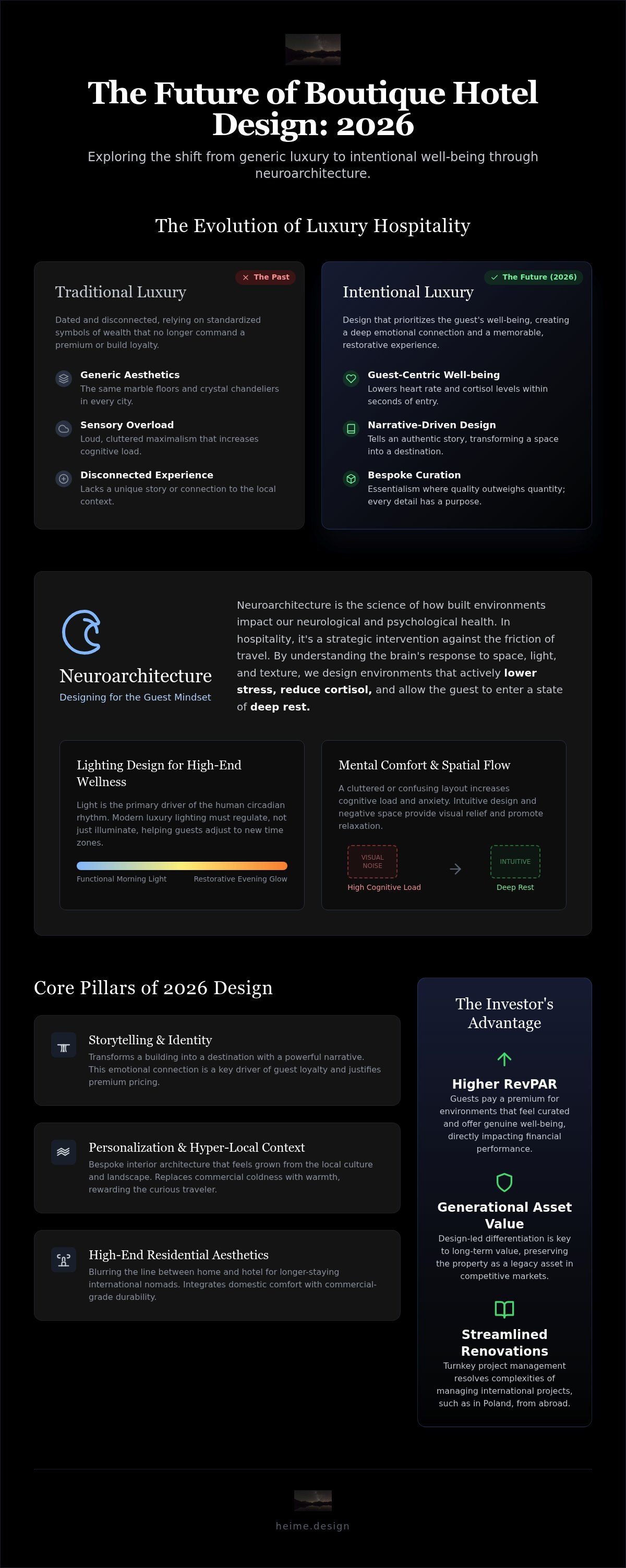
The 2026 aesthetic marks a departure from the loud, cluttered maximalism of the past decade. Modern boutique hotel interior design now prioritizes intentionality. Every element serves a specific purpose. High-net-worth travelers are exhausted by "standard luxury." They've seen the same marble floors and crystal chandeliers in every major city. They're looking for authenticity. They want a narrative they can feel. This shift isn't just about looks; it's about how a space functions for the guest. It's a move toward essentialism where quality outweighs quantity.
Storytelling is the bridge between a physical space and a brand identity. It transforms a building into a destination. When a hotel tells a story through its interior architecture, it creates a memory. This emotional connection is a powerful driver of guest loyalty. It also has a direct impact on financial performance. Properties with a clear, design-led identity often see higher Revenue Per Available Room (RevPAR). Guests are willing to pay a premium for environments that feel curated rather than mass-produced. In a competitive market like Poland, this differentiation is the key to long-term asset value.
Personalization Over Standardization
Standardization is the enemy of the boutique experience. In properties with 10 to 50 rooms, there's a unique opportunity for hyper-local context. Design shouldn't feel imported. It should feel like it grew from the local culture and landscape. We're seeing a shift toward spaces that mirror private residential estates. This approach replaces commercial coldness with warmth. Bespoke interior architecture ensures that no two rooms are identical. It rewards the curious traveler with a sense of discovery. For the investor, this requires detailed technical design documentation to ensure every unique detail is executed perfectly.
The Influence of High-End Residential Aesthetics
The line between home and hotel is blurring. By 2026, the lifestyle hotel will become the primary choice for international nomads. These guests stay longer. They work from their rooms. They require domestic comfort. However, this comfort must be paired with commercial-grade durability. It's a delicate balance. Integrating soft textures and ergonomic furniture creates a home-away-from-home feel. This transition isn't just about aesthetics; it's about functionality. A well-designed hotel room should function as a sanctuary, a workspace, and a living room. Successful boutique hotel interior design anticipates these multi-functional needs without sacrificing the high-end finish expected by global travelers.
Neuroarchitecture: Designing for the Guest Mindset
Neuroarchitecture is the science of how built environments impact our neurological health. For boutique hotel interior design in 2026, it's no longer optional. It's essential. Travel naturally creates friction. It disrupts sleep, increases cortisol, and causes sensory overload. Design acts as the intervention. By understanding the brain's response to space, we create environments that actively lower stress. This scientific approach ensures that luxury is felt on a biological level, not just seen on the surface.
Sensory design plays a vital role in guest memory. We process environments through all five senses simultaneously. A specific scent or the tactile quality of a bespoke wall finish creates a lasting emotional anchor. These details bypass the conscious mind and go straight to the amygdala. This is where true guest loyalty is born. When a space feels "right" on a subconscious level, guests don't just remember their stay. They crave it.
Lighting Design for High-End Wellness
Light is the primary driver of the human circadian rhythm. In high-end hospitality, lighting must do more than illuminate. It must regulate. Dynamic systems that shift color temperature throughout the day help guests adjust to new time zones. This is the foundation of modern wellness. We apply a masterclass approach to lighting design for high end interiors to highlight architectural depth while maintaining a calm atmosphere. The goal is a seamless transition from functional morning light to a restorative evening glow.
Mental Comfort and Spatial Flow
Cognitive load is the mental effort required to process surroundings. A cluttered or confusing layout increases this load and triggers anxiety. We use negative space to provide visual relief, particularly in common areas. An intuitive lobby layout allows guests to navigate without searching for signs. It feels natural. In guest rooms, minimalist architectural interventions create a sanctuary. By removing visual noise, we allow the brain to enter a state of deep rest. This intentionality is what defines a successful luxury stay. If you're planning a project that prioritizes these psychological frameworks, our neuroarchitecture experts can help you refine the guest experience.
Materiality and Curation in Luxury Hospitality
Materiality defines the soul of boutique hotel interior design. In 2026, the palette is tactile and grounded. It's about how a surface feels under a guest's hand. We're moving toward "quiet luxury." This means raw stone, matte timber, and hand-woven textiles. These materials aren't just beautiful; they're sustainable and technologically advanced. They age gracefully. This focus on touch and substance is central to boutique hotel interior design in 2026. It creates a sense of permanence in a fast-paced world.
Commercial durability shouldn't mean aesthetic compromise. We select materials that withstand high traffic while maintaining a residential softness. This balance is critical for long-term property value. A well-chosen material palette reduces maintenance costs and keeps the asset looking pristine. In the Polish market, sourcing local, high-quality timber and stone adds a layer of hyper-local context that global travelers value.
High-End Furniture Selection and Curation
Furniture isn't just seating. It's functional art. Each piece should tell a story. In boutique environments, bespoke furniture is the cornerstone of differentiation. It prevents the "catalog look" that high-net-worth travelers despise. Strategic high end furniture selection ensures that every item contributes to the property's legacy. Custom-designed joinery, such as built-in wardrobes or headboards, creates a seamless, high-end feel. It maximizes space while reinforcing the hotel's unique brand identity. These pieces are investments in the guest experience.
Bespoke Interior Architecture Services
Luxury goes deeper than surface decor. It requires structural transformation. Our bespoke interior architecture services focus on redefining spatial volume and light. This is the difference between decorating a room and creating a sanctuary. We look at the bones of the building. We optimize flow. Technical documentation is the backbone of this process. Without precise drawings, high-quality materials fail. In Poland, where construction standards are rigorous, detailed documentation is essential for flawless execution. It ensures that every architectural intervention adds permanent value to the estate. We don't just fill rooms; we engineer harmony.
Managing International Hospitality Renovations
Investing in a foreign hospitality market is inherently complex. For a boutique hotel, the stakes are significantly higher. You aren't just building a commercial structure; you're curating an intimate guest experience from a distance. Distance creates risk. Language barriers, time zone differences, and unfamiliar building codes can quickly stall progress. Turnkey management is the only viable path for off-site owners. It provides a single point of accountability. This ensures the refined boutique hotel interior design isn't lost in translation between the creative vision and the local contractor.
Bridging the gap between international design standards and local craftsmanship requires a multilingual approach. Coordination isn't just about speaking the language; it's about understanding the local construction culture in Poland. We act as the investor's eyes and ears on the ground. This local presence prevents the "standardization" that often happens when global designs are executed without proper oversight. It maintains the integrity of the 2026 aesthetic throughout the entire build process.
Turnkey Coordination for Global Investors
Managing a high-end project from another country requires radical transparency. Our international project management interior design framework reduces investor uncertainty. We manage the entire procurement cycle. This includes sourcing tactile materials and bespoke furniture from global suppliers and coordinating their delivery to Poland. Logistics and customs for specialized items are handled in-house. Site supervision is equally critical. It acts as a bridge. We ensure every detail is realized exactly as planned. This meticulous oversight keeps timelines and budgets in check, protecting your capital from common cross-border pitfalls.
Technical Documentation and Compliance
Technical drawings are the foundation of any secure renovation. In Poland, hospitality projects must adhere to rigorous safety, fire, and accessibility regulations. Navigating these European building permits requires a specialized technical team. We produce comprehensive documentation that ensures full compliance with local laws. This protects your investment from legal setbacks. Clear, multilingual documentation also allows for accurate bidding from local contractors. It removes the ambiguity that leads to budget overruns. Every architectural intervention is backed by precise data. If you're ready to secure your European hospitality asset with a professional team, our project management experts offer the end-to-end coordination you need.
Designing for Value: The Future of Hospitality Assets
Boutique hotel interior design is a strategic financial instrument. It serves as the primary tool for long-term property value preservation. We don't view a hotel as a temporary project. We treat it as a legacy estate. This generational mindset dictates every choice, from the structural layout to the final textile. High-end design acts as a robust defense against market volatility. While generic hotels struggle during economic shifts, curated assets maintain their ADR (Average Daily Rate) and occupancy. Quality is a permanent competitive advantage.
Adaptive reuse is a cornerstone of the 2026 aesthetic. Poland's landscape is rich with heritage buildings waiting for transformation. Converting these structures into modern boutique icons requires technical precision. We preserve the historical soul while layering in modern neuroarchitecture. This creates a product that's impossible to replicate. It's a unique market position that drives long-term asset appreciation. You aren't just selling a room; you're offering a piece of history refined for the modern mind.
Future-Proofing Through Quality
Avoiding fast-trend pitfalls is the only way to ensure longevity. We prioritize timeless architectural bones over fleeting decor styles. This strategy reduces the need for frequent renovations. Durable, high-value materials are essential. They withstand the rigors of commercial use while maintaining a high-end feel. This focus on quality significantly lowers long-term OPEX. We also design for spatial flexibility. Rooms and common areas are planned to evolve with guest needs. A flexible asset is a resilient asset.
Partnering with HEIMÉ for Boutique Excellence
Our minimalist approach delivers clarity to even the most complex hospitality builds. We remove the friction from the design and renovation process. The HEIMÉ workflow is streamlined and logical. It starts with neuro-analysis to define the guest mindset. It moves through technical documentation and cross-border procurement. It finishes with turnkey delivery and site supervision. We ensure your vision is executed perfectly on Polish soil. Our team handles the multilingual coordination and local compliance, so you don't have to. If you're ready to build a generational hospitality asset, reach out to our studio to begin the conversation.
Designing the Future of Hospitality Assets
The 2026 aesthetic is defined by a shift from visual excess to neurological harmony. Successful properties will prioritize guest well-being through intentional materiality and scientific spatial planning. We've explored how neuroarchitecture and bespoke curation create lasting property value while reducing long-term maintenance. These elements ensure your asset remains competitive in an evolving market. Your boutique hotel interior design should be more than a visual statement; it must be a sanctuary for the modern traveler.
Managing a high-stakes renovation in Poland requires precision and a local presence. Our studio bridges the gap between your international vision and the local construction site. We provide specialized neuroarchitecture expertise and multilingual project management to ensure every detail is executed flawlessly. From technical documentation to final turnkey delivery, we protect your investment at every stage. We handle the complexities of cross-border development so you don't have to worry about the distance.
The path to a unique guest experience starts with a focused strategy. We're ready to help you define the next generation of intimate luxury. Discuss your international boutique hotel project with HEIMÉ and see how our streamlined process delivers clarity. Your vision deserves a partner who values precision as much as you do.
Frequently Asked Questions
What is the average timeline for a boutique hotel interior design project?
A comprehensive project typically takes 12 to 24 months from the initial concept to turnkey delivery. This timeline accounts for technical documentation, permit coordination in Poland, and the procurement of bespoke furniture. Smaller renovations might take 6 to 9 months. Every phase is planned to ensure the 2026 aesthetic is achieved without compromising structural integrity or guest comfort.
How does neuroarchitecture improve the guest experience in hotels?
Neuroarchitecture improves the guest experience by using scientific principles to reduce travel-induced stress. It focuses on how spatial layouts, lighting, and materials impact the brain's cortisol levels and circadian rhythm. By designing for neurological harmony, hotels can actively improve guest sleep quality and emotional well-being. This creates a subconscious sense of safety and deep relaxation that standard luxury often fails to provide.
Do I need a local architect if I hire an international design studio?
You don't necessarily need a separate local architect if your international design studio provides comprehensive project management and technical documentation. A studio with local expertise in Poland can handle permit coordination and site supervision directly. This ensures the design intent remains consistent throughout the build. It also simplifies communication by providing a single point of accountability for the entire renovation process.
What is the difference between a boutique hotel and a luxury hotel?
The main difference lies in scale and personalization. While luxury hotels focus on high-end services and global standards, boutique hotel interior design prioritizes a unique, intimate narrative. Boutique properties typically have fewer than 100 rooms and offer a hyper-local, curated environment. In 2026, boutique luxury is moving toward intentionality, where every architectural detail serves a specific psychological purpose for the guest.
How can I manage a hotel renovation if I am based in a different country?
Managing a renovation from abroad is best handled through turnkey project management. This model provides off-site owners with a dedicated team on the ground in Poland to oversee contractors and procurement. Multilingual coordination is essential to bridge the gap between your vision and local execution. Regular digital reporting and site supervision ensure that timelines and budgets are respected without requiring your constant physical presence.
What are the key interior design trends for boutique hotels in 2026?
Key trends for 2026 include the integration of neuroarchitecture, quiet luxury materials, and the adaptive reuse of heritage buildings. We're seeing a shift toward tactile, sustainable surfaces like raw timber and matte stone. Lighting design is becoming more dynamic to support wellness and sleep health. Additionally, spaces are being designed for flexibility to accommodate international nomads who require both a sanctuary and a workspace.
Why is technical documentation so important for hospitality projects?
Technical documentation is the backbone of any successful hospitality project because it ensures compliance with Polish safety and fire regulations. Precise drawings prevent costly errors during construction and allow for accurate bidding from contractors. For boutique hotel interior design, detailed documentation is critical when implementing bespoke furniture and complex architectural interventions. It guarantees that the final build matches the initial creative vision perfectly.
Can interior design help increase a hotel’s room rates?
High-end interior design directly impacts a hotel’s room rates by increasing its perceived value and guest loyalty. Properties that offer a unique, design-led experience can command higher average daily rates than generic luxury hotels. When guests feel a deep emotional and physical connection to a space, they're more willing to pay a premium. Design becomes a strategic asset that drives both occupancy and long-term property value.


