

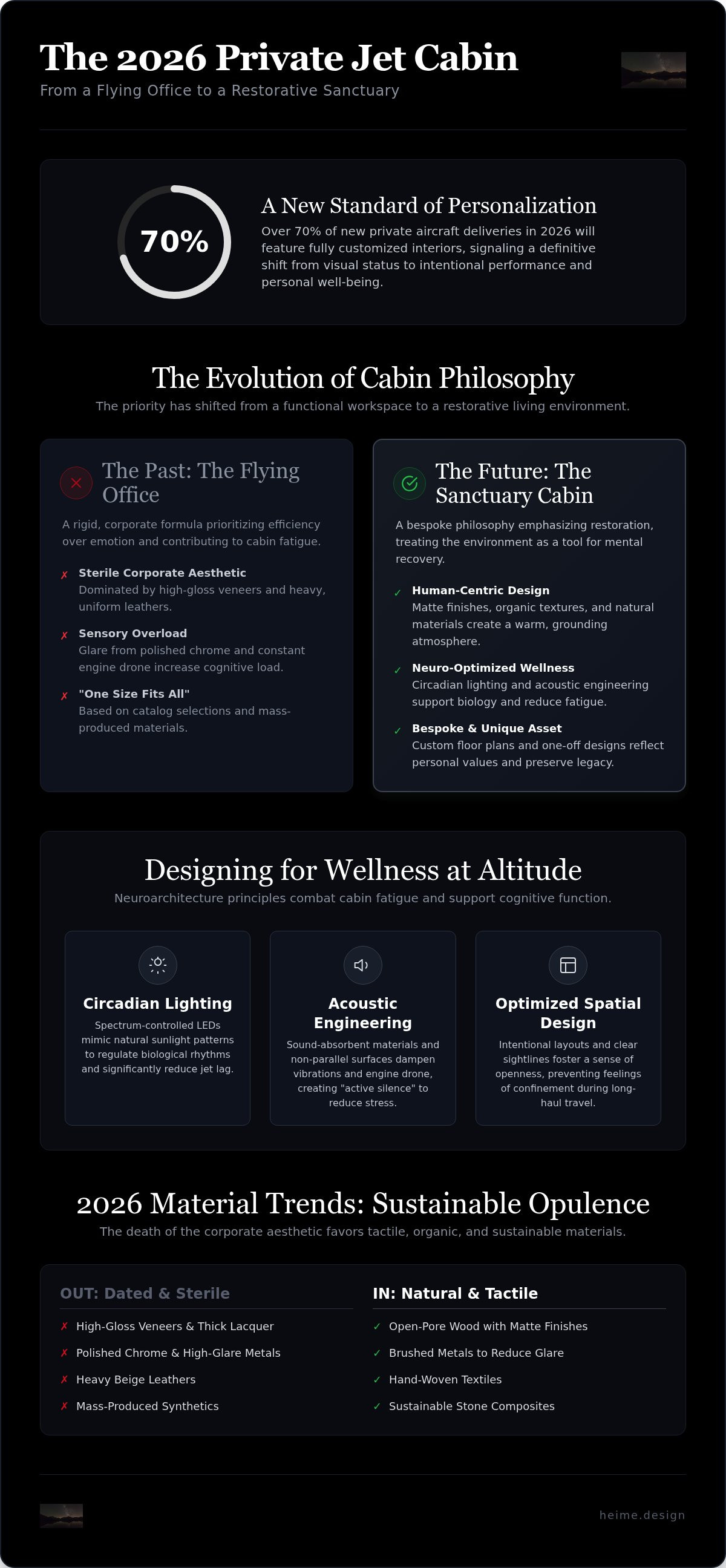
Over 70% of new private aircraft deliveries in 2026 now feature fully customized interiors. The priority has shifted away from visual status toward intentional performance. Modern private jet cabin design now embraces "practical luxury." This approach focuses on how an environment supports your biology, not just your image. You've likely felt the heavy toll of cabin fatigue after a long-haul flight. It's a persistent drain for those who must arrive ready for high-stakes decisions.
We understand the challenge of balancing strict aviation safety standards with the need for a restorative sanctuary. Discover how 2026 cabin design shifts from pure ornamentation to neuro-optimized wellness and legacy asset preservation. We'll examine the integration of cutting-edge wellness technology and the specific design choices that protect your aircraft's long-term value. This guide outlines how to transform your cabin into a high-performance asset that serves as a restorative retreat. Let's explore the new standards of aviation excellence.
Key Takeaways
- Shift your perspective from a functional office to a sanctuary cabin designed for living at 40,000 feet.
- Learn how neuroarchitecture principles combat cabin fatigue by optimizing spatial design for mental wellbeing.
- Balance the latest sustainable material trends with strict aviation safety and fire-resistance standards.
- Discover how strategic zoning in private jet cabin design creates flexible environments for both productivity and rest.
- Preserve the legacy and financial value of your aircraft through turnkey coordination and bespoke interior refits.
The Evolution of Private Jet Cabin Design in 2026
Traditionally, private jet cabin design followed a rigid, corporate formula. It prioritized efficiency over emotion. In 2026, this paradigm has shifted. Cabin interiors are no longer just transit spaces. They're extensions of a primary residence. We see a transition from "traveling" to "living" at 40,000 feet. The focus is no longer just on getting from A to B. It's about how you feel while you're there. This evolution bridges the gap between residential comfort and aviation precision.
The "Flying Office" was once the gold standard. It featured rows of identical chairs and fold-out tables. Today, owners demand a "Sanctuary Cabin." This design philosophy emphasizes restoration. It treats the environment as a tool for mental recovery. Modern aircraft cabin design now incorporates residential-grade lighting and silent air systems. These features reduce the physical toll of long-haul travel. 2026 trends prioritize emotional resonance. Designers use specific layouts to foster connection or provide deep solitude.
The Death of the Corporate Aesthetic
High-gloss veneers and heavy beige leathers are disappearing. These materials feel dated and sterile. 2026 trends favor matte finishes and organic, tactile textures. Frequent travelers need a sense of "home" to remain grounded. By removing the corporate edge, designers create a warmer, more human environment. This shift prioritizes the passenger's emotional state over traditional status symbols. Consider these emerging material choices:
- Brushed metals instead of polished chrome to reduce glare.
- Open-pore wood instead of thick lacquer for a natural feel.
- Hand-woven textiles instead of mass-produced synthetics.
- Sustainable stone composites for durable, elegant surfaces.
Bespoke Personalization as a Standard
Catalog selections are no longer sufficient for high-net-worth owners. Family offices now view aircraft as mobile legacy estates. They want a unique, one-off identity for their fleet. This requires a deep level of bespoke aircraft interior design that reflects the owner’s personal history and values. Personalization extends beyond monogrammed pillows. It involves custom floor plans and specialized art installations. Some owners integrate specific family crests into the veneer. Others request bespoke furniture designed for their specific physical needs. This level of intentionality preserves the aircraft's value as a unique asset. It ensures the private jet cabin design remains relevant for decades. Strategic design choices protect the legacy of the aircraft while providing an unmatched personal experience.
Neuroarchitecture: Designing for Wellness at Altitude
Neuroarchitecture is the practice of using neuroscience to inform interior architecture. In the context of private jet cabin design, it means designing for the brain's response to altitude and confinement. This approach goes beyond simple aesthetics. It focuses on mental clarity and emotional regulation. Neurodesign principles are now essential for high-performance travel. They ensure the environment supports your cognitive function rather than draining it.
Cabin fatigue is a common struggle for long-haul travelers. It isn't just about a lack of sleep. It's the result of sensory overload. The brain works harder in a pressurized, vibrating, and noisy environment. Intentional spatial design reduces this cognitive load. By optimizing layouts and sightlines, we create a sense of openness. This prevents the feeling of being trapped in a small space. Modern cabins use these principles to promote a state of calm. They allow the passenger to transition from a high-stress meeting to a restful state seamlessly.
Circadian Lighting and Biological Rhythms
Lighting is the primary driver of our internal clocks. Dynamic systems in 2026 now mimic natural sunlight patterns with precision. These spectrum-controlled LEDs adjust throughout the flight. They help regulate melatonin production and significantly reduce jet lag. Warm tones promote relaxation in the evening hours. Cooler, blue-shifted light increases alertness for morning arrivals. It's a subtle but powerful way to maintain biological rhythms during transcontinental travel. Psychological comfort is also improved by using specific color temperatures to make confined spaces feel more expansive.
Acoustic Engineering and Cognitive Comfort
Engine drone is a constant stressor that causes invisible fatigue. Designers now use non-parallel surfaces to break up sound waves. Soft, sound-absorbent materials are integrated into the walls and ceiling to dampen vibrations. This creates a state of "active silence." It allows for deep focus and effortless conversation without raising one's voice. Reducing background noise lowers cortisol levels and improves sleep quality. Every surface is an opportunity to enhance acoustic performance. This transforms the cabin into a true recovery space.
For UHNW travelers, time and energy are the most valuable assets. Arriving at a destination exhausted is no longer acceptable. Neuro-optimized cabins are the new benchmark because they prioritize the human element. They turn a transit period into a restorative experience. If you want to optimize your next flight, our team offers specialized neuroarchitecture consultation to help you design a space that truly performs. This scientific approach ensures your cabin is a sanctuary for both the mind and body.
Sustainable Opulence: 2026 Material Trends
Luxury in 2026 is quiet and conscious. The shift toward ethically sourced materials is accelerating as owners prioritize carbon-neutral footprints. This doesn't mean sacrificing comfort; it means choosing materials that tell a better story for your private jet cabin design. Traditional flashiness is being replaced by "quiet luxury." This trend focuses on high-quality, subdued finishes that feel expensive without being loud. Tactile diversity is essential for this aesthetic. Mixing textures, such as matte woods with soft wools, creates a rich, sensory experience. It provides a grounded feeling that glossy, synthetic surfaces simply cannot match.
Navigating the intersection of sustainability and aviation safety is a complex task. Every new material must meet rigorous fire-safety standards. This includes flame-retardant properties and specific smoke emission levels. Sustainable aircraft interior design requires a balance of innovation and strict compliance. We ensure that every bio-material or recycled textile is fully certified for flight before it enters the cabin. This technical precision is what defines modern private jet cabin design. It's about making bold, ethical choices that are also safe and durable for the long term.
Next-Generation Bio-Materials
Mushroom-based leathers are a significant trend in 2026 VIP cabins. They offer a soft, durable alternative to traditional hides with a much lower environmental impact. Recycled ocean plastic textiles are also appearing as high-end upholstery and wall coverings. These materials are engineered to feel like silk or linen while offering superior durability. Reclaimed wood veneers are another popular choice, providing a unique, storied aesthetic that meets modern aviation certifications. Sustainability is now a key factor in aircraft resale value. Future buyers look for interiors that reflect modern ethical standards, making these materials a smart financial investment.
Advanced Composites and Weight Reduction
Weight is the enemy of fuel efficiency and range. Advanced composites allow us to reduce interior weight without losing the luxury feel. Ultra-thin stone veneers are now a standard for lavatories and galleys. They provide the elegance of solid marble with only a fraction of the weight. 3D-printed interior components are also gaining traction for their precision and efficiency. This technology allows for complex, custom shapes that were previously impossible to manufacture. These components are often lighter and more durable than traditional parts. They offer immense aesthetic potential for bespoke cabins, allowing for truly one-of-one design elements that are perfectly integrated into the aircraft structure.
Strategic Zoning: Balancing Productivity and Rest
Effective private jet cabin design requires more than partitioning space. It demands fluid environments that adapt to the passenger's needs. A single zone must transition from a high-stakes boardroom to a private bedroom. This flexibility is the new standard for 2026. We move away from static layouts. Instead, we create multi-functional areas that support different modes of living. This approach ensures every square inch of the cabin serves a specific, intentional purpose.
The "Social Core" is a communal hub. It encourages interaction between family members or executive teams. Instead of isolated seating, we use L-shaped lounges and swivel arrangements. This layout supports natural conversation and shared experiences. In large-cabin jets, the master suite has evolved into a private sanctuary. It often includes full-height showers and sound-isolated sleeping quarters. These private zones provide a level of solitude that's essential for long-range travel.
Ergonomics now extends beyond the seat. We design for movement and posture throughout the entire cabin. This prevents physical stiffness during long flights. Designers integrate subtle handrails and varied flooring textures to encourage safe movement. This focus on physical health is a key component of modern aviation interiors. It ensures you arrive at your destination feeling limber and refreshed.
The Mobile Executive Suite
Productivity requires focus. Modern technology now disappears when it isn't needed. Monitors retract into side ledges. Touchscreens stay hidden beneath leather surfaces. This "invisible connectivity" ensures high-speed satellite links are always available without cluttering the aesthetic. Desks are engineered for long-term comfort. They support proper spinal alignment during extended work sessions. We prioritize a clean, organized workspace that minimizes distractions and maximizes output.
Restorative Retreat Zones
Rest is as vital as work. We create "tech-free" zones dedicated to meditation and deep sleep. These areas use biophilic design elements like natural patterns and organic shapes. These features ground the passenger and reduce stress. Interestingly, luxury yacht decoration services are heavily influencing these jet rest zones. The use of curved lines and marine-grade comfort enhances the sense of escape. It brings a level of soft luxury that was previously reserved for the sea.
To optimize your aircraft's layout for both peak performance and deep rest, explore our strategic zoning services today. Our team specializes in creating bespoke environments that reflect your unique lifestyle and professional requirements.
Bespoke Refits: Elevating Aviation Assets with HEIMÉ
Transforming a pre-owned aircraft requires a vision that extends beyond simple refurbishment. It's a strategic design transformation. We treat each refit as a bespoke personal statement. This approach elevates the asset. It ensures your private jet cabin design aligns perfectly with your specific lifestyle. We manage every detail through a comprehensive turnkey process. This removes the friction from complex, cross-border projects. Our goal is to bridge the gap between residential comfort and aviation precision.
Our work is often part of a larger international project management strategy. We ensure your aviation environment mirrors the quality and comfort of your residential and marine assets. Consistency across your portfolio is vital. It creates a seamless transition as you move between your home, yacht, and aircraft. By managing these complex refits centrally, we maintain a unified aesthetic and functional standard. This level of intentionality is what defines a true luxury asset.
The Turnkey Refit Process
We begin with a deep neuroarchitecture consultation. We identify exactly how you intend to use the space. Then, we coordinate with specialized aviation engineers to ensure full design compliance. This technical oversight is mandatory for safety and airworthiness. We handle all technical drawings and site supervision. Our team manages the entire workflow from initial concept to final delivery. This ensures a seamless transition between your various property types. We act as your single point of contact, streamlining the path from inquiry to action.
Preserving Legacy and Resale Value
Design choices directly impact long-term financial value. In the 2026 market, timeless design consistently outperforms fleeting trends. We focus on materials and layouts that remain relevant for decades. A well-executed private jet cabin design significantly speeds up the eventual sale of an aircraft. It presents a turnkey solution for the next owner. Proper certification and documentation of bespoke interiors protect your legacy. It ensures the aircraft remains a high-value asset in the global market. Strategic design is an investment in the aircraft’s future liquidity.
The Future of High-Performance Aviation
The standard for private jet cabin design has moved beyond surface-level luxury. It's now a science of wellness and asset preservation. You've seen how neuro-optimized environments reduce fatigue. You've learned how sustainable materials secure future resale value. Strategic zoning ensures your aircraft remains a versatile tool for both deep focus and total restoration. These elements don't just improve the flight experience. They protect the long-term legacy of your investment.
HEIMÉ specializes in VIP and UHNW aviation interiors. We combine expertise in neuro-optimized environments with comprehensive turnkey project management. Our team bridges the gap between residential comfort and technical aviation precision. We manage every detail of the refit process to ensure a seamless delivery. Elevate your aviation asset with HEIMÉ bespoke design to ensure your next journey is as restorative as it is efficient. We look forward to transforming your vision into a high-performance reality that stands the test of time.
Frequently Asked Questions
What are the main trends in private jet cabin design for 2026?
The primary trends focus on "practical luxury" and intelligent convenience. This means cabins are becoming smarter and quieter with a heavy emphasis on improved airflow and flexible seating. We're seeing a shift away from flashy, ostentatious displays toward functional wellness features that actively support the passenger's physical health during travel.
How does neuroarchitecture improve the private jet experience?
Neuroarchitecture reduces cognitive load by managing sensory input through intentional spatial design. It uses specific sightlines and acoustic dampening to lower cortisol levels and minimize the mental toll of flight. This science-based approach ensures you arrive at your destination mentally sharp and physically recovered rather than drained by cabin fatigue.
Can sustainable materials be used in luxury aircraft interiors?
Yes, sustainable materials like bio-based leathers and recycled textiles are now standard in high-end aviation. These materials must undergo rigorous testing to meet aviation fire-safety and smoke emission standards. They offer a modern, ethical alternative that provides the same tactile quality and durability as traditional luxury finishes.
What is the difference between a standard layout and a bespoke VIP cabin?
Standard layouts prioritize mass-market efficiency and basic functionality. A bespoke private jet cabin design is a one-off personal statement tailored to your specific physical and professional requirements. It transforms the aircraft into a mobile legacy estate that reflects your unique identity and supports your specific lifestyle at altitude.
How much does a private jet interior refit cost?
The investment for a refit varies significantly based on the aircraft size and the depth of customization. Factors like new veneer installation, advanced technology upgrades, and custom upholstery all influence the final cost. Each project requires a detailed technical assessment to determine the scope of work and the materials required for certification.
How long does a complete cabin refurbishment typically take?
A complete cabin refurbishment typically takes between 4 and 12 months. This timeline includes the initial design phase, material procurement, and the technical installation. Coordinating with aviation engineers for certification is a critical part of this schedule to ensure the aircraft meets all safety requirements before returning to service.
Are there specific safety regulations for bespoke cabin materials?
All cabin materials must comply with strict FAA and EASA fire-resistance and toxicity standards. In 2026, there's an increased focus on international safety collaboration to modernize equipment standards and aircrew training. Every bespoke element must be fully documented and certified to ensure it meets these rigorous global aviation requirements.
How does cabin design affect the resale value of a private jet?
Strategic private jet cabin design significantly increases the liquidity and resale value of the aircraft. Timeless, high-quality interiors attract higher-tier buyers and reduce the time the asset spends on the market. A well-maintained, modern cabin serves as a key indicator of the aircraft's overall value and the care it has received.


