

Camera placement matters more than camera count. Comprehensive interior construction site monitoring should cover entrances and exits, vulnerable perimeter areas, tool and equipment storage, and high-value materials, while accounting for lighting, obstructions, elevation, and the site’s layout.
A camera shows only what its position and field of view allow. Even with cameras installed, a complex site can have blind spots. Plan placement around how people, materials, and work move through the space.
This guide explains how to plan coverage, when existing cameras can connect to a wider system, and how remote access, progress monitoring, and IoT devices can bring site information together. It covers what each layer can monitor and how it can support a coordinated construction project.
Key Takeaways
- Assess how existing cameras, their viewing limits, and site coverage needs affect a wider monitoring setup.
- Plan remote access around clear rules for who can view site data and how long it is retained.
- Use visual progress records and video analytics to spot schedule deviations and other changes on site.
- Combine cameras with relevant sensors, such as dust, temperature, and humidity monitoring, to build a fuller picture of site conditions.
Can construction monitoring systems work with cameras I already have installed?
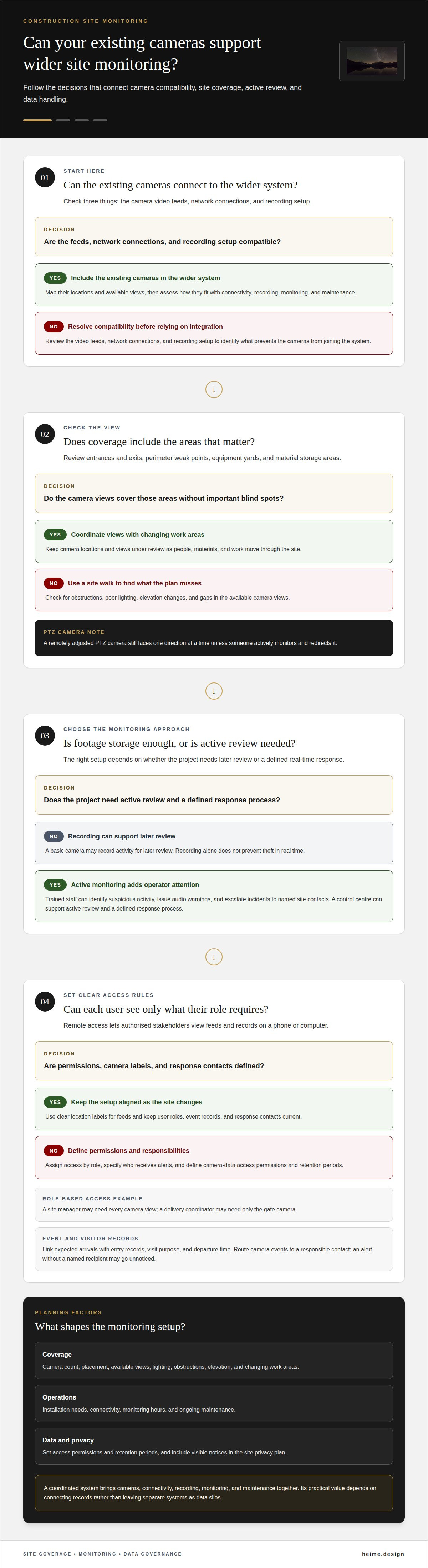
Often, yes. Existing cameras can be part of a wider monitoring system if their video feeds, network connections, and recording setups are compatible. Begin by mapping camera locations, checking available views, and identifying gaps. On a large or irregular site, a remotely adjusted PTZ camera still faces one direction at a time unless someone actively monitors and redirects it.
A complete system can combine cameras, connectivity, recording, monitoring, maintenance, and placement adjustments. Assess coverage at entrances, perimeter weak points, equipment yards, and material storage areas. A site walk can reveal obstructions, poor lighting, and changes in elevation that a floor plan may miss. Use the review to coordinate camera views with changing work areas.
Costs depend on the number of cameras, installation needs, connectivity, monitoring hours, and ongoing maintenance. A basic camera may record activity for later review, but recording alone does not prevent theft in real time. Live monitoring adds operator attention: trained staff can identify suspicious activity, issue audio warnings, and escalate incidents to named site contacts. A control centre is useful when a project needs active review and a defined response process, rather than footage storage alone.
Construction 4.0 connects physical site activity with digital systems. A construction monitoring framework adapts a five-level cyber-physical systems architecture, linking sensors and cameras with data processing and project information. Its practical value depends on bringing records together rather than leaving separate systems as data silos. High initial sensor costs and privacy concerns are recognised implementation challenges.
Independent site monitoring records conditions and reports observations; a construction project manager coordinates decisions, contractors, schedules, and delivery. For interior renovation and fit-out work in Poland, applicable building rules depend on the work’s scope and whether it affects regulated building elements. Project documents should define the relevant approvals and technical standards. For disputes, delays, or defects, keep dated photos, written notices, contract references, and records of responses. Together, these create a clear chronology for resolution under the contract and applicable Polish law.
An independent inspector should have technical experience relevant to the work and any qualifications required for the specific statutory task. A useful monitoring report records the visit date, areas observed, work progress, defects, photographs, responsible parties, and agreed follow-up actions. For camera data, define access permissions and retention periods, and include visible notices in the site’s privacy plan.
Remote access and cloud-based management
Cloud access lets authorised stakeholders view camera feeds and site records on a phone or computer, instead of relying on a monitor in the site office. For example, a project lead working remotely can review a loading-bay view before coordinating a delivery. Remote video is most useful when each feed has a clear location label, such as “north entrance” or “level two corridor.”
A shared visual workspace can bring camera footage and site updates together, helping teams compare actual site conditions with the information needed to coordinate work. Dated footage can clarify whether a delivery arrived before a work area closed or whether an access route was blocked. Cloud management also lets authorised users review the same event without transferring video files between devices.
Start access control by assigning permissions according to role. A site manager may need to review every camera view, while a delivery coordinator may need access only to the gate camera. Visitor management can link an arrival record to the expected person or company. Recording the entry, visit purpose, and departure time creates a practical access history for contractors and project stakeholders.
Intruder detection combines visual monitoring with a defined response process. A camera covering a closed entrance can help an operator distinguish an unexpected arrival from scheduled access. The system should record the event and route it to the responsible contact. Clear escalation steps matter: an alert without a named recipient may go unnoticed.
Automatic number plate recognition, or ANPR, reads vehicle plates at an access point. For example, a gate camera can help match an arriving vehicle with an expected delivery record. Handle plate records as part of the site’s data management plan.
Remote surveillance works best when camera labels, user roles, event records, and response contacts stay aligned as the site changes. On a renovation, the access plan may need updates when contractors begin using a different entrance. Where remote updates need to inform design and contractor decisions, interior project management can connect site coordination with the wider project.
Construction progress sensing and evaluation
Progress monitoring turns site observations into records that teams can compare with planned work. For interior projects, useful reports connect dated visual evidence with milestones, drawings, and decisions.
Interior Monitoring Stages
Interior construction monitoring involves recording work, comparing progress with plans, and documenting issues. In Poland, it gives project teams a practical way to follow fit-out work without assuming one monitoring routine suits every project.
It can begin with a baseline: record existing conditions and the planned work areas. During construction, inspections and camera records capture visible progress. Drone flights can produce orthomosaic maps and 3D models over time where the site and flight arrangements suit them. Next, teams compare records with the schedule, log deviations, assign follow-up, and review completion evidence.
Inspection and Documentation Frequency
Inspection frequency is the planned rhythm for site reviews and written records. An observation is most useful when it reaches the team before the next work stage conceals or changes the area.
Schedule visits around project milestones and changing site conditions, such as services installation before walls close or finishes before handover. For each visit, record dated photographs, the area observed, progress against the relevant milestone, and the person responsible for each action. For automated monitoring, review alert thresholds weekly as site conditions change. This is a schedule for reviewing alert settings, not a universal inspection frequency for Polish interior projects.
Risks, Defects, and Prevention
Monitoring risks are conditions that can disrupt progress or leave defects hidden behind completed work. Early records matter because later finishes can make the original condition harder to assess.
Examples include installed work that visibly differs from drawings, damaged finishes, blocked access, or work proceeding before a related check. Compare site images with plans and earlier records, log the location, date, and issue, then assign follow-up before the area is covered. AI video analytics can flag progress deviations from the project schedule, while mobile reporting lets teams record observations at the relevant location. Human review connects an automated flag to a clear decision and documented next step.
Construction site data collection using sensors and IoT
IoT sensors add information that cameras cannot capture alone. Dust sensors track air quality and help document environmental impacts. Temperature and humidity sensors can help protect stored materials from damage. For example, readings from a materials store can show whether conditions changed during the project, giving the team a record to review alongside site observations.
Sensor data needs dependable infrastructure. Construction camera systems may use solar power with battery backup, generator integration, wireless or cellular connectivity, and elevated mounting towers. Solar power, batteries, and cellular links can support monitoring where permanent site infrastructure is unavailable. Choose a setup according to the site layout, power access, connectivity, and sensor locations.
A useful platform brings sensor readings and other site records into a coherent view. A construction monitoring framework can combine data acquisition, processing, integration, and visualisation. It can connect indoor and outdoor information with IoT, building information modelling (BIM), computer vision, SLAM, and digital twins. This reduces isolated data stores and gives project teams a shared basis for reviewing site conditions.
Data management can also be viewed in five stages, from raw onsite data to advanced automated systems. A project might begin with a sensor reading, process it into a usable record, then connect it with camera footage or a project model. Teams can use that combined view to identify changes and adjust monitoring as work areas shift. Place sensors and manage access according to the project’s actual needs, rather than collecting readings no one will use.
For projects that need site observations coordinated with wider interior works, explore construction coordination with heime.design.
Heime.design: Construction Coordination
heime.design provides Construction Coordination and Site Supervision for projects where site observations need to inform wider project decisions. Monitoring records can show progress or flag a concern, but the design team, contractors, and on-site work still need clear coordination.
Consider this support when a renovation or fit-out involves several contractors, changing work areas, or decisions that depend on accurate site updates. Construction Coordination helps align project activity, while Site Supervision connects site reviews with the work underway. For international projects, heime.design also offers Luxury Interior Design & Project Management for international Clients.
If you’re planning a project and want to discuss coordination or supervision, contact heime.design.
Turn site visibility into project decisions
Decide what a useful site update should help the team do. Comprehensive interior construction site monitoring is more purposeful when observations inform project decisions, such as resolving a design detail, coordinating a contractor instruction, or sequencing work around an occupied area.
Before monitoring begins, define who reviews each update and which decision it supports. For example, route a finish-related observation to the design lead and a site access issue to the person coordinating contractors. This keeps information connected to action instead of creating another stream of records to manage.
For an interior renovation or fit-out, monitoring should form part of the wider project plan. Aligning responsibilities, site observations, and design decisions gives each stakeholder a clearer role as work develops.
Start a project conversation with heime.design. A considered next step can bring greater clarity to the work ahead.
Frequently Asked Questions
Where Should Construction Site Cameras Be Placed?
Place cameras to clearly show important movement, including at entry doors, material storage areas, and internal access routes. In an interior fit-out, a camera near a delivery entrance can document materials arriving, while a corridor view can show when teams enter a work zone. Review blind spots caused by temporary partitions, stored supplies, and changing layouts. Keep camera views focused on relevant site activity.
What legal requirements apply to video monitoring on construction sites?
Plan video monitoring around worker information, visible notices, and controlled access to recordings. For a Polish site, review the workplace-surveillance and data-protection rules that apply to the project before using cameras. Place notices at site entrances and explain the monitoring purpose to affected workers. Limit views to relevant work areas, and define who can access footage and how long records are kept.
What does comprehensive interior construction site monitoring include?
Comprehensive interior construction site monitoring can combine camera views, remote access, progress records, and relevant sensor data. Define who reviews observations, how issues are logged, and which project decisions each record supports. For example, linking a dated image of an installed finish with the corresponding drawing revision and inspection record can create a more useful project history than footage alone.
How much does interior construction site monitoring cost in Poland?
There is no standard cost for interior monitoring in Poland. The budget depends on the number and type of cameras, installation and connectivity needs, coverage areas, access requirements, and whether live monitoring or ongoing maintenance is included. Existing equipment may reduce the need for new hardware, but integration and support affect the total. Define the scope first, including what the system must record and who will review it.
How can progress, workmanship, and contractor compliance be verified on an interior project?
Compare completed work with current drawings, agreed specifications, and documented project decisions. For example, record concealed electrical or plumbing work before finishes cover it, then match the evidence to the relevant room and drawing revision. Log deviations with dated photos and a written action owner. Assess contractor compliance against project requirements and recorded instructions, not from camera footage alone.


