

The most beautiful interior design is only as good as its execution. Construction coordination in interior design isn't a simple administrative task. It's the technical enforcement of your aesthetic intent. Without it, visionary plans often dissolve into miscommunication and costly errors. You've likely seen how technical gaps between architects and builders lead to budget overruns or subpar finishes on luxury materials.
It's a common challenge for high-end builds. Managing international contractors adds a layer of stress that few owners want to carry. This article provides a professional framework for construction coordination and site supervision. It's designed to help you master these complexities and ensure precision at every stage of the build.
We'll examine the systems that bridge the gap between design and delivery. You'll discover how technical documentation and structured oversight create a stress-free turnkey experience. Let's look at how to protect your investment and preserve the value of your legacy estate through disciplined execution.
Key Takeaways
- Understand how construction coordination in interior design bridges the gap between creative vision and physical execution.
- Learn to distinguish between high-level management and the granular site supervision required for luxury builds.
- Discover the essential steps for navigating international architecture licensing and local building permit coordination.
- Identify the turnkey service model that best suits the needs of international property investors and legacy estates.
- Explore how technical precision and organized workflows preserve the long-term value of high-end residential projects.
What is Construction Coordination in Interior Design?
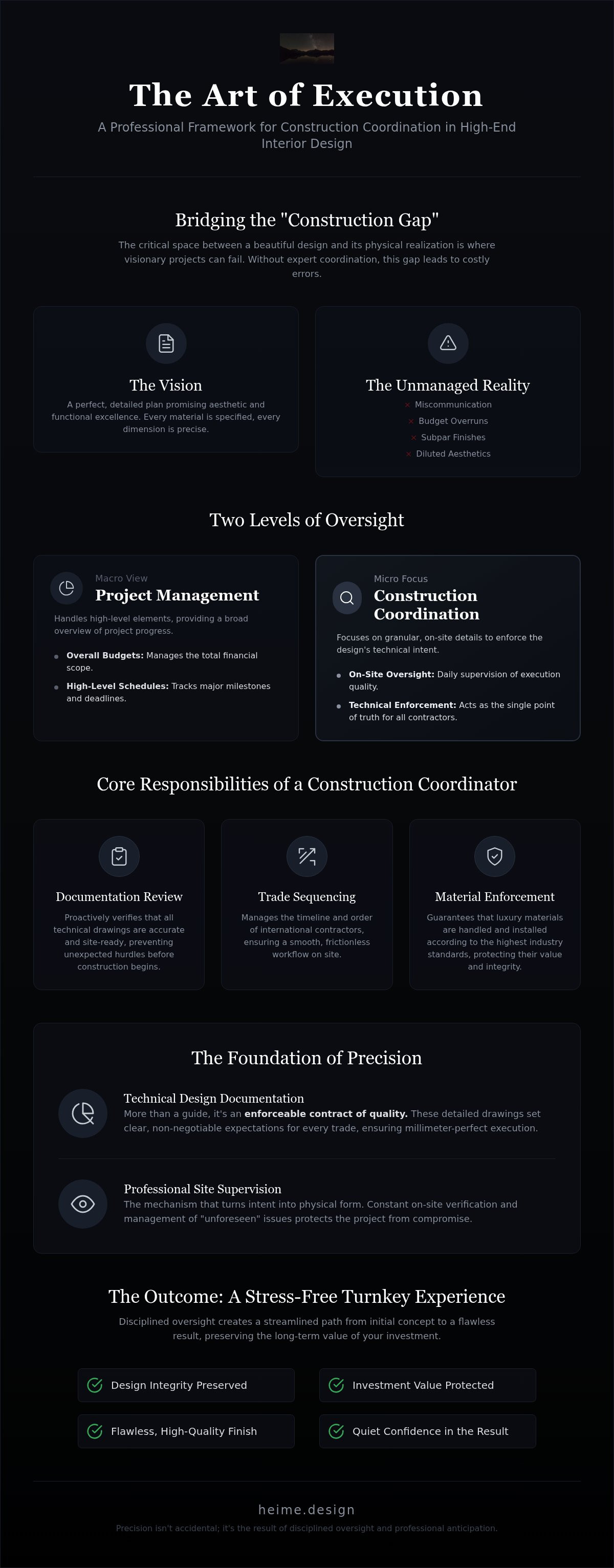
Construction coordination in interior design is the active management of the build phase. It's the point where creative vision meets structural reality. Many people confuse this role with general project management. However, the two functions differ in scope and depth. Project management handles the macro elements like overall budgets and high-level schedules. Construction coordination focuses on the micro. It's the granular oversight of every technical detail on the job site. This organized framework provides the quiet confidence that the final output will meet your expectations.
Luxury projects demand this dedicated layer of protection. When you're working with rare materials or bespoke joinery, there's no room for error. The coordinator acts as the single point of truth for all contractors. They interpret the design for the builder and ensure the execution matches the intent. This role is a core part of Construction Management in Interior Design. It involves the vital coordination of professional services, including mechanical, electrical, and plumbing systems. By maintaining this focus, the coordinator prevents the technical gaps that often lead to budget overruns.
The Difference Between Design and Execution
A beautiful render is only 50% of a project. It's a visual promise, but it isn't a finished home. The "construction gap" is a common failure point in high-end builds. It happens when a design looks perfect on paper but fails to account for site-specific constraints. Without active construction coordination in interior design, these gaps lead to technical errors. These errors often force designers to make compromises that dilute the original aesthetic. Coordination ensures technical feasibility throughout the entire build process, keeping the integrity of the design intact.
Key Responsibilities of a Construction Coordinator
The coordinator's work starts with a deep dive into the technical design documentation. They ensure everything is site-ready before construction begins. This proactive audit saves time and prevents unexpected hurdles. Their daily focus remains on the precision of the execution. Key responsibilities include:
- Documentation Review: Verifying that every technical drawing is accurate for the specific site conditions.
- Trade Sequencing: Managing the timeline and order of international contractors to ensure a smooth workflow. They prevent the friction that occurs when multiple specialists work in the same space.
- Material Enforcement: Checking that luxury materials are handled and installed according to the highest industry standards.
This organized approach removes the stress of managing contractors yourself. It creates a streamlined path from the initial concept to a flawless turnkey result. Precision isn't accidental; it's the result of disciplined oversight and professional anticipation.
The Technical Layers of Professional Site Supervision
Professional site supervision is the mechanism that turns technical intent into physical form. In high-value renovations, the margin for error is non-existent. Construction coordination in interior design ensures that every millimetre of a drawing is respected on-site. This involves constant verification of contractor outputs against approved documentation. It's a form of professional construction management that prioritizes the owner's standards over the contractor's convenience. By maintaining a steady presence on-site, we identify and resolve the 'unforeseen' issues typical of heritage transformations. Old structures often hide structural shifts or plumbing anomalies that aren't visible until demolition. A coordinator manages these variables without compromising the aesthetic goal.
Technical Design Documentation as a Blueprint for Success
Precision starts at the drawing board. Detailed technical drawings aren't just guides; they're enforceable contracts of quality. In specialized sectors like luxury marine and aviation interiors, tolerances are measured in fractions. There's no room for 'close enough' when dealing with weight limits or confined spaces. HEIME uses these documents to set clear, non-negotiable expectations for every trade. This documentation serves as a shield for the client, ensuring that the value of the estate is preserved through exact execution. It allows for a streamlined workflow where every contractor knows exactly what's expected before they arrive on-site. If you're planning a complex build, our technical design documentation services provide the necessary clarity for success.
Quality Control and Craftsmanship Oversight
The final layers of a project define the luxury experience. Oversight during this phase is critical for maintaining high standards. We monitor the installation of high-end furniture and custom joinery to ensure seamless integration with the building's architecture. Lighting design implementation requires similar rigor. A slight misalignment in a recessed fixture can ruin the intended atmosphere of a room. Our process includes conducting rigorous snag lists and punch lists throughout the build, not just at the end. We check the alignment of stone slabs, the finish of millwork, and the functionality of smart home integrations. We don't consider a task complete until it meets the specific criteria outlined in the initial design phase. This disciplined approach ensures a flawless finish that reflects the original vision and protects the long-term value of the property.
Coordination vs. Management: Choosing Your Service Level
Selecting a service level is a strategic decision that impacts both the budget and the final quality. A "Design Only" package provides the creative blueprint but leaves the execution entirely to the contractor's interpretation. This often leads to a disconnect between the render and the reality. "Design + Coordination" introduces a necessary layer of technical enforcement. For international property investors, Turnkey Project Management is the gold standard. It combines construction coordination in interior design with comprehensive logistics and procurement management. This approach offers a clear ROI by identifying potential budget leaks, such as material waste or incorrect installations, before they occur. It eliminates the need for the owner to manage daily site friction, saving hundreds of hours over the project lifecycle.
The Turnkey Interior Design Model
The turnkey model is designed for a professional handover. For UHNW individuals, the goal is a finished home without the administrative burden of construction. Turnkey coordination is vital for expats and those managing cross-border design projects. Distance, cultural differences, and language barriers make direct site management nearly impossible for the owner. We act as the bridge, ensuring your standards are met without you needing to be on-site. Our process incorporates neuroarchitecture into the final execution phase. We verify that lighting, acoustics, and spatial flow align with the scientific principles of well-being. This ensures the physical environment supports your mental clarity from the moment you move in.
Risk Mitigation and Value Preservation
A coordinator acts as the guardian of your investment. In legacy estate projects, the long-term value depends on the uncompromising quality of the finish. Without professional coordination, projects often experience "contractor-led" design shifts. These are small, site-level changes made by trades for the sake of speed or ease. While they may seem minor, these shifts erode the design's integrity and value over time. Effective construction coordination in interior design ensures that every detail remains faithful to the technical documentation. We maintain momentum by managing the sequence of trades, ensuring that the plumber, electrician, and joiner work in a logical, frictionless order. This disciplined oversight preserves both the aesthetic harmony and the financial value of the property.
Navigating International Permits and Compliance
International projects carry unique regulatory hurdles. Architecture licensing is not universal. Every jurisdiction has its own set of codes and permit requirements. In Europe, compliance standards vary significantly between countries. Professional construction coordination in interior design must integrate these legal layers from the earliest stages. It's the only way to avoid costly delays or structural changes mid-build. We focus on the intersection of design intent and local legality. This ensures your project moves forward without administrative friction. Our team manages the technical dialogue with local authorities to keep the path clear for execution.
Success in cross-border builds depends on local expertise. Coordinating with local architects is a mandatory step for many high-end renovations. This is especially true for international buyers in Spain. Spanish building permit coordination requires specific technical documentation and a deep understanding of regional urban planning laws. We bridge the gap between your international design vision and the strict requirements of local building departments. This organized approach protects your investment from the risks of non-compliance.
Architecture Licensing Services for Global Investors
International design concepts often require translation for local regulatory bodies. You need a partner who understands both worlds. Technical support for Spanish building permits is vital for any luxury build in the region. This is where architecture licensing services in Spain provide a strategic advantage. They streamline the approval process by ensuring every technical drawing meets local safety and zoning standards. This proactive step saves months of potential waiting time. It creates a solid foundation for a stress-free turnkey experience. If you're planning a renovation abroad, our Architecture Licensing Services ensure your project remains fully compliant from start to finish.
Managing Cross-Border Construction Teams
Communication is the greatest challenge in international project coordination. Language barriers and cultural differences can lead to misinterpretations on the job site. HEIME takes the lead in coordinating Spanish architects and local contractors. We serve as the single point of truth. This prevents the "lost in translation" errors that often plague cross-border builds. We maintain design integrity by enforcing specifications across international borders. Our team ensures that a bespoke detail designed in one country is executed perfectly in another. This level of oversight removes the owner's burden of managing diverse trades. It provides the quiet confidence that the final output will match the original technical intent, regardless of where the project is located.
The HEIME Approach to Construction Coordination
HEIME approaches construction coordination in interior design with a focus on intentionality. We combine the scientific principles of neuroarchitecture with rigorous technical precision. This ensures that every space doesn't just look perfect; it feels right. Our workflow is defined by quiet confidence. We prioritize streamlined processes that remove complexity for the client. This organized approach is essential for high-end builds where every detail carries significant weight. Whether it's a family estate or a commercial project, we maintain a calm, professional environment throughout the build phase. Every decision is backed by data and technical documentation.
Specialized Coordination for Unique Environments
Technical challenges vary across sectors. Yacht refits require an understanding of marine-grade materials and weight distribution. Private jet interior design demands even higher levels of precision due to aviation safety standards and space constraints. These specialized environments require a tier of construction coordination that goes beyond standard residential work. We also manage UHNW legacy estate transformations with total discretion. Protecting your privacy is as important as protecting the design's integrity. These projects often involve complex technical design documentation that must be enforced without compromise. Our team ensures that every bespoke feature is installed to the exact specifications of the original design.
A Seamless Path to Your New Space
The HEIME promise is simple. We offer a minimalist process that delivers maximum quality. We handle the friction so you don't have to. Our international project management framework facilitates global builds with ease. We bridge the gap between international vision and local execution. This ensures a frictionless journey from the initial consultation to the final handover. Precision is our standard. Organization is our method. We value your time and prioritize efficient communication throughout the project lifecycle.
Our approach removes the stress of managing international contractors and complex licensing. We provide the technical enforcement needed to preserve the value of your property. This results in a turnkey experience where the transition to your new space is as smooth as possible. We invite you to explore how our specialized approach can elevate your next project. Our team is ready to provide the technical oversight and creative dedication your estate deserves. Contact us to discuss your project requirements and discover a more refined path to execution.
Achieving Excellence Through Disciplined Execution
Execution is the final test of any design. A successful build relies on the technical enforcement of your aesthetic intent. You've seen how construction coordination in interior design acts as the vital bridge between visionary plans and physical reality. By managing international contractors and cross-border licensing, you protect the long-term value of your property. It's the difference between a project that merely finishes and one that flourishes.
HEIME specializes in UHNW legacy estates. Our multilingual team provides seamless coordination across Europe, ensuring your project remains compliant and precise. We redefine luxury by integrating neuroarchitecture into our organized workflow. This creates spaces that support your well-being while maintaining the highest standards of craftsmanship. Our process removes the administrative burden from the owner, allowing for a focused and efficient path to completion.
The path to a flawless turnkey experience is built on disciplined oversight and professional anticipation. We're ready to help you navigate the complexities of your next high-end build. Secure your project's success with HEIME's construction coordination. Your vision deserves a foundation of technical excellence.
Frequently Asked Questions
What is the difference between a project manager and a construction coordinator?
A project manager handles the broad administrative scope, such as high-level scheduling and overall budget tracking. In contrast, construction coordination in interior design focuses on the technical execution at the site level. The coordinator ensures that every physical detail aligns perfectly with the technical drawings. While the project manager looks at the project's health from a distance, the coordinator provides granular oversight to prevent technical errors during the build phase.
Do I need construction coordination for a small luxury renovation?
Yes, because the complexity of luxury materials requires precise handling regardless of the project's size. Even a small renovation involves bespoke joinery, high-end stone, and specialized lighting that contractors might misinterpret. Coordination acts as a vital quality control layer, ensuring that expensive materials aren't wasted due to technical oversights. It provides the quiet confidence that the final finish will match the high-end vision you've invested in.
How does HEIME handle coordination for properties in Spain?
HEIME utilizes a multilingual team to bridge the gap between international design standards and local Spanish regulations. We provide specialized architecture licensing services and coordinate directly with local architects to secure building permits. Our team manages the technical dialogue with Spanish authorities and contractors, removing the language barrier for the owner. This organized approach ensures that cross-border projects in Spain move forward without the typical administrative or cultural friction.
Can construction coordination actually save me money on a high-end build?
Professional coordination saves money by preventing expensive rework and material waste. Construction coordination in interior design identifies technical gaps before they become physical errors on-site. By catching a plumbing misalignment or a structural discrepancy early, we avoid the costs of demolition and re-installation. This disciplined oversight protects your budget from the hidden costs of miscommunication, ensuring the value of your legacy estate is preserved through efficient execution.
What role does technical design documentation play in the coordination process?
Technical design documentation serves as the enforceable blueprint for every trade on-site. It translates the aesthetic vision into precise measurements, material specifications, and installation methods. During the coordination process, these documents act as the single point of truth. The coordinator uses them to verify contractor work and ensure total compliance with the design intent. Without this level of detail, the build phase relies on guesswork, which often leads to subpar finishes.
How often does a construction coordinator visit the site?
Site visit frequency depends on the project's current phase and complexity. During critical stages, such as the installation of bespoke millwork or structural changes, visits are frequent to ensure immediate problem-solving. Regular site supervision allows the coordinator to catch deviations before they affect subsequent trades. We maintain a consistent presence to monitor quality control and verify that the work remains on schedule, providing the owner with regular and detailed progress updates.
Is construction coordination included in standard interior design fees?
Construction coordination is typically a separate service or part of a comprehensive turnkey project management package. Standard design fees often cover only the creative concept and basic drawings. Coordination requires a significant technical time commitment and site presence that goes beyond traditional design work. We offer tiered service levels, allowing clients to choose between design only or a fully coordinated experience that includes end-to-end site supervision and contractor management.
What happens if a contractor deviates from the design plans?
If a contractor deviates from the plans, the coordinator identifies the error during site supervision and enforces a correction. We refer to the approved technical documentation to resolve the discrepancy immediately. By catching these shifts early, we prevent them from impacting other trades or the final aesthetic harmony. The coordinator manages the technical dialogue with the contractor to ensure the work is brought back into alignment with your original standards and vision.


