

What if your private jet felt less like a high-end hotel and more like a cognitive sanctuary designed for peak performance? Many owners find that standard VIP aircraft cabin design often prioritizes generic aesthetics over personal wellbeing. It's frustrating to invest in a luxury asset that doesn't support your mental clarity or focus. You've likely felt the stress of managing complex, cross-border renovations. Technical safety and weight certifications often seem to clash with your creative vision.
We believe a successful cabin must balance high-end aesthetics with technical precision. This guide explores how neuroarchitecture and project management transform interiors into high-performance sanctuaries. We'll show you how to preserve long-term asset value while building a functional flying office. You'll learn how a seamless, turnkey process handles everything from technical documentation to site supervision. From 2026 safety standards to the shift toward "quiet luxury," we provide the roadmap for your aviation legacy. Let's move beyond simple transit and start designing for your future.
Key Takeaways
- Learn how neuroarchitecture principles optimize cognitive function and mental wellbeing during long-haul flights.
- Evaluate the ROI of a cabin refit versus a new completion to maximize the long-term value of your aviation asset.
- Discover how bespoke VIP aircraft cabin design transforms standard interiors into high-performance sanctuaries using zoning and advanced acoustics.
- Streamline complex cross-border projects with turnkey management that bridges technical documentation and site supervision.
- Create a seamless transition from your residential estate to your aircraft by focusing on a holistic wellness environment.
Redefining the VIP Aircraft Cabin Experience
In 2026, the definition of luxury in the sky is changing. We're seeing a move away from standard corporate palettes toward highly bespoke personal sanctuaries. Modern VIP aircraft cabin design now prioritizes the emotional and cognitive state of the passenger. The traditional "flying office" was once the gold standard. Today, it's evolving into a holistic wellness environment that supports deep focus and restorative rest.
This shift requires a delicate balance. Designers must marry your aesthetic identity with the rigid technical constraints of aviation. Every material must meet strict fire safety standards, such as FAR 25.853 or CS 25.853. We manage these complexities so your creative vision remains the priority. The result is a space that feels like a natural extension of your legacy property portfolio. It's about creating a sense of permanence in a mobile environment.
From Transit to Transformation
Long-haul travel takes a toll on the human body and mind. Understanding these psychological needs is central to our process. A well-designed Aircraft Cabin isn't just a vehicle; it's an extension of your legacy estate strategy. It should feel like a seamless transition from your primary residence to your global travels. We focus on quiet confidence rather than flashy displays. This means using natural materials and layouts that reduce stress. Your cabin becomes a place where time is regained, not lost. It's a sanctuary that prepares you for your arrival.
The Role of the Boutique Design Studio
Large completion centers often provide industrial, one-size-fits-all solutions. A boutique design studio offers the personalized attention required for high-stakes projects. We act as the bridge between owners, family offices, and aviation engineers. This ensures your vision remains intact through every technical hurdle. Our multidisciplinary approach draws from marine and residential design to create a cohesive experience. We handle the technical documentation and site supervision so you don't have to. This turnkey approach is essential for maintaining the value of your aviation legacy. We prioritize clarity and precision in every drawing and specification. This level of detail prevents costly delays during the installation phase. It's a streamlined path to a finished sanctuary that reflects your unique identity.
The Science of Flight: Neuroarchitecture and Materials
Modern VIP aircraft cabin design is shifting from pure decoration to scientific optimization. We look beyond surface-level aesthetics to understand how the environment affects your brain. In the context of aviation interior design, neuroarchitecture is the application of neuroscience to the built environment to enhance passenger wellbeing and cognitive performance through intentional sensory and spatial mapping. By managing cabin pressure, acoustics, and air quality through architecture, we create a space that actively promotes wellbeing. Every material we select must also meet rigorous EASA and FAA fire and weight standards, ensuring safety never compromises style.
Cognitive Luxury in High-Altitude Environments
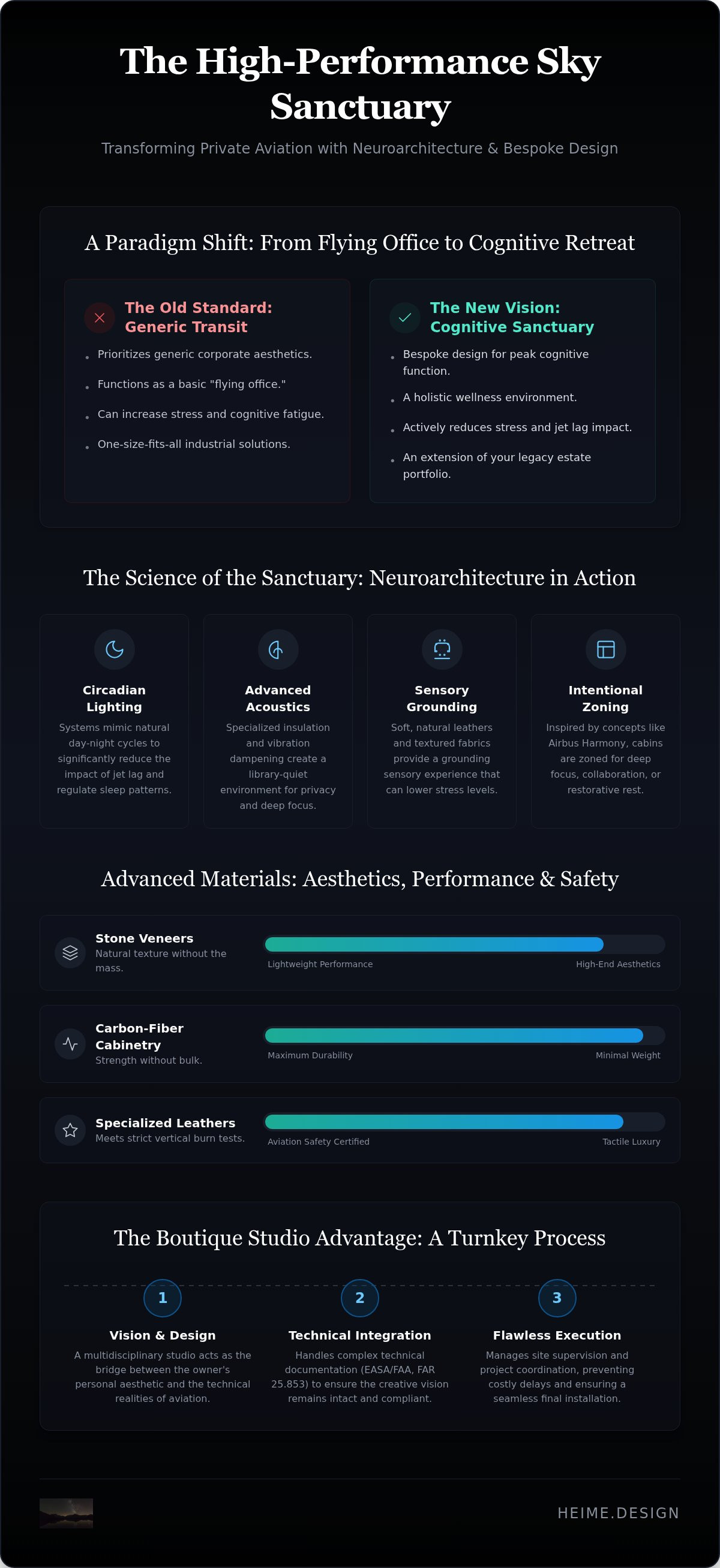
Lighting is a primary tool for regulating circadian rhythms during international travel. We design lighting systems that mimic natural day-night cycles, reducing the impact of jet lag. Tactile surfaces also play a role in passenger comfort. Soft, natural leathers and textured fabrics can lower stress levels during turbulence by providing a grounding sensory experience. Integrating neuroarchitecture interior design allows us to create zones specifically for deep focus or restorative rest. This approach mirrors the Airbus Harmony Cabin Concept, which uses concentric circles to create a more natural, fluid movement within the aircraft.
Bespoke Materials for Aviation Performance
Weight is the ultimate constraint in aviation. We use advanced materials like stone veneers and carbon-fiber cabinetry to provide a high-value look without the bulk. These materials allow for the same level of detail found in a legacy estate while remaining flight-ready. Soundproofing is another critical element. We use specialized insulation and vibration-dampening techniques to create a library-quiet environment. This ensures that your "flying office" remains a space for clear thought and private conversation.
- Stone veneers for natural texture at a fraction of the weight.
- Specialized leathers that meet strict vertical burn tests.
- Matte-brushed metal accents to reduce glare and visual fatigue.
Our team at heime.design integrates these technical requirements into a cohesive, high-performance design. We ensure every material choice supports both your aesthetic goals and the aircraft's operational efficiency. By selecting materials that age gracefully, we help preserve the long-term asset value of your cabin. It's a precise balance of durability and high-value appeal that defines the next generation of private flight.
Navigating the Refit vs. New Completion Decision
Choosing between a refit and a new completion is a high-stakes decision. A cabin refit for a legacy aircraft can significantly boost its resale value. It's a strategic way to update an existing asset with modern technology and aesthetics. On the other hand, starting with a "green" aircraft offers total creative freedom. This path allows for a completely bespoke VIP aircraft cabin design tailored to your specific mission. Both options require a deep understanding of aviation engineering and project coordination.
The Technical Blueprint: Documentation and Permits
Technical design documentation is the most critical part of any modification. It's the bridge between a creative vision and flight certification. We provide comprehensive documentation services to ensure your interior meets all safety standards. This includes managing LOPA (Layout of Passenger Accommodation) compliance to ensure passenger safety and emergency egress. Permit coordination is equally vital for cross-border projects. We navigate the complex requirements of international aviation bodies so you don't have to. This level of detail is a hallmark of effective international project management interior design. It ensures your aircraft moves through the shop without regulatory delays.
Timeline and Project Management Realities
A major cabin overhaul involves months of downtime. Effective planning is the only way to manage this reality. We act as your eyes and ears on the ground through constant site supervision. This ensures that every stitch and panel meets the original specification. We coordinate directly with Spanish and international authorities to streamline the approval process. Our turnkey approach reduces the stress of managing multiple global contractors. We prioritize clarity and speed to get your aircraft back in the air. This meticulous focus is essential for next-generation VIP aircraft cabin design.
A refit offers a faster turnaround and an immediate aesthetic upgrade. It's often the best path for maintaining the utility of a current fleet. A new completion provides the highest long-term asset value and access to the latest airframe technology. It's the ultimate expression of personal style and performance. Your choice depends on your long-term aviation strategy. We help you evaluate the ROI of each path with clear, data-driven insights. It's about building a legacy that performs as well as it looks.
Steps to Designing a High-Performance Private Sanctuary
Successful VIP aircraft cabin design follows a rigorous, logical sequence. First, define your primary mission. Whether for business, family, or multi-purpose use, this choice dictates the entire floor plan. Second, zone the cabin to ensure privacy, social connection, and restorative sleep. Third, integrate a modern Cabin Management System (CMS) that feels intuitive. Fourth, select bespoke materials that reflect your personal journey. Finally, finalize technical drawings for engineering sign-off. This structured approach moves you from a concept to a certified flying sanctuary.
Zoning for Privacy and Performance
We design the Master Suite to provide residential-level comfort at 40,000 feet. It's a private retreat for recovery. The dining and conference area serves as a functional, high-performance office. Here, ergonomics and acoustics are paramount. We also prioritize crew rest areas. Proper crew design is essential for maintaining safety and high-service standards during long-haul flights. Each zone must serve its specific purpose without compromise. This ensures the aircraft remains a high-performance tool for your global legacy.
Technological Integration and Connectivity
Connectivity is no longer optional. We future-proof your cabin with high-speed satellite links and 6G integration. Technology should be invisible. We integrate controls directly into high-end furniture selection, avoiding cluttered screens. Immersive entertainment systems provide a cinema-like experience without disrupting the aesthetic harmony. The goal is a seamless, smart environment that responds to your needs. It's about creating a "smart home" in the sky that feels entirely natural.
Finalizing technical drawings for renovations is the most critical step for safety and certification. Our team manages this entire process to ensure your vision meets all airworthiness requirements. We bridge the gap between creative ambition and engineering reality. If you're ready to transform your aircraft into a personalized sanctuary, contact heime.design to begin your turnkey design journey. We prioritize your vision while handling every technical detail. This ensures a smooth path from the first sketch to the final flight.
Turnkey Management for Global Aviation Legacies
Managing an international aviation build is a significant logistical challenge. It requires more than just a creative eye; it demands a rigorous management framework. The heime.design approach focuses on bridging cultures and managing global contractors with absolute precision. Turnkey project management is essential for UHNW clients who oversee diverse asset portfolios. It ensures that the transition between your primary home and your aircraft is handled by a single, expert team. This consistency is vital for maintaining the standards seen in UHNW residential interior design. We treat your cabin as a mobile legacy property. Meticulous maintenance and strategic refits preserve this value over time.
Cross-Border Design Excellence
Our team manages projects across Poland, Spain, and major international aviation hubs. We provide multilingual coordination in English, Spanish, and Polish to ensure total clarity. This ensures your vision is never lost during technical discussions with engineers or contractors. For projects involving Spanish ground operations, we integrate our expertise in architecture licensing services Spain to streamline documentation. It's about removing friction from the cross-border design process. We handle the site supervision so you can focus on your primary objectives. Clear, direct communication remains our priority throughout the project lifecycle.
Securing the Future of Your Aviation Asset
A thoughtful VIP aircraft cabin design directly impacts the resale value of your private jet. Buyers in 2026 look for interiors that balance bespoke luxury with technical compliance. We create a physical legacy that transcends passing trends by focusing on essentialism. This means selecting materials that age well and layouts that remain functional for decades. Your aircraft shouldn't just look modern today; it should feel relevant and sophisticated in ten years. Finalizing the build requires end-to-end turnkey interior design to ensure every detail matches the technical drawings. We don't just deliver a beautiful space. We secure the future of your aviation asset through intentional, high-performance design. It's a comprehensive strategy for your global legacy.
Designing Your Global Aviation Legacy
Aviation in 2026 is about more than speed; it's about how you feel when you arrive. We've explored how neuroarchitecture and cognitive luxury turn a standard aircraft into a high-performance sanctuary. Thoughtful VIP aircraft cabin design preserves the long-term value of your asset while supporting your mental clarity. Success depends on balancing aesthetic goals with rigid technical documentation and constant site supervision.
Managing these complex, cross-border projects requires a specialized partner with a global perspective. Our multilingual team bridges the gap between owners and international aviation hubs. We handle every detail, from initial concept to final engineering sign-off. This ensures your vision remains intact through every phase of the build. Your aircraft should be a seamless, restorative extension of your legacy property portfolio. It's time to move beyond generic luxury and create a space that reflects your identity.
Consult with HEIMÉ for your next VIP aviation project to begin building your private flying sanctuary. We're ready to help you navigate the future of private flight with precision and care.
Frequently Asked Questions
What is the average timeline for a VIP aircraft cabin refit?
A full cabin refit typically takes between 4 and 12 months depending on the scope of the project. Minor aesthetic refreshes are faster, but structural overhauls require extensive engineering and certification. This timeline includes technical design documentation and site supervision to ensure the build stays on schedule. Planning for this downtime is essential for maintaining your aviation legacy. We coordinate with global contractors to reduce the risk of regulatory delays.
How does neuroarchitecture improve the private jet experience?
Neuroarchitecture uses neuroscience to design spaces that enhance passenger wellbeing and cognitive performance at high altitudes. We apply these principles to regulate circadian rhythms through lighting and reduce stress with tactile surfaces. In VIP aircraft cabin design, this creates a sanctuary that promotes deep focus or restorative rest. It's a scientific approach to spatial layout that goes beyond aesthetics. This ensures you arrive at your destination feeling refreshed and ready for your primary mission.
What are the main differences between FAA and EASA cabin certifications?
FAA and EASA certifications both require materials to pass strict fire safety tests, though their administrative paths differ. Both authorities use vertical burn tests under regulations like FAR 25.853 or CS 25.853. The main difference lies in the specific documentation and permit coordination required for cross-border projects. We manage this technical design documentation to ensure compliance in both jurisdictions. This bridge between creative vision and airworthiness is critical for any international aviation build.
Can I use residential materials in my private jet interior?
You can only use residential materials if they pass strict aviation fire, smoke, and toxicity requirements. Standard residential fabrics and woods usually fail these vertical burn tests. We select high-end materials that provide a residential feel while meeting EASA and FAA standards. This includes specialized leathers and lightweight stone veneers. We ensure every selection supports your aesthetic identity without compromising safety. Our goal is a seamless transition from your home to your aircraft.
How does cabin design impact the resale value of an aircraft?
A modern, compliant interior significantly increases the long-term asset value and market appeal of a private jet. Buyers prioritize cabins that balance bespoke luxury with technical compliance. A well-executed VIP aircraft cabin design that uses durable materials ensures the aircraft remains relevant for years. Meticulous maintenance and documented refits also preserve value. We focus on creating a physical legacy that transcends passing trends, securing the future of your aviation investment.
What is the role of a project manager in aviation interior design?
The project manager acts as the central link between the owner, designers, and aviation engineers. We handle end-to-end turnkey coordination to manage global contractors and technical documentation. This includes site supervision during the build to ensure quality control. Our multilingual team ensures the owner's vision is never lost in translation. We remove the stress of managing complex renovations. This professional oversight is essential for delivering a high-performance sanctuary on time and within scope.
How do you balance soundproofing with aircraft weight restrictions?
We use advanced, lightweight insulation and vibration-dampening materials to create a library-quiet environment without exceeding weight limits. Weight is a critical constraint in aviation. We select acoustic treatments that provide maximum sound absorption with minimal mass. This requires precise technical drawings and engineering sign-off. By zoning the cabin effectively, we can prioritize soundproofing in areas meant for sleep or focus. It's a delicate balance of technical precision and passenger comfort.


