

FF&E procurement for luxury residential projects typically takes four to eight months from specification sign-off to final installation. For villas, the average is 2-6 months, depending on project size and customization. The calendar can feel tight when bespoke pieces, supplier approvals and delivery all need to align.
That is why the timeline takes shape well before furniture arrives at the property. Clear specifications and timely decisions help keep sourcing, orders, quality checks and budgets aligned.
This guide explains the procurement stages and factors that can affect the schedule for a luxury home or villa in Poland. Learn how supplier coordination, custom production, budgeting and delivery shape the timeline, and how early planning keeps the process organised.
Key Takeaways
- Map quantities, specifications and project scope early to make supplier comparisons clearer and reduce gaps between design intent and purchasing.
- Keep each order’s specifications, approvals and progress in one coordinated process so delays or quality issues can be addressed promptly.
- Build the budget around more than purchase prices: delivery, installation, currency exposure and contingencies can all affect the final plan.
- Treat a villa’s FF&E schedule as a project-specific plan, balancing custom pieces and personal requirements with production and delivery sequencing.
Multi-brand FF&E sourcing and supplier consolidation
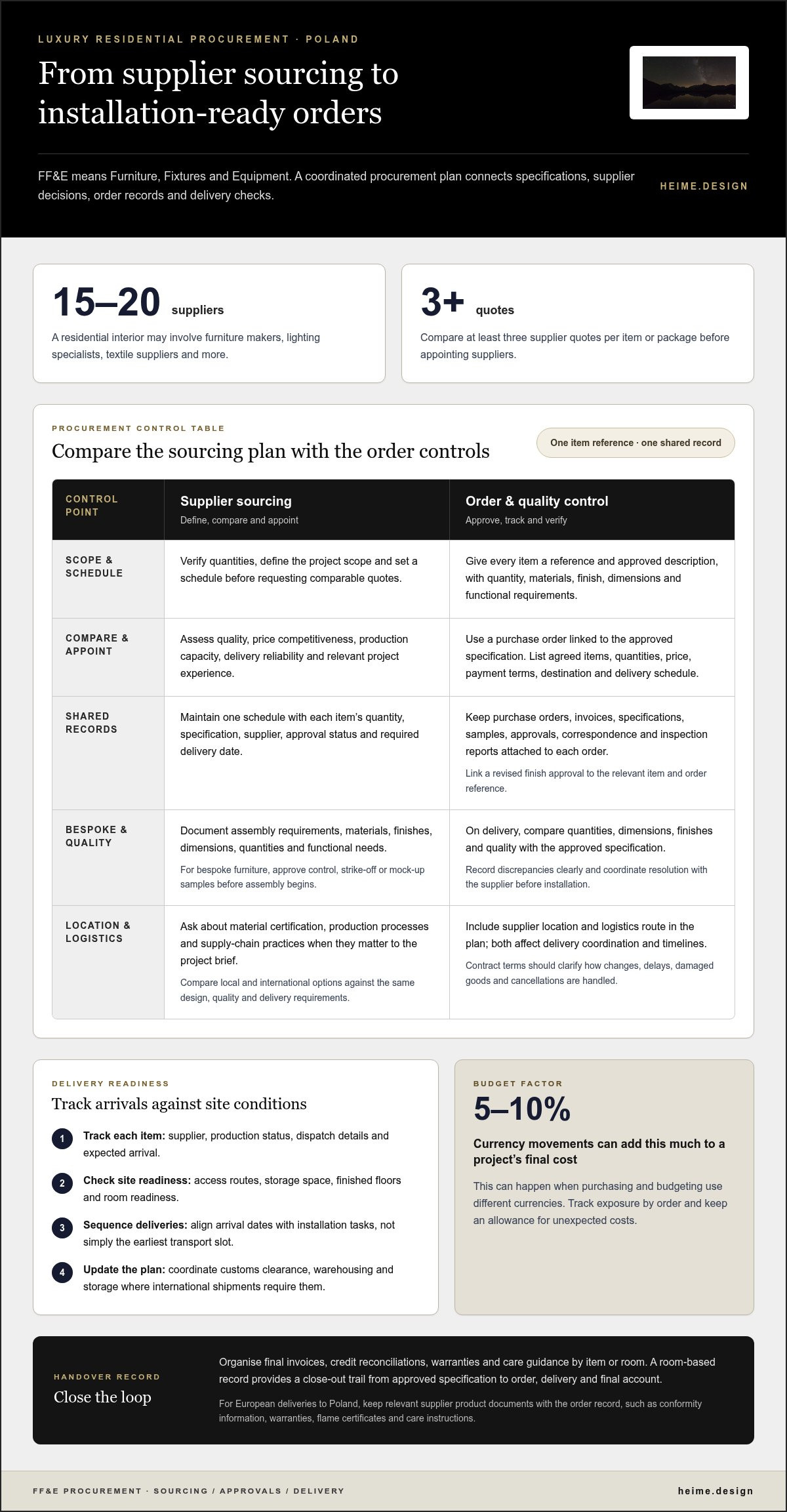
Residential projects in Poland source furniture, lighting and décor from Polish makers, European brands and specialist suppliers. For FF&E procurement for luxury residential projects, begin with verified quantities, a clearly defined scope and a schedule before requesting comparable quotes.
Multi-Brand Supplier Sourcing
A residential interior may involve 15-20 suppliers, from furniture makers to lighting and textile specialists. Build one schedule that records each item’s quantity, specification, supplier, approval status and required delivery date. Compare at least three supplier quotes per item or package. Assess product quality, price competitiveness, production capacity, delivery reliability and relevant project experience before appointing suppliers.
Supplier Communication and Order Records
Keep communications attached to each order rather than scattered across email threads. Record purchase orders, invoices, specifications, samples, approvals, correspondence and inspection reports. For example, link a revised finish approval to the relevant item and order reference. A shared record helps the design and project teams track decisions, quantities and timelines, and coordinate updates with suppliers.
Quality Assurance and Supplier Coordination
Document the assembly requirements, materials, finishes, dimensions, quantities and functional needs for each item. For bespoke furniture, approve control, strike-off or mock-up samples before assembly begins. On delivery, compare quantities, dimensions, finishes and quality with the approved specification. Record any discrepancies clearly and coordinate their resolution with the supplier before installation.
Sustainable Sourcing and Supplier Location
Ask suppliers for information on material certification, production processes and supply-chain practices when these matter to the project brief. European and Iberian manufacturers may prioritise certified materials and responsible processes. Include supplier location and logistics route in the procurement plan: these affect delivery coordination and timelines. Compare locally sourced and international options against the same design, quality and delivery requirements.
Order management, contracts, and quality control
FF&E Definitions and Specifications
Distinguish loose furniture and equipment from fixed building elements in the specification. Give every order an item reference, approved description, quantity, materials, finish, dimensions and functional requirements. A dining chair, for example, needs a specified upholstery and finish, not just a product image. Record approved changes against the item reference so owners and suppliers use the same version.
Supplier Contracts and Purchase Orders
Use a purchase order for each supplier order and link it to the approved specification. List the agreed items, quantities, price, payment terms, delivery destination and schedule. Contract terms should clarify how changes, delays, damaged goods and cancellations are handled. Before issuing the order, compare it with the final selections and approval record. This helps prevent an outdated finish or quantity from entering production.
Open-book financial reporting gives owners a clear view of commitments and changes. Maintain a cost schedule linking each order to its approved amount, deposit, balance, invoice and payment status. Record variations separately, including the reason and approval. For example, document how a furniture substitution affects both the order value and specification before authorising the change.
For European deliveries to Poland, keep supplier-provided product documents with the order record. These may include conformity information, warranties, flame certificates and care instructions, where relevant to the specified item. At receipt, document visible damage or discrepancies and link them to the delivery and purchase order. Clear records support follow-up with the supplier and prevent unresolved issues from disappearing during installation.
At handover, organise final invoices, credit reconciliations, warranties and care guidance by item or room. Owners can then find the right document for a specific fixture or piece of furniture. A room-based record also provides a practical close-out trail, from approved specification to order, delivery and final account.
Budget, delivery, quality, and import challenges
For a residence in Poland, the purchase price is only one part of the FF&E budget. Delivery, installation, currency changes, storage and site readiness can all affect the final cost and schedule.
Delivery Tracking and Site Readiness
Create a delivery tracker showing each item’s supplier, production status, dispatch details and expected arrival. Before booking transport, confirm that the property is ready to receive and protect the goods. Check access routes, storage space, finished floors and room readiness. For example, schedule delicate lighting after dusty work is complete to reduce exposure to debris and damage. Align delivery dates with installation tasks, rather than simply choosing the earliest transport slot.
Logistics Coordination and Oversight
International shipments can require customs clearance, warehousing and storage. Coordinate these stages with suppliers, carriers and the site team, especially when orders have different production dates. A delay to custom stonework, for example, may affect when a room is ready for installation. Keep the delivery plan current, record changes and share revised arrival dates with the people preparing the property.
Currency movements can add 5-10% to a project’s final cost when purchasing and budgeting use different currencies. Track exposure by order, and keep an allowance for unexpected costs. An FF&E project should include a 10-15% contingency for issues such as transit damage, discontinued models and fabric batch variation. Include purchase, delivery, installation, foreign charges and contingencies in the estimate.
Production time affects freight and installation planning. Italian manufacturers often need 8-14 weeks for custom upholstery and 12-20 weeks for stone or metalwork. Allow an additional two-week buffer for unforeseen delays in upholstery and custom-built furniture production and delivery. These periods make early scheduling useful, particularly when several finishes must arrive before installation can proceed.
On arrival, inspect quantities, finishes, dimensions and quality against the approved specification. Photograph damage, note missing pieces and record discrepancies before installation. For a marble table or upholstered chair, compare the delivered finish with the approved sample. A clear inspection record supports follow-up and helps protect the intended design and quality standards.
Private villa and residential procurement
A private villa’s FF&E plan is shaped around one household’s routines, preferences and property. Hospitality procurement, by contrast, often prioritises operational needs and consistency across properties. Define priorities room by room. Depending on the home, the package may include loose furniture, decorative lighting, case goods, mirrors, rugs, accessories, selected equipment and outdoor pieces.
Use an example budget allocation to test priorities, not as a fixed formula: one villa model assigns 20% to the living room, 30% to bedrooms, 25% to the kitchen and 25% to outdoor areas. A client with a large terrace may need a different balance. Tie each allocation to approved items, room use and the overall project budget before placing orders.
Custom furniture can give a villa a distinctive identity. Made-to-measure pieces may suit unusual room dimensions or a specific interior scheme, while materials such as oak, walnut, marble and linen offer different visual and practical qualities. Compare samples with the room’s lighting and finishes, and record approval before production, particularly for bespoke dimensions, materials or colours.
Many FF&E items need 12-16 weeks of production, so procurement should run in parallel with construction. Sequence choices by room and installation dependency. A dining table, for example, may require access and floor protection after other work finishes. Aligning approvals with construction milestones helps limit delays and keeps deliveries relevant to site readiness.
Assess each supplier’s quality, price, production capacity, delivery reliability and relevant project experience. A strong selection balances the villa’s design intent with practical delivery needs. Review the package as a whole so a change in one room does not disrupt materials or proportions elsewhere. This matters when a property combines bespoke pieces, outdoor furniture and suppliers with different timelines.
Plan your villa interior with a coordinated view of design choices, approvals and project timing.
Heime.design: Luxury Interior Design & Project Management for international Clients
heime.design brings luxury interior design and project management together for international residential projects. The studio can help when sourcing decisions need to align with the broader design, renovation or project plan.
The studio’s work includes bespoke interior design, renovation and project management, alongside interior architecture. This integrated approach is useful when a villa’s furniture, lighting, finishes and room layouts need to form a coherent scheme. Coordinated planning connects design decisions with the practical sequence of the project.
For a home in Poland or a cross-border residence, discuss the property, your priorities and the project scope with heime.design. Contact the studio to explore the right starting point for your home.
Shape the Next Stage of Your Home
The next decision is not which item to order, but what you want the finished home to make possible. Consider how each room should feel, how the household will use it and which details will give the property continuity. A clear direction helps each choice contribute to the overall vision.
FF&E procurement for luxury residential projects works best when the design vision guides decisions from the outset. Set priorities for the home, then use them to assess choices as the project develops. This keeps the process focused on the people who will live there, not simply on a list of furnishings.
heime.design works with international clients on luxury interior design and project management. If you’re ready to define the direction for your home, discuss your project with heime.design. A thoughtful brief is a strong place to begin, and your next decisions can bring the home closer to the life you imagine.
Frequently Asked Questions
What is the typical timeline for luxury FF&E procurement?
A typical residential FF&E project takes four to eight months from specification sign-off to final installation. Villa procurement averages 2-6 months, depending on project size and customization. These timelines cover different scopes and starting points, so use the project’s own approval date and delivery plan to map milestones. Supplier location, order quantities, bespoke requirements and logistics all affect how the schedule unfolds.
How can developers ensure quality when sourcing internationally?
Set quality checks for sample approval and delivery, and record the requirements against each item. For a custom dining chair, keep the approved fabric and finish references with its dimensions and quantity. Approve control, strike-off or mock-up samples before bespoke assembly begins. On delivery, inspect the goods against those references, document discrepancies and link them to the relevant order for follow-up.
What are the biggest cost drivers in luxury FF&E procurement?
Key cost drivers include product selection, customisation, order quantity, supplier location and the route goods take to the property. A custom stone console involves different production and transport considerations from a standard lamp sourced nearby. Allow for purchasing, delivery, installation, foreign charges and contingencies in the budget. Tracking costs by order makes the impact of design changes easier to assess.
What does FF&E stand for?
FF&E stands for Furniture, Fixtures and Equipment. In a home, it refers to movable and specified elements that complete the interior, rather than the building’s permanent structure. Examples include a sofa, bed, table, lamp or curtain. A project schedule can list each item by room and order, distinguishing selected furnishings from fixed architectural finishes.
What is FF&E in villa projects?
In a villa, FF&E is the furniture, fixtures and equipment that makes each space usable and reflects the household’s needs. A package might include bedroom furniture, decorative lighting, mirrors, rugs, accessories and outdoor pieces. Unlike hospitality procurement, a private residence is tailored to its owner. Grouping selections by room helps connect choices to how the home will be used.
What is FF&E in interior design?
In interior design, FF&E describes the specified furnishings and equipment that bring a design scheme into the home. It connects visual choices with practical decisions, such as choosing a dining table that fits the room and chairs that complement its finish. The schedule records what is being supplied and where it belongs, giving the design and delivery teams a shared reference.


