

A beautiful room can still feel unfinished when it appeals only to the eye. Sensory interior design for high-end residences considers sight, touch, sound, scent and physical comfort, bringing materials, lighting and the way a space is used into one coherent experience. The result is a home shaped not only by how it looks, but also by how it feels to live in.
Natural stone, considered lighting and carefully chosen furnishings can all change a room’s atmosphere. The key is how these elements work together. This article explores how texture, acoustics and integrated audio contribute to a richer sensory experience, and how to balance them without overwhelming the home.
Learn how tactile materials add depth, acoustic choices soften everyday noise and integrated sound can suit different moments at home. You’ll also see how lighting and other sensory layers fit into the wider design, helping each room feel intentional, comfortable and connected.
Key Takeaways
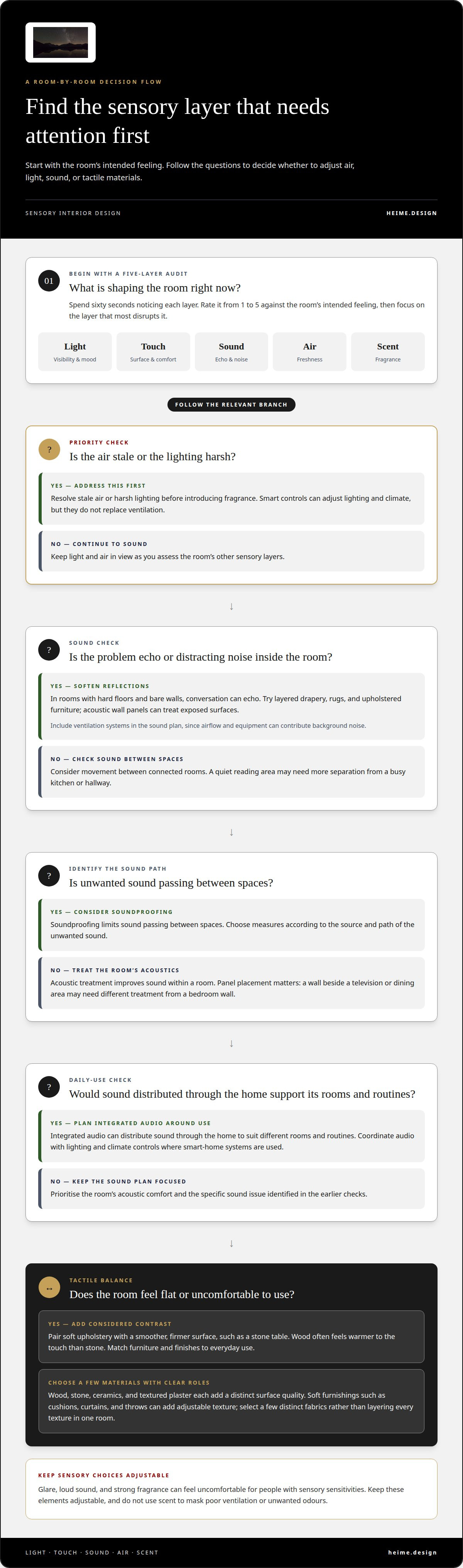
- Assess how light, touch, sound, air and scent shape each room, then focus on the layer that most disrupts its intended atmosphere.
- Combine contrasting materials, such as smooth stone and soft textiles, to give a room tactile depth without making it feel busy.
- Use furnishings and acoustic treatments to soften unwanted echo, while planning integrated audio around how each space is used.
- Coordinate sensory choices with the room’s purpose so comfort, atmosphere and function feel connected rather than competing.
What is sensorial interior design?
Sensory design shapes how a home feels through sight, touch, sound, air and scent. A five-layer audit can help identify which elements support a room’s purpose and which distract from it.
Ventilation and Lighting Priorities
Ventilation and lighting should be addressed before fragrance because they shape air freshness and visibility. In a five-layer home audit, assess light, touch, sound, air and scent separately. Spend sixty seconds noticing each layer, then rate it from 1 to 5 against the room’s intended feeling. Resolve stale air or harsh lighting before introducing fragrance. Smart controls can adjust lighting and climate, but they don’t replace ventilation.
Visual Harmony Across Colours and Surfaces
Visual harmony comes from balancing colour, lighting and finishes to create a coherent environment. Blues and greens can support a calm mood, while yellow can add energy. Sensory design focuses on how people experience a space; biophilic design centres on nature, while universal design prioritises usability for people with different needs. In Poland, projects must account for applicable building and accessibility requirements. The relevant provisions depend on the property and project scope.
Light on Textured Surfaces
Light reveals texture through highlights and shadows. Matte finishes absorb light and add visual depth, while sculpted relief creates shifting shadow and rhythm. Consider these effects beside a window, where daylight changes throughout the day. Glare, loud sound and strong fragrance can feel uncomfortable for people with sensory sensitivities. Keep these elements adjustable, and don’t use scent to mask poor ventilation or unwanted odours.
Layered Lighting for Moods and Activities
Layered lighting combines different sources to suit activities and atmosphere. A reading light supports focused tasks, while softer ambient light can invite conversation. Dimmers and smart bulbs adjust brightness and colour; smart-home systems can also coordinate lighting, audio and climate controls. A typical luxury residential project moves from a brief and property survey to concept design, technical documentation, coordination and implementation. For comprehensive renovations and high-end residences, design and build specialists such as Projeco Contracting LLC | Villa Construction | Apartment Interiors Fit Out help bridge architectural documentation with seamless on-site execution. At each stage, the design direction is connected to practical use.
Tactile materials and contrasting textures
Contrasting textures make a room feel engaging rather than visually flat. Each material should support comfort and the room’s function.
Tactile Comfort in Furniture and Surfaces
Tactile comfort comes from matching furniture and finishes to everyday use. A sofa invites longer conversations when its upholstery feels soft, while a smooth stone table gives the hand a cooler, firmer contrast. Consider temperature as well as texture: wood often feels warmer to the touch than stone. In a living room, balance an enveloping fabric with harder, easy-to-use surfaces. This contrast helps the space feel comfortable and functional, rather than uniformly soft.
Natural Materials and Finishes
Natural finishes introduce distinct textures through wood, stone and ceramics. Handcrafted wood reveals its grain beneath the fingertips; raw stone adds a more irregular surface. Textured plaster creates another tactile layer on walls without adding furniture. These materials work best together when each has a clear role, such as stone on a counter and wood on a cabinet. Their variation gives a luxury interior depth while keeping the material palette considered.
Earthy Colours and Tactile Perception
Earthy colours can suggest softness even before anyone touches a surface. Warm browns, muted clay and natural greens often create a gentler impression than sharp, high-contrast combinations. Use colour alongside real texture, not as a substitute for it: a warm wall tone cannot recreate the feel of linen or brushed wood. Repeating a restrained palette across upholstery, flooring and walls helps connect surfaces and lets contrasting textures stand out without competing.
Textures in Soft Furnishings
Soft furnishings add adjustable texture through cushions, curtains and throws. Velvet cushions can contrast with linen upholstery, while a cashmere blanket adds a softer touch to a structured chair. Choose a few distinct textures rather than layering every fabric in one room. For example, pair a textured sofa with smoother curtains and one tactile throw. This approach makes comfort easy to adapt, while keeping furniture and fabrics in visual balance. A bespoke furniture design approach can help align seating form with the room’s material palette.
Acoustic treatments and integrated audio
Acoustic design shapes how sound travels through a room and supports comfort in daily life. It can help manage echo, outside noise and audio for different activities.
Echo and Noise Interventions
Acoustic treatments reduce reflected sound and soften distracting noise. In a large living room, hard floors and bare walls can make conversation echo. Layered drapery, rugs and upholstered furniture help absorb sound, while acoustic wall panels can treat exposed surfaces. Consider movement between connected rooms, too: a quiet reading area may need more separation from a busy kitchen or hallway. Include ventilation systems in the sound plan, since airflow and equipment can contribute background noise.
Soundproofing and Acoustic Treatments
Soundproofing limits sound passing between spaces; acoustic treatment improves the sound within a room. Panels covered in suede or silk can add a refined finish while helping manage reflections. Placement matters: a wall beside a television or dining area may need different treatment from a bedroom wall. Layered curtains and soft furnishings can further reduce echo. These measures address different acoustic needs, so choose materials according to the source and path of unwanted sound.
Integrated Sound and Acoustic Comfort
Integrated audio distributes sound through the home to suit its rooms and routines. Speakers can provide calming music in the morning or jazz during dinner, helping shape the atmosphere. Acoustic comfort still depends on the room: clear sound needs controlled reflections, while a quiet space may call for lower audio levels. Plan speaker locations around furniture, listening positions and movement, so sound supports daily life rather than dominating it.
Plan these elements together. In a dining room, for example, conversation should remain clear while music stays in the background. In a bedroom, softer sound and fewer reflective surfaces can support a calmer setting. Coordinating speaker placement with panels, curtains and room use helps each acoustic choice contribute to the whole environment.
Multisensory design for luxury homes
Multisensory design connects visual, tactile, acoustic, aromatic and thermal elements to the way each room is used. The aim isn’t to add a feature for every sense, but to make the spaces work together so a beautiful interior also supports daily routines. In a dining room, clear conversation, comfortable seating and gentle background music can reinforce a shared experience.
Start with the room’s purpose. A foyer should make arriving feel easy, with a clear path, balanced light and a place to set belongings. A bedroom benefits from fewer competing stimuli, including softer lighting and restrained sound. In a kitchen, the layout should support food preparation, movement and conversation. These choices connect sensory details to function instead of treating them as decoration.
Natural materials can contribute several sensory qualities at once. Limewashed walls, linen upholstery and aged brass create a visual palette with varied surfaces; cedar or amber notes may complement that warmth. Keep fragrance restrained and suited to the room. Thermal comfort also shapes perception: radiant heated floors, natural ventilation and zoned climate control can help create a more comfortable environment. Each choice affects how the others are experienced. When planning a luxury residence from the ground up, boutique custom builders and property specialists such as gallowayrealty.com illustrate how architectural structure and natural materials work together to support long-term comfort.
Consider transitions between spaces, too. A bright, active kitchen can lead into a quieter sitting room through softer light, less prominent audio and a change in surface finish. Rounded furniture edges and flowing layouts can make movement feel more comfortable. The goal is not sensory intensity, but a coherent sequence from room to room. Define a few words for each space, such as “calm,” “welcoming” or “focused,” then choose elements that support that feeling.
For a home where materials, atmosphere and function need to align, develop a cohesive residential interior design around the way you want to live.
Heime.design: Highend Furniture Design
heime.design offers high-end furniture design for residences where furniture needs to support daily use and a considered sensory experience. The studio can help when seating, storage or bespoke pieces need to work with the home’s materials, textures and overall design direction.
For broader projects, Luxury Interior Design & Project Management for international clients brings design and project coordination together. This can suit a residence renovation involving multiple spaces and decisions, from furniture to finishes. The appropriate scope depends on the project and the needs of the home.
To discuss high-end furniture design for your residence, contact heime.design.
Shape the next step around how you want to live
Before making changes, define what you want a room to support. A place to unwind may need a different sensory balance from a space for hosting or creative work. That intention gives materials, lighting, sound and furniture a shared purpose, keeping decisions focused as the project develops.
For a new residence or considered renovation, HEIMÉ Interior Design offers luxury interior design, bespoke interior design, renovation and project management, and luxury interior design and project management for international clients. These services bring design choices and project coordination together, from the overall direction to the details that shape daily experience.
Thoughtful sensory interior design for high-end residences starts with your priorities, then translates them into a home that feels personal and cohesive. Discuss your home with heime.design, and take the next step toward spaces designed around the way you want to live.
Frequently Asked Questions
What is sensory interior design for high-end residences?
Sensory interior design shapes a home around how people experience its spaces through sight, touch, hearing, smell and physical comfort. In practice, choices respond to routines: a quiet reading corner needs a different atmosphere from a room used for entertaining. The design connects these experiences so sensory details support the room’s purpose rather than compete with it.
Which sensory design principles improve comfort and well-being in luxury homes?
Prioritise choice, clarity and personal comfort. Give residents control over lighting and audio, keep circulation intuitive, and create places to retreat from busy shared areas. For example, a flexible guest room can pair a calm visual palette with adjustable lighting and reduced sound stimulation. Consider individual sensitivities during planning, since a fragrance or sound that feels pleasant to one person may feel intrusive to another.
How do luxury residential designers use lighting, color, texture, sound, and scent?
Coordinate sensory elements with the room’s use and transitions between activities. In a study, for example, focused task lighting, a comfortable chair and discreet audio can support concentration, while low-intensity scent remains optional. Colours and finishes shape the visual setting. Residents should be able to adjust or remove sensory elements, rather than relying on one fixed mood throughout the home.
What materials and finishes create a multisensory experience in high-end interiors?
Wood, stone, ceramics, textured plaster and fabrics each offer distinct visual and tactile qualities. Their contrast can be more effective than using one finish everywhere: a smooth tabletop beside woven upholstery offers different sensations to the touch. Review samples together under the room’s intended lighting, since colour and surface appearance shift with illumination. Choose finishes for their feel, function and relationship to adjoining spaces.


