

What if your aircraft could actively lower your cortisol levels while you cross the Atlantic? For many owners, the transition from a bespoke residence to a private cabin often feels like a compromise. You expect the same aesthetic harmony in the air as you have on the ground. Yet, the disconnect between residential beauty and aviation technicality remains a persistent frustration. Refining your business jet interior design shouldn't require sacrificing your mental wellbeing or physical comfort.
It's time to redefine the flight experience. This guide helps you blend technical airworthiness with neuro-aesthetic design to transform your aircraft into a high-performance sanctuary. We'll examine how to leverage neuroarchitecture for recovery, navigate the latest 2026 material certifications, and manage the complex communication between designers and completion centres. Discover the path to a curated, turnkey cabin that serves as a true extension of your legacy and a tool for your continued success.
Key Takeaways
- Learn to transition from a functional flying office to a holistic sanctuary designed for cognitive recovery.
- Discover how applying neuroarchitecture principles reduces cabin fatigue through intentional geometry and lighting.
- Understand how to balance 2026 weight restrictions with high-end aesthetic appeal in your business jet interior design.
- Master the turnkey lifecycle to ensure seamless communication between your design vision and the completion center.
- Explore how integrating your aircraft into a legacy property portfolio preserves value and ensures aesthetic continuity.
The Evolution of Business Jet Interior Design in 2026
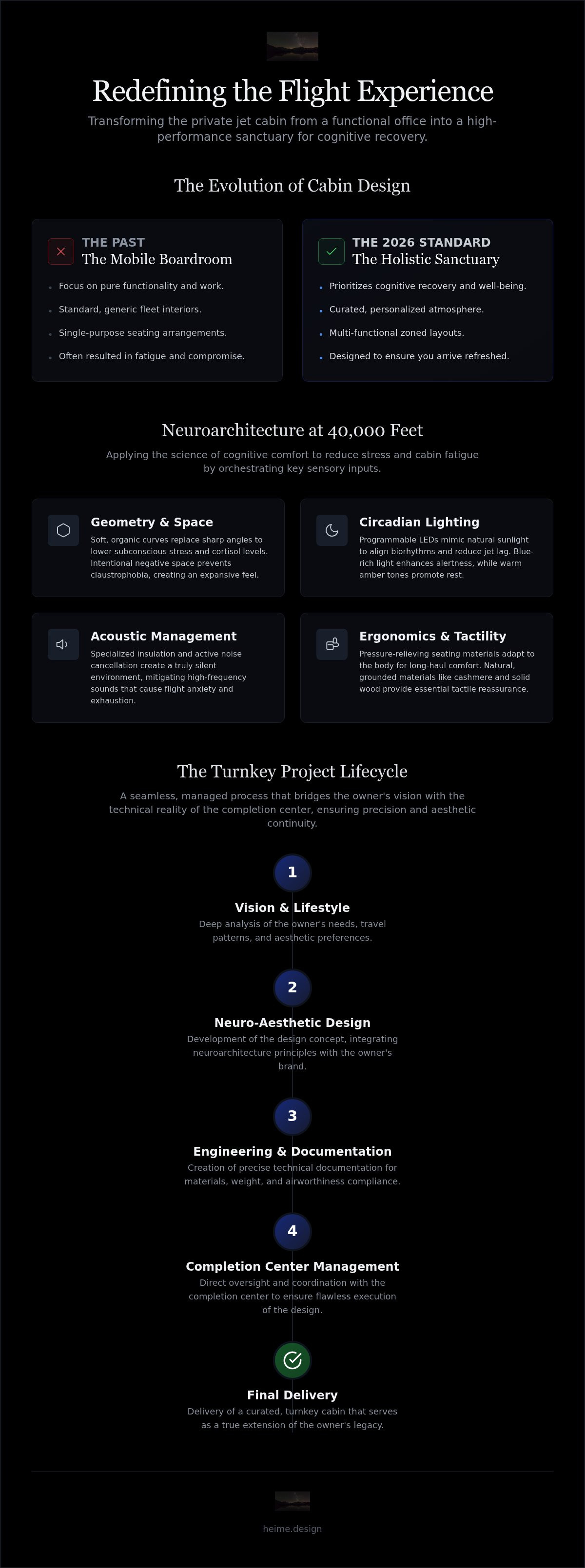
The year 2026 marks a definitive shift in private aviation. For years, the cabin was a mobile boardroom, a place to work through turbulence. Today, the focus has moved toward cognitive recovery. Owners now view their aircraft as a holistic sanctuary. This evolution moves past basic utility. The 2026 approach to business jet interior design prioritizes how a person feels upon landing. Modern aircraft cabin design now balances technical airworthiness with deep psychological comfort.
The design lifecycle has become more complex. It requires a bridge between aesthetic vision and engineering reality. International design studios now act as the primary coordinators. They manage the transition from initial sketches to final completion. This ensures that the technical documentation aligns with the owner's lifestyle. It's about precision. Every gram of weight and every millimetre of space matters in this high-stakes environment.
Beyond the Boardroom: Multi-Functional Cabins
Modern layouts prioritize zoning. We no longer see a single row of club seats. Instead, cabins feature dedicated areas for deep work, formal dining, and restorative sleep. Adaptive furniture is essential. Tables disappear into side ledges. Divans convert into full-sized beds with a single touch. This shift in business jet interior design draws heavily from residential luxury. It uses natural materials like cashmere and solid wood veneers to create a sense of home. The goal is to maximize square footage without feeling cluttered.
The 2026 Standard for Personalised Flight
The era of fleet-standard beige and generic wood grain is over. In 2026, personalization is the ultimate luxury. Owners are integrating personal branding and unique color palettes into their private jets. This isn't just about logos. It's about a curated atmosphere that reflects a family's legacy or a corporation's values. We use biophilic elements and smart lighting to enhance the environment. Cognitive luxury in aviation is the intentional orchestration of sensory inputs to ensure the passenger arrives more refreshed than when they boarded.
Neuroarchitecture: Cognitive Comfort at 40,000 Feet
Confined spaces often trigger a subconscious stress response. Applying neuroarchitecture interior design to the fuselage changes this dynamic. It isn't just about aesthetics. It's about the brain's reaction to geometry and volume. Soft, organic curves replace sharp angles to lower cortisol levels. HEIMÉ integrates these wellness principles into the technical cabin layout from the start. This ensures the environment supports recovery rather than contributing to fatigue.
The impact of scent and sound is also critical. High-frequency cabin noise is a primary driver of flight anxiety and physical exhaustion. We use specialized insulation and active acoustic management to create a truly silent environment. Subtle, natural scents can further aid relaxation and cognitive recovery. This intentional approach to business jet interior design ensures you arrive focused and ready for your next engagement. Every sensory input is curated to support your mental wellbeing.
Circadian Lighting and Biorhythm Alignment
Lighting is the most effective tool for biorhythm alignment. Programmable LED systems now mimic natural sunlight cycles with high precision. We use specific Kelvin temperatures to signal rest or productivity. Blue-rich light helps you stay alert during work hours. Warm, amber tones promote melatonin production before sleep. This light-driven hormonal regulation is a key factor in reducing jet lag. Major manufacturers are now supporting streamlined cabin customization to make these advanced systems more accessible and easier to install.
Ergonomics and Physical Wellbeing
Physical comfort is the foundation of cognitive ease. We select pressure-relieving seating materials specifically engineered for long-haul missions. These materials adapt to the body, reducing the need for constant adjustment. Tactile comfort is also essential. We prioritize materials that feel grounded and natural to the touch. Negative space is another vital element in our strategy. By designing intentional 'empty' areas, we prevent the feeling of claustrophobia. A well-planned business jet interior design feels expansive, even in a narrow-body aircraft. This creates a sense of freedom that is often missing in standard configurations. If you want to explore how these principles can be applied to your aircraft, you can consult with our design team for a personalized assessment.
Materials and Sustainability in Private Jet Refits
Selecting materials for business jet interior design is a precise science in 2026. The global aircraft refurbishing market has reached USD 5.89 billion this year, driven by a demand for "Quiet Luxury" and sustainable innovation. We don't just choose fabrics for their appearance. We select them for their molecular weight, acoustic properties, and compliance with rigorous safety standards. Every material must pass mandatory FAA and EASA burn-tests before it enters the cabin. This technical foundation ensures that your sanctuary is as safe as it is beautiful.
Sustainable Aviation Materials (SAM) are now a standard requirement for the modern fleet. We prioritize recycled textiles, bio-based resins, and reclaimed wood veneers. These choices reflect a commitment to circularity without compromising the high-end aesthetic. Acoustic engineering is another critical factor. By strategically selecting soft goods like silk-blend wall coverings and specialized foams, we can significantly reduce ambient cabin noise. This creates a quieter environment that supports both deep focus and restorative rest during long-haul missions.
The Weight-to-Luxury Ratio
Weight is the ultimate constraint in aviation. Every additional kilogram increases fuel burn and reduces the aircraft's total range. To counter this, we use advanced composite veneers and ultra-lightweight stone. These materials provide the visual impact of solid marble or rare hardwoods at a fraction of the mass. HEIMÉ’s approach focuses on sourcing high-performance aviation textiles that offer durability and luxury while remaining exceptionally light. This balance ensures your jet maintains peak performance and efficiency.
Tactile Luxury: Leathers, Silks, and Composites
The 2026 cabin is a tactile experience. We integrate antimicrobial surfaces that feel natural to the touch, ensuring a hygienic environment that doesn't feel clinical. Hand-woven carpets are another essential element. These are engineered with specific pile densities to act as acoustic dampeners, absorbing sound waves that would otherwise bounce off hard surfaces. In 2026, aviation leather must be sustainably sourced, lightweight, and fully compliant with the latest FAA burn-test standards while maintaining a natural, residential feel. By combining these elements, we create a space that feels grounded and secure.
- Composite veneers for weight reduction
- Antimicrobial silk blends for health and comfort
- Bio-based materials for environmental responsibility
- Acoustic-grade floor coverings for noise suppression
The Turnkey Project Management Lifecycle
Successful business jet interior design depends on more than just aesthetic talent. It requires rigorous international project management to bridge the gap between an owner's vision and the technical reality of a completion centre. At HEIMÉ, we act as the central point of contact. We manage the dialogue between designers, engineers, and artisans. This turnkey approach ensures the final result is airworthy, on schedule, and aligned with your lifestyle. One of the most critical hurdles is the Supplemental Type Certificate (STC) process. We oversee the certification of every custom modification. This includes everything from new seating configurations to advanced connectivity systems. For example, managing the Gogo Galileo HDX installation, which secured FAA STCs for Gulfstream aircraft in July 2026, requires precise technical coordination to maintain compliance.
Our role extends to the hangar floor. Site supervision during the strip-out and installation phases is mandatory for quality control. We monitor every detail to ensure the engineering team respects the design's integrity. If a conflict arises between a structural bulkhead and a planned lighting feature, we resolve it immediately. This level of oversight prevents costly delays and ensures the cabin's neuro-aesthetic goals, discussed in previous sections, are fully realized. We don't just design a space; we manage its birth into the physical world.
Phase 1: Concept and Technical Documentation
Precision begins at the drawing board. We translate aesthetic mood boards into airworthy technical drawings that completion centres can actually execute. This phase requires early-stage coordination with aviation engineers to verify weight and balance. In the 2026 supply chain, securing long-lead items is essential. We identify and order specialized sustainable textiles and composite veneers months in advance. This proactive documentation reduces the risk of the aircraft sitting idle in the hangar. It's about protecting your time and your investment through meticulous planning.
Phase 2: Execution and Contractor Coordination
Execution is where the vision meets the metal. We manage cross-border teams for international owners, ensuring that artisans in different time zones stay aligned. Quality control is constant. We perform regular inspections during the final outfitting to check seam alignments, veneer matching, and smart home integrations. The process culminates in a 'white-glove' delivery. We conduct a final cabin walkthrough to ensure every switch, light, and surface meets our exacting standards. If you are ready to begin your aircraft transformation, contact our project management team to discuss your vision.
Designing for Legacy: The Boutique HEIMÉ Approach
UHNW families often find large completion houses too clinical. They want a partner who understands the nuances of their lifestyle. This is where boutique expertise excels. We view business jet interior design as an extension of a client's global footprint. It's about creating a cohesive aesthetic across every asset. By integrating the aircraft into a broader UHNW residential interior design portfolio, we ensure the transition from home to hangar is seamless. This isn't just about style. It's about value preservation. High-quality execution and timeless choices protect the aircraft's resale value while serving the family's immediate needs.
Our approach is built on quiet confidence and precision. We don't rely on aggressive trends. Instead, we focus on material honesty and structural integrity. This ensures that the cabin remains a sanctuary for years to come. Every decision is intentional. From the way light hits a veneer to the tactile response of a switch, we curate every detail. This meticulous focus is what separates a standard refit from a legacy transformation.
Private Jet Cabin Design for Family Offices
Family offices require a specific level of discretion and durability. We design for multi-generational use. The materials must withstand the energy of children while maintaining the sophistication required for business guests. Consistency is key. Whether you're on your yacht, in your villa, or at 40,000 feet, the sensory experience should remain familiar. We provide secure project management that respects the privacy of high-profile owners. Our team handles every detail with professional anticipation. We ensure the technical documentation and site supervision are executed without disturbing the client's daily operations.
The Future of Bespoke Aviation
Looking toward 2027 and 2030, we anticipate a deeper integration of invisible technology. We're moving toward environments that sense and respond to passenger needs without manual input. HEIMÉ remains at the forefront of this innovation. We're already exploring the next generation of weight-saving composites and AI-driven lighting systems. Our commitment to precision ensures that every business jet interior design project we deliver today is prepared for the advancements of tomorrow. The goal is a cabin that remains relevant and high-performing for years. Begin your cabin transformation with HEIMÉ today to secure your place in the future of private flight.
Defining Your Next Horizon
Your aircraft is more than a vehicle. In 2026, it's a critical environment for cognitive recovery and professional readiness. We've explored how blending neuro-aesthetic principles with airworthiness standards transforms a cabin into a high-performance sanctuary. Success in business jet interior design requires a meticulous bridge between technical documentation and aesthetic harmony. By prioritizing sustainable materials and intentional geometry, you ensure your legacy assets remain both relevant and valuable.
HEIMÉ brings a unique perspective to this specialized field. Our background in luxury marine interior architecture allows us to manage complex, weight-sensitive environments with precision. We provide end-to-end turnkey coordination for international clients, focusing on technical documentation and site supervision excellence. Elevate your flight experience with HEIMÉ’s bespoke aviation design services. We look forward to preparing your next sanctuary.
Frequently Asked Questions
How long does a full business jet interior refit typically take in 2026?
A full refit typically takes between six and twelve months depending on the aircraft's size and the project's complexity. This timeline includes initial technical documentation, material procurement, and the installation phase. In 2026, lead times for sustainable aviation materials and advanced connectivity systems can influence the schedule. Meticulous project management is essential to coordinate these variables and minimize aircraft downtime during the completion process.
What are the most important FAA/EASA safety certifications for cabin materials?
The primary requirements are Part 25 flammability standards; these mandate that every material in the cabin must pass rigorous burn-tests. This applies to leathers, fabrics, foams, and adhesives. In 2026, new weight-saving material certifications are also critical for maintaining airworthiness. Ensuring that your business jet interior design meets these specific regulatory benchmarks is mandatory for both safety and legal compliance during international flight operations.
Can residential interior designers work on private aircraft?
Residential designers can contribute aesthetic vision, but they must partner with specialists who understand aviation technicality. The environment requires a deep knowledge of weight restrictions, flammability rules, and Supplemental Type Certificates (STCs). HEIMÉ bridges this gap by translating high-end residential concepts into airworthy technical documentation. This ensures that the final cabin sanctuary looks like a bespoke home while meeting all international aviation safety requirements.
How much does interior design impact the resale value of a private jet?
High-quality interior design can significantly enhance an aircraft's resale value and marketability. A modern, well-maintained cabin suggests that the entire aircraft has been cared for to a high standard. Conversely, an outdated or poor-quality interior often leads to significant price deductions. In 2026, buyers prioritize "Quiet Luxury" and advanced technology; this makes intentional design a smart investment for the long-term value preservation of legacy estates.
What is the difference between a cabin refresh and a full completion?
A cabin refresh focuses on updating soft goods such as upholstery, carpeting, and side-ledge treatments. It's a faster process designed to modernize the aesthetic without structural changes. A full completion involves a total overhaul of the interior, often starting from a "green" aircraft. This includes new seating configurations, galley installations, and integrated smart home technology. Completions require extensive technical drawings and long-term project coordination to ensure success.
How does cabin weight affect the flight range of my business jet?
Cabin weight has a direct, linear impact on your aircraft's flight range and fuel efficiency. Every additional kilogram requires more fuel to lift and move, which reduces the total distance the jet can travel. This is why we prioritize lightweight composite veneers and high-performance textiles. By optimizing the weight-to-luxury ratio, you can enjoy a premium sanctuary without compromising the aircraft's ability to complete long-haul missions.
What are the latest trends in private jet connectivity and smart home integration?
The 2026 standard focuses on seamless, high-speed connectivity through advanced satellite systems. Passengers expect the same digital experience in the air as they have on the ground. Smart home integration includes touchless controls, programmable circadian lighting, and personalized climate zones. These features are managed through intuitive digital interfaces; this allows for a completely tailored environment that supports both productivity and restorative rest during long-haul travel.
Is it possible to include real wood and stone in an aircraft interior?
Real wood and stone are possible when used as thin veneers bonded to lightweight honeycomb cores. This technique provides the tactile luxury of natural materials while meeting strict aviation weight and flammability standards. We use specialized composite stones and certified wood veneers to create a residential feel. These materials must be meticulously documented and tested to ensure they don't compromise the aircraft's safety or performance.


