

What matters most in a private jet cabin refurbishment may not be the choice of finishes, but clarity about who is responsible for each part of the project. Private jet cabin refurbishment consultants help turn an owner’s priorities into a coherent design brief. Design advice, technical delivery and aircraft maintenance, however, are distinct roles.
A cabin concept should reflect your preferences while accounting for the specific aircraft and the practical requirements of the project. Clear responsibilities help make that possible. A design and coordination partner can develop the cabin concept, prepare technical design documentation and keep the design intent visible across stakeholders. Aircraft maintenance, airworthiness certification and regulatory approval are separate responsibilities.
This 2026 guide explains what refurbishment consultants do, where their role begins and ends, and how to prepare a focused, aircraft-specific brief. It also shows how to align owner preferences with design documentation and project coordination so decisions can move forward with greater clarity.
Key Takeaways
- Understand how private jet cabin refurbishment consultants translate owner priorities into a cabin concept and design documentation.
- See how design consultants, refurbishment facilities and authorized technical parties have distinct roles.
- Build an aircraft-specific brief with clear priorities, passenger needs, existing-condition details and decision-makers.
- Learn how coordinated design helps keep the owner’s intent visible as specialist teams carry out the project.
What private jet cabin refurbishment consultants do, and where their role starts
A private jet cabin refurbishment consultant is a design and coordination partner. The consultant helps translate owner priorities into a cabin brief, a design direction and technical design documentation. The goal is to define the intended experience clearly, then coordinate that design intent with the people responsible for delivering the project.
Design advice and drawings are not the same as physical refurbishment, aircraft maintenance or an airworthiness decision. Installation is handled by the parties carrying out the work. Technical approvals and regulated aviation activities belong to appropriately authorized aviation parties. Keeping these boundaries clear helps owners distinguish design choices from decisions that require technical or operational authority.
What does a cabin refurbishment consultant deliver?
The work starts by understanding the owner’s priorities. You may want a calmer cabin, more practical use of the available space or an interior better suited to how the aircraft is used. A consultant turns those priorities into a brief, develops a cohesive concept and prepares design documentation to communicate the intended layout, materials and details.
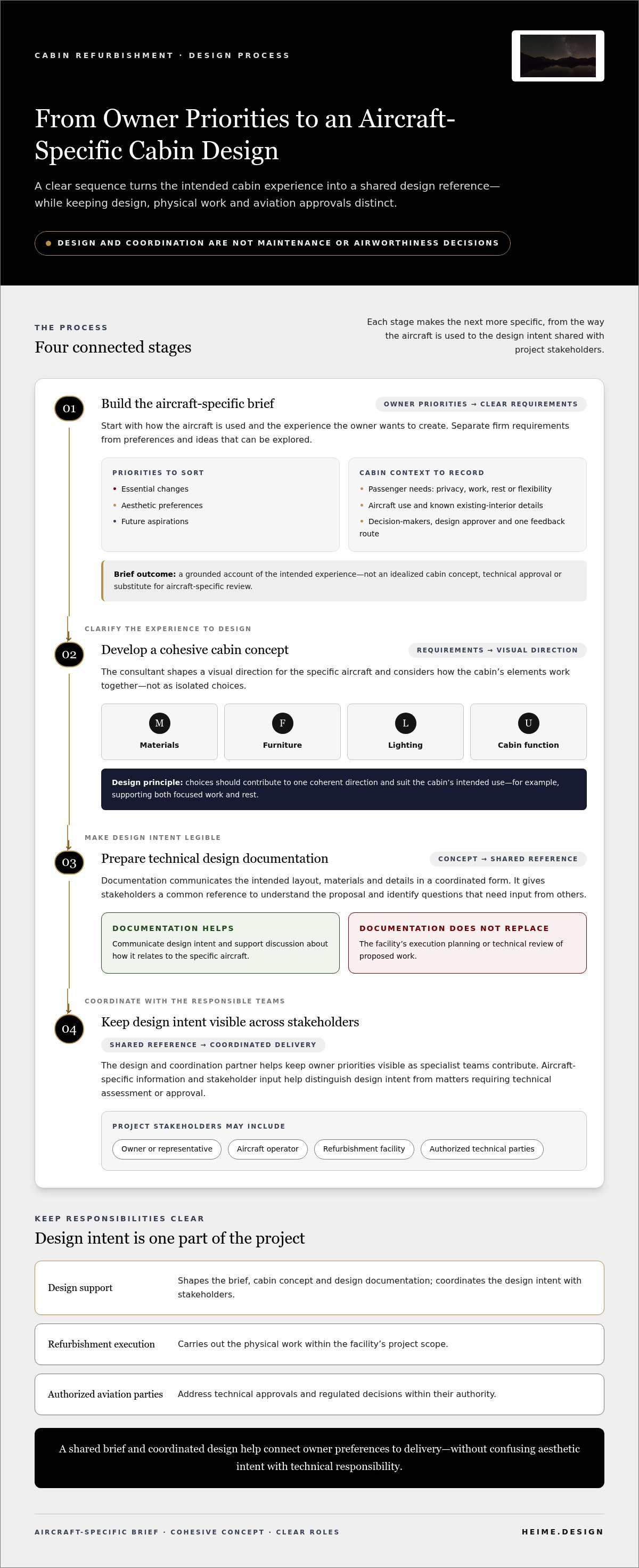
The aircraft is central to the process. A concept for one cabin cannot simply be assumed to suit another. The design needs to account for the specific aircraft and its intended use, drawing on relevant aircraft information and coordination with project stakeholders. These may include the owner or representative, the aircraft operator, the refurbishment facility and authorized technical parties. Their input helps separate design intent from matters requiring technical assessment or approval.
Documentation gives the project a shared reference. It helps stakeholders understand the design intent and identify questions that need input from others. It does not replace the facility’s execution planning or technical review of proposed work. Physical work and aircraft approvals remain separate responsibilities.
When is a consultant useful for an aircraft interior?
A design partner can support a full cabin redesign, a targeted update or a broader refresh. Even a limited change can affect the cabin’s visual balance. A clear design direction helps you consider each choice as part of the whole, rather than as an isolated finish or furnishing decision.
Coordination is especially useful when several people contribute to the project. An owner may focus on comfort and appearance, while an operator considers day-to-day use and a refurbishment facility plans the physical work. A shared brief records priorities, surfaces conflicting expectations and gives stakeholders a common reference.
- Design support: shapes the brief, cabin concept and design documentation.
- Refurbishment execution: carries out the physical work within its project scope.
- Authorized aviation parties: address technical approvals and regulated decisions within their authority.
Private jet cabin refurbishment consultants focus on design and coordination, rather than aircraft acquisition inspections or maintenance planning. Assessing an aircraft before purchase or planning its upkeep is a separate workstream. Keeping the distinction clear helps the design process move forward without confusing aesthetic intent with technical responsibility.
From owner brief to cabin concept: how refurbishment consultants shape the design
A strong cabin design starts with a clear account of how the aircraft is used, not just a folder of attractive reference images. Private jet cabin refurbishment consultants turn owner priorities into a sequence: define the brief, develop the concept, prepare design documentation, then coordinate the design intent with project stakeholders. Each step makes the next one more specific.
Turn the owner’s priorities into an aircraft-specific brief
Start by separating three kinds of input: essential changes, aesthetic preferences and future aspirations. Then describe who uses the cabin and how. Do passengers need privacy for work, a restful setting or a flexible space for different parts of a journey? What is the aircraft’s typical use? These details help clarify which design decisions matter most.
Record the aircraft context and what is known about its existing interior. Note who contributes to decisions and who approves the design direction. If several people are involved, establish one clear route for feedback. This reduces the risk of conflicting preferences and helps keep the brief grounded in the aircraft and its use, rather than an idealized cabin concept.
A refurbishment brief links owner priorities to the design decisions that shape the cabin. It should describe the intended experience and distinguish firm requirements from ideas that can be explored. It is not a technical approval or a substitute for aircraft-specific review.
Develop the concept and technical design documentation
With priorities in place, the consultant develops a visual direction and considers how the cabin’s elements work together. Materials, furniture, lighting and function should not be decided in isolation. For example, a calm visual palette may need to support both focused work and rest, while furniture choices should suit the cabin’s intended use. Each decision contributes to a coherent design system.
Technical design documentation communicates the concept in a coordinated form. It helps stakeholders understand the intended design and discuss how it relates to the aircraft. A concept remains a design proposal until its aircraft-specific technical implications have been reviewed by the appropriate parties. Documentation supports coordination; it does not establish that a design is approved or ready for installation.
Industry references can help owners explore visual and functional possibilities. Latest trends in business jet interior design can offer ideas to discuss, but a trend is a starting point, not a specification for a particular aircraft.
The practical sequence is straightforward: clarify priorities, shape the cabin concept, document the design, then coordinate with relevant stakeholders for technical review and specialist execution. For owners developing a considered cabin direction, bespoke aircraft interior design at heime.design connects personal priorities with design documentation and project coordination.
Design consultant or refurbishment facility: who handles each part?
A separate design consultant does not need to duplicate a refurbishment facility’s role. The two can contribute different expertise: a design partner develops and documents the owner’s cabin vision, while the facility plans and carries out physical work within its agreed scope. Authorized technical parties address aviation matters within their remit. Clear coordination connects these responsibilities without blurring them.
The division of work can vary by project. A focused refresh may need a defined design direction for a few elements. A broader redesign may call for more extensive concept development and documentation. In either case, design intent and technical execution need to be coordinated, not treated as interchangeable.
| Responsibility | Design consultant | Refurbishment facility | Authorized technical parties |
|---|---|---|---|
| Design direction | Develops the brief, spatial intent and visual coherence. | Uses the agreed design information to plan physical work within its scope. | Provides technical input where required for aviation matters. |
| Materials and documentation | Shapes material direction and prepares design documentation. | Coordinates execution details related to its work. | Reviews technical matters within its authority. |
| Physical and airworthiness matters | Does not carry out installation or certify aircraft modifications. | Performs physical refurbishment work according to its responsibilities. | Handles applicable maintenance, airworthiness and approval decisions. |
Which decisions belong to design consultancy?
Design consultancy covers the cabin brief, spatial intent, visual coherence, material direction and design documentation. A design partner keeps the owner’s priorities visible as the concept is discussed among stakeholders. This helps distinguish the intended look and use of the cabin from questions about how specific work is technically assessed or completed.
heime.design provides bespoke private jet and VIP aircraft interior design, technical design documentation and project coordination. The studio’s role is to provide a clear design reference and coordinate it with the parties responsible for technical review and execution.
Which tasks need maintenance or authorized technical involvement?
Installation and aircraft maintenance are specialist work, separate from interior design. Airworthiness matters and decisions about whether a modification can proceed also sit with appropriately authorized aviation parties. The relevant roles depend on the aircraft and project context, so design documentation should not be treated as a substitute for technical assessment.
A drawing, material schedule or finished concept does not certify or approve an aircraft modification. It communicates design intent. The facility and authorized technical parties address their respective execution and aviation responsibilities.
For owners, the practical question is not whether one role is better than another. It is whether responsibilities are clear: who shapes the cabin concept, who carries out the physical work, and who addresses technical and airworthiness decisions. That separation helps a focused refresh or a larger redesign move forward with the right input at each stage.
How to brief private jet cabin refurbishment consultants with confidence
A useful brief does not need to resolve technical questions in advance. It should give private jet cabin refurbishment consultants a clear picture of the aircraft, the people who use it and the change you want to make. Separate known facts from assumptions. This keeps the design conversation focused on priorities while leaving aircraft-specific technical conclusions to the appropriate parties.
Information to gather before the first design conversation
Collect the context you have before discussing finishes or furniture. Existing drawings, photographs and records can help explain the current cabin, though they do not replace technical review. Note what information is available and where there are gaps.
- Aircraft context: Record the aircraft type and any cabin information you have. Treat these as project details, not conclusions about what can be changed.
- Passenger use: Describe typical passenger patterns, work routines and privacy needs, and whether the cabin should support rest, meetings or different uses during a journey.
- Existing condition: Gather available drawings, photographs and records. Note which details are documented and which are based on observation or recollection.
- Owner priorities: Separate must-haves from preferences and future aspirations. For example, a functional change may be essential, while a particular material or visual reference may remain open to discussion.
- Decision-makers: List the people who will contribute and identify who has authority to approve design choices.
Be specific about the experience you want, but avoid prescribing an unverified technical solution. “A more private place to work” describes a need. Naming a particular modification before aircraft-specific review can narrow the discussion too soon.
Questions that help define scope and decision-making
Clarify whether the project is a targeted refresh, a functional change or a broader redesign. Then agree how decisions will be made and what information should be shared at each stage. These questions turn a collection of preferences into a brief that supports useful design discussions and coordinated input.
- What should change, and what should remain as it is?
- Which priorities are essential, and which can be explored as options?
- Who provides feedback, and who approves the design direction?
- How should updates and decisions be communicated among stakeholders?
- What design documentation and coordination are expected at each project stage?
A clear scope helps stakeholders respond to the same objective instead of interpreting separate requests in different ways. It also focuses design discussions: ideas can be compared against the intended use, owner priorities and available aircraft information.
For a broader view of specialist design across aviation and marine settings, explore this luxury marine and aviation interior architecture guide. To shape an aircraft-specific design brief into a coordinated cabin concept, discuss bespoke aircraft interior design with heime.design.
What coordinated cabin refurbishment looks like with a design partner
A coordinated project moves from a shared understanding of the owner’s priorities to design development, documentation and specialist execution. Each stage has a distinct purpose. The brief sets direction. The design turns that direction into a coherent cabin concept. Documentation gives stakeholders a reference for discussion, while aircraft specialists address technical and physical work within their responsibilities.
- Align the brief. Set out the aircraft context, intended use, owner priorities and who makes design decisions.
- Develop the design. Shape the cabin concept around the agreed goals and the available information about the aircraft.
- Coordinate documentation. Use design documents to communicate intent and support discussion among relevant stakeholders.
- Move into specialist execution. The parties responsible for physical work and technical aviation matters address their respective scopes.
This sequence does not promise a particular timeline, approval or technical outcome. It provides a clear framework for decisions and handoffs. heime.design’s bespoke aircraft interior design, technical design documentation and project coordination support the design and coordination stages. These services connect owner priorities with the cabin concept and help keep that intent visible as relevant specialists contribute.
Coordinate design intent across project stakeholders
A documented design direction gives the owner, design partner, refurbishment facility and relevant aircraft specialists a common reference. It can make it easier to discuss whether a proposed detail reflects the intended cabin experience, while technical questions stay with the parties equipped to address them. Coordination supports communication; it does not replace technical review, maintenance work or aviation approvals.
These principles also apply to complex work across locations and disciplines. The international project management guide offers a broader perspective on keeping responsibilities, decisions and project communication aligned.
For a cabin refresh, coordination may focus on keeping a limited set of design choices consistent. A broader redesign can involve more design information and stakeholder discussion. In either case, the brief and documentation help preserve the owner’s intent without assuming that every design idea is technically executable.
Move from a defined brief to a focused first conversation
To start clearly, bring the aircraft context you have, the priorities behind the project and the cabin changes you are considering. You can also outline passenger needs, existing-condition information and who will take part in decisions. These details provide a practical starting point for a focused design discussion, even if some questions remain open.
heime.design works as a bespoke design and coordination partner for private jet and VIP aircraft interiors. If you are ready to shape your priorities into a considered design brief, discuss your private jet cabin design brief.
Give your cabin vision a clear starting point
The next step is not to resolve every technical question. Decide what you want the cabin to make possible, then give that intention a clear form. A focused brief can turn an early idea into a design conversation grounded in your aircraft and its use.
The right private jet cabin refurbishment consultants keep owner priorities at the centre of design discussions while coordinating with the specialists responsible for execution and aviation decisions. HEIMÉ brings bespoke private jet and VIP aircraft cabin design together with technical design documentation and end-to-end project coordination. Each project begins with your priorities, not a predetermined template.
Share the aircraft context, the changes you are considering and what matters most to you. From there, develop a thoughtful direction with the right responsibilities in view. Discuss your private jet cabin design brief and take the first step toward a cabin shaped around your needs.
Frequently Asked Questions
What does a private jet cabin refurbishment consultant do?
A private jet cabin refurbishment consultant helps shape the interior design around the owner’s goals. The work may include developing a design brief, establishing a visual direction, preparing design documentation and coordinating design discussions. For example, an owner considering updated seating and lighting can use design support to assess how those choices fit the intended cabin feel. Physical installation, aircraft maintenance and airworthiness decisions are separate responsibilities.
When should I hire a consultant for a private jet cabin refurbishment?
Consider involving a consultant while you are defining the project, especially if you have several cabin goals or multiple people providing input. Early design support can help distinguish the main objective from details that can wait. For instance, an owner deciding between a focused refresh and a wider redesign can clarify the desired experience before the scope is fixed. Technical feasibility remains a separate specialist consideration.
What is the difference between an aircraft interior designer and a refurbishment facility?
An aircraft interior designer develops the cabin’s design direction and related documentation. A refurbishment facility may perform physical cabin work within its capabilities and agreed scope. A project could involve both, such as when an owner wants a particular visual direction carried through several cabin elements. Maintenance and approval matters are separate responsibilities. Clear roles help prevent design discussions from being mistaken for decisions about installation or airworthiness.
Can a cabin refurbishment consultant handle aircraft certification or approval?
No. Design consultancy and aircraft certification or regulatory approval are different functions. A design drawing describes an intended interior; it does not establish that a proposed change is approved or that the aircraft remains airworthy. Technical review or approval requirements depend on the aircraft and the work being considered. Appropriately authorized aviation specialists determine the applicable requirements and handle those matters within their authority.
How do I prepare for a private jet cabin design consultation?
Bring a concise outline of the aircraft context, the changes under consideration and what matters most to the people who use the cabin. If available, include current photographs or drawings, and note which information is verified versus approximate. For example, describe a need for a quieter-feeling work area rather than specify a technical alteration. Also identify who will consolidate feedback and make design decisions.
Is a full cabin refurbishment always better than targeted updates?
No. The right scope depends on the cabin’s condition, intended use and the owner’s priorities. If the main concern is a single area, targeted updates may be a suitable design direction. If several needs affect how the cabin feels and functions together, a broader redesign may be worth considering. Comparing each option against the project goals can help avoid expanding the scope without a clear reason.
How long does a private jet cabin refurbishment take?
There is no dependable universal duration because project timing depends on the aircraft, scope, design decisions, technical requirements and work carried out by each project party. A limited design update and a wider cabin project involve different tasks and coordination needs. Timing should be considered against the specific scope and responsibilities, rather than assumed from a general estimate. The parties responsible for execution and aviation matters plan those parts of delivery.


