

The most luxurious space on a yacht is the one that functions with the silent precision of its engine. High-end yacht interior design requires more than an eye for aesthetics. It demands a deep understanding of maritime weight limits, salt-resistant materials, and the strict 2026 IMO safety regulations. You likely know the frustration of coordinating contractors across European ports or worrying if your chosen finishes will withstand the humidity.
We agree that your time is better spent enjoying the sea than managing a chaotic refit. This guide promises to redefine your perspective on luxury marine architecture. You'll learn how technical precision, neuroarchitecture, and turnkey management can protect your maritime asset while creating a personalized sanctuary. We'll preview the latest trends in smart technology, residential-inspired layouts, and the essential safety standards taking effect this year.
Key Takeaways
- Learn how 2026 trends in "invisible technology" and seamless spatial flow redefine modern maritime luxury.
- Understand the role of neuroarchitecture in reducing sea fatigue and enhancing wellness through smart ergonomic routing.
- Identify durable, bio-based materials designed to withstand harsh salt and UV exposure without compromising on bespoke aesthetics.
- Navigate the yacht interior design refit process with clarity, from the initial technical audit to final sea trials.
- Discover how turnkey project management and professional site supervision ensure quality control and preserve the value of your vessel.
The Engineering of Elegance: Defining Yacht Interior Design in 2026
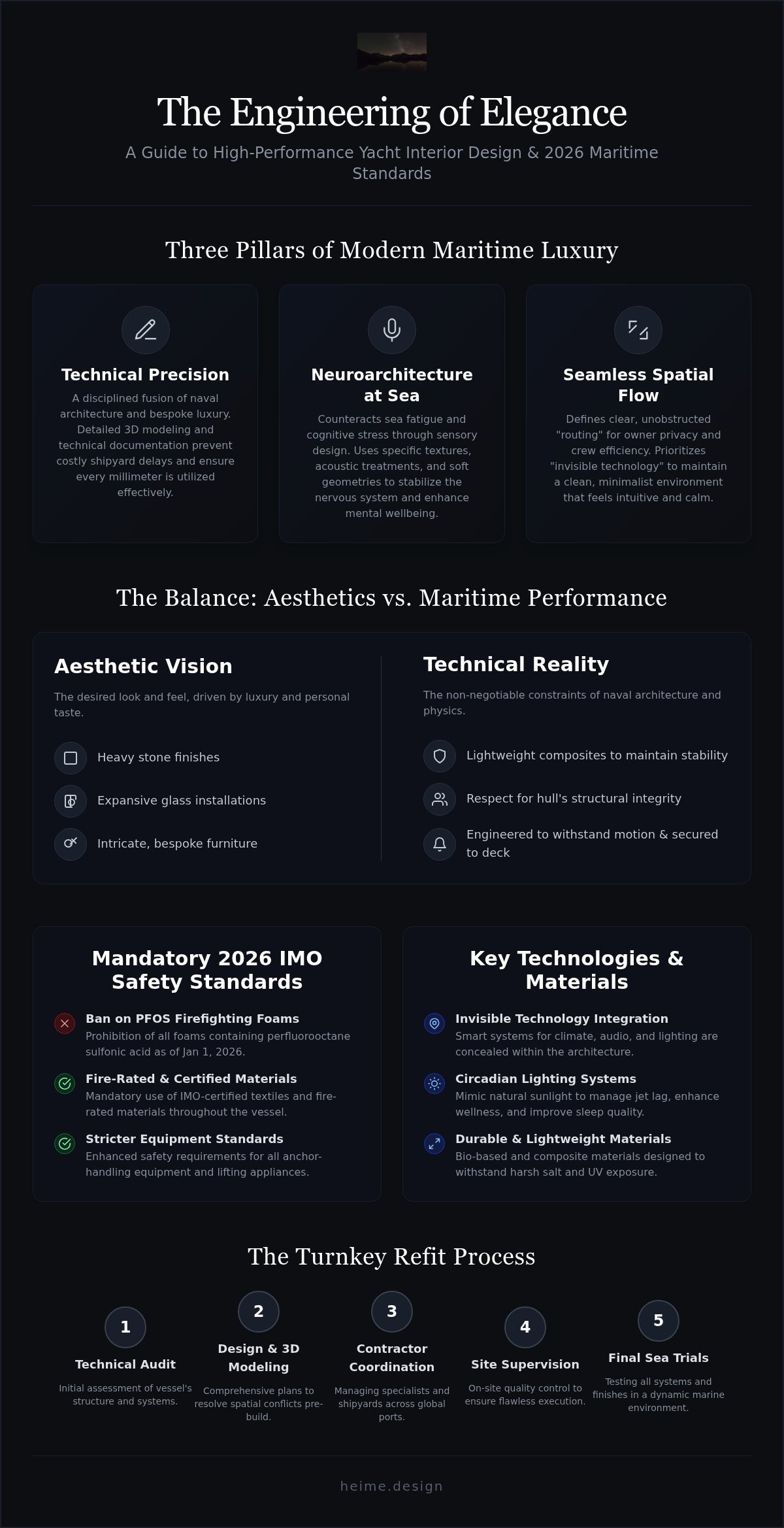
Modern yacht interior design is a disciplined fusion of naval architecture and bespoke luxury. In 2026, the industry has moved beyond simple decoration. We now focus on the "total work of art" concept. This treats the vessel as a single, cohesive entity where every surface serves a technical and aesthetic purpose. Current trends prioritize "invisible technology." Smart systems for climate, audio, and lighting stay hidden within the architecture to maintain a clean, minimalist environment. The result is a seamless spatial flow that feels intuitive and calm. This approach ensures that the interior doesn't just look expensive; it functions with absolute precision.
Aesthetics vs. Maritime Performance
Every design choice carries technical weight. Interior designers must account for how materials affect the vessel's center of gravity and fuel efficiency. High-performance interiors rely on Naval Architecture Principles to ensure stability remains uncompromised. If a stone finish is too heavy, it can degrade the ship's handling. We use lightweight composites to achieve the same luxury look without the mass.
Safety is the highest priority in any marine environment. As of January 1, 2026, new IMO regulations prohibit firefighting foams containing PFOS. They also mandate stricter safety standards for anchor-handling equipment and lifting appliances. Designers must source fire-rated materials and IMO-certified textiles that meet these specific maritime compliance markers. Bespoke furniture isn't just about style. It's engineered to withstand the dynamic movement of the sea while remaining securely fastened to the deck.
The Shift Toward Technical Precision
Precision avoids costly shipyard delays. Comprehensive technical design documentation is the foundation of every successful build or refit. It provides the exact specifications contractors need to execute complex designs. There's no room for guesswork when you're working within the tight tolerances of a hull. Detailed drawings ensure that every millimetre of space is utilized effectively.
Advanced 3D modeling allows us to resolve spatial conflicts before construction begins. This proactive approach prevents "scope creep" and keeps your budget on track. Coordinating with naval architects early in the process is essential. It ensures the interior vision respects the hull's structural integrity and accommodates vital systems. This level of technical oversight protects your investment. It guarantees a turnkey delivery that meets 2026 global standards for luxury and safety.
Spatial Architecture and the Science of Marine Ergonomics
Spatial design in a marine environment is a complex puzzle of efficiency and seclusion. We focus on the "routing" of the vessel. This mapping defines how owners and crew move through the ship. Owners require total privacy. Crew need clear, unobstructed paths to perform their duties without intrusion. By analyzing these paths during the technical design phase, we ensure service remains invisible. The owner's sanctuary stays undisturbed. This strategic layout is a fundamental element in The Engineering of Elegance in Yacht Design. It allows for a functional flow that respects both luxury and naval necessity.
Neuroarchitecture at Sea
Living on the water presents unique psychological challenges. Constant motion and enclosed cabins often lead to "sea fatigue." We apply neuroarchitecture to counter these stressors. This science examines how the brain responds to the built environment. We use specific textures, acoustic treatments, and soft geometries to stabilize the nervous system. The goal is cognitive recovery. Designing for mental wellbeing in enclosed marine cabins requires a balance of sensory input. Our specialized approach to neuroarchitecture interior design ensures that your vessel is a true place of rest.
Strategic Lighting Design
Lighting is the most effective tool for wellness at sea. Circadian lighting systems have become a standard for 2026. These systems mimic the natural cycle of sunlight. They assist passengers in managing jet lag and improving sleep quality during international voyages. We also prioritize maximizing natural light. Innovative glass integration and strategically placed reflective surfaces open up the interior. This prevents the feeling of being "boxed in." Architectural lighting then defines functional zones within open-plan decks. It provides subtle visual cues that guide the eye, creating structure without physical walls.
Restricted perimeters don't have to feel small. We use intelligent spatial architecture to maintain a sense of openness. Smart home technology now incorporates AI that anticipates user needs. It learns your preferences for temperature, lighting, and sound. The tech stays hidden, appearing only when required. This reduces cognitive load and enhances the luxury experience. If you're looking to modernize your vessel, a yacht interior design consultation can help integrate these advanced systems into a seamless, turnkey layout.
Material Selection: Durability Meets Bespoke Luxury
Marine environments are notoriously unforgiving. Salt air, constant humidity, and intense UV exposure can degrade standard luxury finishes in a single season. In 2026, high-performance yacht interior design prioritizes resilience alongside aesthetics. We select materials specifically engineered for maritime endurance. Rare wood veneers and supple leathers are now treated with specialized finishes to repel moisture and resist cracking. Acoustics also play a vital role in the luxury experience. We integrate advanced sound-dampening materials within cabin bulkheads to eliminate engine vibration and hull noise. This technical layering ensures a quiet, sanctuary-like environment even while the vessel is at cruising speed.
Sustainable Luxury Materials
The industry is seeing a significant shift toward bio-based composites and recycled marine luxury fabrics. These materials aren't just ethical choices; they're often more durable than their traditional counterparts. Lab-grown finishes and ethically sourced exotic woods provide the same visual depth as rare timber without the environmental impact. Weight-reduction technology has also evolved. We now use ultra-thin stone slabs mounted on lightweight honeycomb aluminum cores. This allows for the inclusion of heavy aesthetic finishes like marble or granite without compromising the vessel's fuel efficiency or stability. Selecting materials with this level of foresight helps maintain the asset's resale value through generational ownership.
High-End Furniture and Craftsmanship
Bespoke furniture in a marine setting must be an extension of the vessel's structure. Loose items aren't just a nuisance; they're a safety risk in rough waters. We focus on Highend Furniture Design that integrates seamlessly with the deck and bulkheads. Every piece is custom-built to fit the unique curvature of the hull. We utilize non-corrosive metals, such as marine-grade stainless steel and specialized alloys, to create accents that won't pit or cloud over time. Using chemically strengthened glass ensures that decorative surfaces remain safe and scratch-resistant. These custom pieces serve both form and safety, providing residential-level comfort that remains entirely stable during dynamic sea movements.
The result of this meticulous selection process is an interior that feels effortless but is technically robust. By bridging the gap between delicate luxury and maritime reality, we create spaces that look as pristine in five years as they do on the day of delivery. This commitment to material integrity is what defines a truly successful marine renovation.
The Refit Process: Managing Complex Marine Renovations
A successful yacht refit is a logistical marathon. It begins with a comprehensive technical audit of the existing vessel. We then move through concept development and detailed technical design before a shipyard is even selected. The construction phase requires constant site supervision to ensure the final output matches the original vision. Finally, sea trials verify that every interior element remains stable and silent under power. This structured approach to yacht interior design prevents common pitfalls like scope creep or material failure. It ensures the vessel returns to the water on schedule and within the defined technical parameters.
Turnkey Coordination for Global Owners
Managing a renovation across different European ports is a specialized skill. Owners need a single point of contact who understands both the design intent and the shipyard's technical constraints. This Construction Coordination is what keeps a project on schedule. It bridges the gap between international owners and local contractors. Our multilingual team handles the communication, ensuring nothing is lost in translation. For a deep dive into these management strategies, see our guide on international project management interior design.
Technical Documentation and Permitting
Technical documentation is the primary language of the shipyard. Precise drawings reduce friction with engineers. They ensure that every plumbing, electrical, and HVAC integration is perfect. We also handle the complexities of maritime law compliance and permit coordination. This is especially critical for cross-border renovations where regulations vary between jurisdictions. Clear documentation acts as the technical bridge between your vision and the shipyard's execution.
When evaluating a studio's technical capabilities, owners should use this brief checklist:
- Does the studio provide full Technical Design Documentation for engineers?
- Do they have a proven record of managing cross-border design projects?
- Is there a dedicated process for Site Supervision and quality control?
- Can they coordinate directly with naval architects and shipyard managers?
If you're planning an international renovation, our team provides the expert Yacht Refit Design services needed to manage these complex projects from start to finish.
HEIMÉ’s Vision: Tailored Marine and Aviation Interiors
HEIMÉ operates at the intersection of technical precision and quiet luxury. We specialize in interior architecture for clients who view their vessels and aircraft as more than transport. These are physical legacies. Our approach to yacht interior design prioritizes a minimalist aesthetic that favors essentialism over excess. By removing the unnecessary, we create space for intentionality and calm. This philosophy ensures that every element, from a custom bulkhead to a recessed lighting fixture, serves a specific purpose. We act as the technical bridge between your vision and the specialized teams at the shipyard or hangar.
A Boutique Approach to UHNW Design
We believe in the power of a personalized, one-on-one design partnership. Unlike large, faceless firms, HEIMÉ functions as a boutique innovator. This allows for direct communication and meticulous attention to detail. We understand that a yacht is a high-value maritime asset. Proper design documentation and site supervision are not just about style; they are about value preservation. A well-executed refit protects the vessel's market position for years to come. This same commitment to longevity applies to our work on shore. We apply these maritime standards to UHNW residential interior design to help owners transform legacy estates into enduring family sanctuaries.
From Sea to Sky: Integrated Design Services
There is a unique synergy between private jet cabin design and luxury yacht interiors. Both environments are high-performance mobile spaces. They share strict constraints regarding weight, safety, and spatial ergonomics. HEIMÉ applies the principles of neuroarchitecture across both sectors to ensure cognitive recovery for travelers. Whether you are at 30,000 feet or crossing the Mediterranean, the environment should stabilize your nervous system. We use soft textures and intelligent lighting to counter the fatigue often associated with long-distance travel. This integrated perspective allows us to maintain a consistent aesthetic and functional standard across your entire portfolio of assets.
Our studio is ready to guide you through the complexities of your next international project. We manage the technical documentation, coordinate with global contractors, and oversee every phase of the fit-out. This turnkey approach removes the stress of renovation, leaving you with a sanctuary that is entirely yours. If you are preparing for a new build or a comprehensive refit, we invite you to schedule a luxury interior design consultation to discuss your vision.
Defining the Future of Your Maritime Asset
Luxury on the water has evolved. Modern yacht interior design is now a technical discipline where neuroarchitecture meets naval engineering. We've examined how spatial ergonomics and sustainable materials define the next generation of vessels. You understand the importance of technical documentation in preventing shipyard delays. You know that wellness at sea requires more than just aesthetics; it requires environments that actively support cognitive recovery. These elements work together to preserve the value of your asset and ensure a personalized sanctuary.
HEIMÉ provides the technical bridge between your vision and the shipyard's execution. As specialists in UHNW marine and aviation interiors, we prioritize quiet luxury and neuroarchitecture. Our comprehensive turnkey project management ensures a stress-free transition from concept to sea trials. We handle the complexities of international coordination so you don't have to. It's time to elevate your experience on the water with a partner who values precision and aesthetic harmony.
Partner with HEIMÉ for your bespoke yacht interior refit. We look forward to preparing something specialized for your next voyage.
Frequently Asked Questions
What is the difference between yacht interior design and residential design?
Marine design must account for dynamic movement, saltwater corrosion, and strict weight limits. Unlike land-based homes, yachts require fire-rated materials and IMO-certified textiles for safety. Every piece of furniture is typically integrated into the vessel's structure to prevent movement at sea. Yacht interior design focuses on high-performance mobile environments where naval architecture principles dictate the layout, ensuring the interior survives harsh maritime conditions.
How much does a luxury yacht interior refit cost in 2026?
Industry data indicates that major refits typically cost between 5% and 10% of the yacht's current value. For mid-life renovations, owners often see costs ranging from €10,000 to €30,000 per meter. Yard fees and labor generally represent 15% to 40% of the total budget. These figures vary based on the vessel's condition and the complexity of the technical design documentation required to meet 2026 standards.
Which materials are best for luxury yacht interiors to ensure durability?
High-performance materials like marine-grade stainless steel, chemically strengthened glass, and bio-based composites are ideal for 2026. We prioritize rare veneers and leathers treated for extreme UV and salt resistance. Lightweight honeycomb aluminum cores allow for stone finishes without excessive weight. These selections ensure the interior withstands humidity while maintaining the aesthetic standards of a personalized sanctuary. Choosing durable materials also helps preserve the asset's long-term resale value.
How long does a typical yacht interior renovation take?
A standard winter refit for a 30 to 50-meter vessel usually fits within a six-month window. However, major structural work or full rebuilds can extend beyond a year. The timeline depends heavily on the detail of the initial technical audit and the efficiency of the construction coordination. Starting the design process early prevents shipyard delays and ensures all bespoke materials are sourced before the vessel enters the yard.
What is neuroarchitecture and why is it used in yacht design?
Neuroarchitecture is the science of how the built environment affects the human brain and nervous system. In yachting, we use it to reduce "sea fatigue" and promote cognitive recovery during voyages. By manipulating light, acoustic treatments, and spatial geometries, we create interiors that stabilize the nervous system during motion. This approach transforms a vessel into a true wellness sanctuary, enhancing the owner's mental wellbeing through evidence-based design principles.
Do I need a specialized designer for my yacht refit or can I use a residential architect?
Specialized marine designers are essential due to the technical complexities of maritime law and naval engineering. Residential architects often lack experience with IMO fire safety standards or the impact of material weight on vessel stability. A yacht interior design expert acts as the technical bridge between your vision and the shipyard's execution. They ensure all documentation meets maritime compliance while managing the unique constraints of a mobile, high-performance environment.
How does weight affect the choice of materials in yacht interior design?
Weight directly impacts a vessel's center of gravity, stability, and fuel efficiency. If an interior is too heavy, it can degrade the ship's performance and safety at sea. We use weight-reduction technology, such as thin veneers and lightweight composites, to achieve luxury aesthetics without the mass. Every material choice is calculated to respect the hull's technical limits while providing the high-end finish expected in a bespoke marine refit.
Can you manage a yacht refit in Spain or other European countries remotely?
Yes, we provide comprehensive turnkey project management for international clients across European ports. Our multilingual team coordinates with local contractors and shipyard engineers to ensure quality control. We handle everything from permit coordination in Spain to technical documentation and site supervision. This cross-border expertise allows owners to manage their maritime assets effectively without needing to be physically present at the shipyard during the renovation process.


